On Saturday morning I had yet another insight into the degree of luck that is involved in finding a rare bird. I was in north Norfolk with my family, but first thing Saturday morning I had arrange to meet up with great mate Richard Campey, who lives and works in the county. Burnham Overy dunes is the nearest thing that Richard has to a local patch, he found a nice blythii Lesser Whitethroat there on Thursday and with persistent easterly winds Richard was keen to get out there again. Until a Pallas’s Warbler was found there on Friday afternoon. One thing, of many, that Richard and I share, is dislike of crowds. North Norfolk being north Norfolk, even a Pallas’s Warbler will draw a small crowd, especially on a Saturday. So late on Friday evening Richard rings and we agree to a last minute change of plan. We will abandon our plans to go to Burham Overy dunes but will go to Wareham Greens and work the long hedgerow that runs east towards Stiffkey.
Saturday morning dawns dry after overnight rain, with the brisk easterly wind still blowing. Despite the fact that there could not be better conditions for bird hunting in late October on the east coast, ours is the only car on the concrete pad at the end of the first track to Wareham Greens. Immediately we hear the harsh calls of Brambling in the hedgerows. Goldcrests are everywhere, calling loudly, it feels super-rare! Thrushes are everywhere, Fieldfares clacking overhead, Redwings seeping out of every tree. We work our way east, past the pit, we check the bushes around the whirlygig. Yellowhammers and Redpolls pass overhead, we flush a flock of at least 12 Brambling.
We then bump into another birder, working his way west along the hedgerow. We exchange sightings – lots of common migrants, but so far, nothing rare. After a few moments chatting we realise that we know each other – it is Geoff Wyatt from Oxfordshire! Geoff has spent the last few days on the coast, including the last few mornings at Burham Overy dunes, where he was the first to find the Fin Whale that washed up on the beach on Thursday morning. And then Geoff’s pager goes off – an Isabelline Wheatear has just been found at Burnham Overy dunes. All three of us exchange grim looks and smile at the hand that fate has dealt us. We all could have easily been in the dunes at first light this morning. That could have been our bird, but for our last minute change of plans. Such is the element of luck in birding.
Still, my time in particular being limited, it is time to eat humble pie and join the crowds. We drive the short distance back to Burnham Overy and walk out along the track to the dunes. The Isabelline Wheatear is skittish and mobile, but this just helps show off the distinctive half black, half white tail. The other plumage features were much more subtle, though the black centered alula stood out. Below, looking typically upright and short-tailed:
Below, looking more plump and less structurally distinctive:
Below, a Northern Wheatear at the same site for comparison. The stronger supercilium behind the eye and the more orange tones on the flanks and ear coverts helped pick out the Northern bird from the paler, less contrasting Isabelline. That evening a Desert Wheatear was also to be found at this site.
On Saturday afternoon, I head out to the beach at Burnham Overy with the family to see the Fin Whale. Seeing a dead whale is a strange mixture of emotions, but is the sort of experience that stays with you, whether adult or child. It generated lots of questions from the children. The blood filled pool around the head attracted the most comment. A day to remember, for lots of different reasons.
It is 8 years since I drove for hours to see a specific bird. The fact that on that occasion Ian and I were nearly killed by another driver ploughing headlong into the front of my car on the A148 in Norfolk, may have come into my decision, but the thrill of the chase was fading anyway. I realised that I found it much more satisfying to find my own birds, so I covered my Oxfordshire local patch around Cuddesdon and visited Lundy Island in the autumn for my migration kicks. But this autumn has seen a truly spectacular ornithological event. A rare and beautiful species that breeds in Siberia and winters in central China has reached us. In fact, a species only recorded 15 times in the whole Europe in the last 150 years has reached us in unprecedented numbers. To date 146 Siberian Accentors have been recorded across Europe between 4th and 23rd October 2016, including the first 8 British records. Surely the quickest turnaround from first record to many since the first Collared Doves arrived in Norfolk in the late 1950s? With new birds being discovered on a daily basis, online maps of Siberian Accentor sightings quickly became outdated (see full map here):
This irruption raises a number of questions. It seems unlikely to be due to reverse migration. The random chance of a genetic abnormality causing a bird’s migratory compass to propel it far from the usual migratory routes for that species is not going to occur in over 100 birds simultaneously. There was talk on the east Yorkshire coast that the harvest in Russia this summer was the best in a generation. If true, would good conditions for agriculture also benefit breeding passerines? Even if it did, why should so many migrate so far from their usual route from Siberia to central China and end up so far west? Could the mass displacement of so many Siberian Accentors be indicative of some unknown environmental issue on their breeding grounds?
Siberian Accentors are thought to have expanded their breeding range west toward such the Ural Mountains. Perhaps a good breeding season has produced an exceptional number of birds in the far west of their range? Then these young migratory birds are exposed to a prolonged period of wind propelling them towards Western Europe. A prolonged spell of high pressure stretching from central Russian into Scandinavia, combined with winds blowing from central Asia into Western Europe during most of early October may have assisted the irruption. This graphic from 7th October illustrates the prevailing weather conditions (see here for the full animated map). An area of high pressure (blue) stretches across all of central Russia, with winds blowing from east to west (green) picking up from the Urals, blowing straight into the Baltic Sea, southern Sweden and onto the northern east coast of the UK:
From the moment of the discovery of the second British Siberian Accentor last Thursday near Spurn Point, East Yorkshire I realised that I wanted to be part of this remarkable event. I was not alone, it is estimated between 3,000 and 4,000 people traveled to Easington to see this bird during it’s six day stay. For me, what it represented was almost as important. Not merely the epic feat of a long migration from the other side of Eurasia to East Yorkshire, but the fact that hundreds (possibly many hundreds, how many were missed?) of Siberian Accentors were simultaneously entering western Europe in a unique ornithological event. The bird itself was a cracker. An early online description of it being like a “Dunnock doing Bowie” is spot on: it is the head pattern that sets this birds apart, a feast of tan and black stripes that the bird showed off to great effect whilst tossing leaves around during its search for insects:
The collective noun for Dunnocks is, apparently, a “Jovial of Dunnocks”. If this is the case, then a “Joy of Accentors” would seem appropriate for the pleasure and interest that this remarkable event has brought to birders all over Europe. And for me, I had a fabulous day out at Spurn Point, seeing a feast of Siberian breeding warblers including Yellow-browed, Pallas’s and Radde’s Warblers that made up the supporting cast. With the winds remaining in the east, this remarkable autumn is set to run and run.
Phylloscopus warblers, either one of the joys of Sichuan or a constant pain in the neck! These species are not adequately dealt with in any existing field guide, though there are some online resources that cover the warblers of south-west China, for example, Per Alström‘s overview is essential reading. So out of the chaos of wingbars, supercilia and a multitude of shades of olive, I have tried to create order in the species that we recorded.
There are over 25 species of phylloscopus warbler frequently recorded in Sichuan and they are all very similar: the size and colour of a leaf, but so much more mobile. They advertise and recognise each other through vocalisations, so it makes sense that we should do the same. The good news: in order to simplify the field identification of so many very similar species I have grouped the species of phylloscopus warbler that we saw into 5 basic types. Being a UK based birder I have used the following warbler species as headline species, the species within each type share some plumage characteristics:
Pallas’s Warbler types
Hume’s Warbler types
Greenish Warbler types
Eastern Crowned Warbler types
Dusky Warbler types
This model is not perfect, but it gave me a handle on getting to grips with this difficult group and may be useful for those planning to visit Sichuan. I have also embedded recordings of the song of each species from the fabulous Xeno Canto website. The bad news: I have illustrated this blog post with my own pictures. Don’t want to make it too easy for you….
1. Pallas’s Warbler types: Bright supercilium+ bright medial crown stripe, double wing bars, dark tertials and a pale rump. The whole shebang.
Sichuan Leaf Warbler Phylloscopus forresti
Sichuan Leaf Warbler: a muted Pallas’s Warbler. It has the rump and the seven stripes, but none of the vivid greens or yellows of Pallas’s Warbler. The song is a series of rapid high pitched trills, each ending with a Eurasian Wren-like rattle:
[Frank Lambert, XC111060. Accessible at www.xeno-canto.org/111060.]
Chinese Leaf Warbler Phylloscopus yunnanensis
Even duller than Sichuan Leaf Warbler! A Pallas’s Warbler type, but with a completely different song to Sichuan Leaf or Pallas’s. One of my favourite sounds from Jiuzhaigou National Park, Chinese Leaf Warbler sounds like a tiny sewing machine rattling away, quite Locustella-like.
[Oscar Campbell, XC285252. Accessible at www.xeno-canto.org/285252]
Buff-barred Warbler Phylloscopus pulcher
Not really so Pallas’s Warbler-like in real life, though it shares many features. However, the crown is grey, contrasting with the green mantle; the bright buff greater covert bar stands out and the pale rump is present. The white outer tail feathers are distinctive.
[Frank Lambert, XC161371. Accessible at www.xeno-canto.org/161371]
2. Hume’s Warbler types: Bright supercilium, faint (at best) medial crown stripe; double wingbars, dark tertials and no rump patch.
Hume’s Warbler Phylloscopus humei mandellii
The Hume’s Warblers in south west China are mandellii rather than humei. We heard calling rather than singing birds.
[Frank Lambert, XC113239. Accessible at www.xeno-canto.org/113239]
3. Greenish Warbler types: Bright supercilium, but no real medial crown stripe; double wingbars, greenish tertials and no rump patch.
Greenish WarblerPhylloscopus trochiloides
One of commoner leaf warblers, we found them at a number of different sites.
[Mike Nelson, XC266546. Accessible at www.xeno-canto.org/266546]
Large-billed Warbler Phylloscopus magnirostris
The long bill can be distinctive in the field. Thanks to James Eaton on Birdforum for noting the weak wing bars and mottled ear coverts of this species. A common, easily recognisable song: a single, followed by two double, melancholy descending notes:
[Guy Kirwan, XC324805. Accessible at www.xeno-canto.org/324805]
4. Eastern Crowned Warbler types: Larger warblers with a bright supercilium + medial crown stripe, double wings bars, greenish tertials, no pale rump.
Emei Leaf WarblerPhylloscopus emeiensis
We only saw this species in Longcanggou. Can flick both wings simultaneously (see Kloss’s and Claudia’s Leaf Warblers, below). The song is a distinctive shimmering trill:
[Oscar Campbell, XC282711. Accessible at www.xeno-canto.org/282711]
Very similar to both Emei Leaf and Claudia’s Leaf. Flicks both wings simultaneously (see Claudia’s Leaf Warbler, below). The song is a pleasant burst of notes, delivered with even spacing:
[Mike Nelson, XC267134. Accessible at www.xeno-canto.org/267134]
Claudia’s Leaf Warbler Phylloscopus claudiae
One of the commoner leaf warblers. Has the habit of flicking a single wing (see picture) or alternates flicking one wing and then the other. The song is a rapid burst of high pitched notes, longer and faster than Kloss’s Warbler:
[Frank Lambert, XC183391. Accessible at www.xeno-canto.org/183391]
Sulphur-breasted Leaf Warbler
A lower altitude species, only seen in Tangjihae National Park. A feast of strong head stripes, recalling Worm-eating Warbler, but much more yellow! Song consists of a few well spaced bursts of liquid notes, sung at a moderate pace:
[Nick Athanas, XC23034. Accessible at www.xeno-canto.org/23034]
5. Dusky Warbler types: Buff warblers, with an obvious supercilium, plain wings and plain rump.
Dusky Warbler Phylloscopus fuscatus fuscatus
[Frank Lambert, XC113518. Accessible at www.xeno-canto.org/113518]
Yellow-streaked Warbler Phylloscopus armandii
The Radde’s Warbler sister species that we await to discover one autumn in the UK! Seen in scrub in lower level river valleys.
[Mike Nelson, XC191320. Accessible at www.xeno-canto.org/191320]
Alpine Leaf Warbler Phylloscopus occisinensis
A high altitude species, seen foraging for insects in snow covered bushes at Balangshān at over 3000m.
[Yong Ding Li, XC144887. Accessible at www.xeno-canto.org/144887]
Buff-throated Warbler Phylloscopus subaffinis
We only encountered this species in Longcanngou. A simple repeating song:
[Frank Lambert, XC187023. Accessible at www.xeno-canto.org/18702]
One of the highlights of birding the forests of Sichuan was the constant presence of Leaf Warblers. To stand on, for example, the hills above Wolong (below) and scan through the trees picking up multiple phylloscopus warblers was a fantastic, if technically challenging, experience:
My advice would be go to Sichuan in Spring when the phylloscopus warblers are singing. Otherwise you will have to leave even more species unidentified than I had to: good luck!
One of the pleasures of birding in Sichuan was the diversity of Rosefinches. If you have seen three species in Western Europe you have done well. Below are some photo highlights of some of the 12 species of Rosefinch that we saw in Sichuan. Also seen, but not photographed well, were Dark-breasted Rosefinch, Common Rosefinch, Long-tailed Rosefinch & Crimson-browed Finch.
“Longcanggou – don’t mention that place, the roads were terrible, it rained the whole time, we saw none of the target species“. So said a member of a Dutch tour party that we met in Tangjiahe as we were about to depart for Longcanngou. Not necessarily what you want to hear about your next destination. And more rain was forecast.
Longcanggou is a large forest covered hill that rises east of the Jingkun Expressway, a few hours south of Chengdu. The far eastern side apparently has, in fair weather, good views and thus a hotel development is being constructed on top. There is only one access road, for construction traffic or for birders and in wet weather it becomes liquid. Our accommodation was at Ganziping at the base of the hill proper. We spent three nights in Longcanggou, the first after driving through the paddyfields and tea plantations of southern Sichuan. The days fell into a routine of awaking in the dark and rain; driving east and up the hairpins of the single liquid mud road in the rain; then working pretty hard to pull a few species of bird out of the mist, fog and rain; before finally descending back to our accommodation, in the rain. People come here for, amongst others, Grey-headed and Brown Parrotbills, Emei Leaf Warbler, Sichuan Treecreeper and Red Panda. These species, plus more beside, are found at altitude in the forests on top of Longcanggou. Our visit, only this late in the trip as we swapped it for the Wolong Blackthroats on the first day, was dominated by rain, fog and poor visibility (picture by Ian):
Our first day here was spent at lower levels, whilst we waiting in vain to see if the weather would improve. Two hours after leaving our accommodation we got lucky with a drive-by Pheasant. Ian, in the front passenger seat, suddenly calls “Lady Amherst’s Pheasant!“. Roland, driving, pulls the car over and there in front of us at the forest edge is a vision of white, green and blue, a stunning male Lady A:
As soon as we stop the bird runs across the road, uses the forest as cover and comes back out behind us. The low light levels mean getting pictures is beyond us, most show a blurred white streak crossing the road, a sort of smeared Roadrunner. Still, in life, this was a fantastic bird to see and raises our spirits. As the morning progresses we pick up some other local goodies: Emei Leaf Warbler, Red-winged Laughingthrush, Kloss’s Leaf Warbler and Mountain Bulbul:
Having few other options we decided to try to get up to the top on our second day. If we thought the lower approach road was bad, the road nearer the construction site on top was appalling. We park and pick our way up the mountain, trying to avoid the very deep areas of mud. It does feel as though we are walking though a human-inflicted scar on the landscape. There are birds, but visibility is poor. Scanning the trees for Red Panda is productive in good weather. We could barely see each other at times:
But with a bit of effort, we take what rewards there are to be had:Red-billed Liethorix, Chestnut-headed Tesias, Aberrant and Brown Bush Warblers are picked up on call and eventually seen. Dead trees reveal Darjeeling Woodpeckers, a perched Large Cuckoo Hawk and our first Sichuan Treecreeper (picture by Ian):
Overhead Himalayan Swiftlets and small groups of White-throated Needletails appear as silhouettes against the low cloud base. Then the road levels out and we have reached the construction site on top. To say it was wet underfoot would be an understatement. Here Roland and I are trying to turn the wet dark shapes in the trees into Parrotbills (picture by Ian):
We, like everyone else we met in those few days in Longcanggou, had no success with Grey-headed Parrotbill, but conditions were hardly favourable and there was little inclination to spend hours waiting in the rain and increasingly cold wind. The plateau/building site area did provide views of both Great and Brown Parrotbill, plus our 16th species of phylloscopus warbler, Buff-throated Warbler (picture by Ian):
Which was rapidly followed by a soaking Brown Shrike:
Conditions being what they were, we did not stay on top too long and we begin our descent. Ian took this great portrait of his boots, which just about summed up conditions during the morning:
However, the afternoon was to prove much more productive. We dropped a few hundred metres in altitude before Roland led us down a track to the west of the main road, along a ridge through mature forest. We quickly called in a large mixed flock of birds; Rufous-gorgetted Flycatchers, Red-billed Liethorix…
…many leaf warblers and two species of Fulvetta: our first Golden-breasted Fulvetta, plus this showy Grey-hooded Fulvetta:
There were also Red-tailed Minla…
… but best of all, a fabulous Streaked Barwing. This thrush-sized bird ran along horizontal branches tossing off moss and searching for insects. It blazed along branches above our heads and was a real show-stopper:
We return to the main road and whilst approaching the Golden Parrotbill site hear, and eventually get glimpses, of a cracking Emei Shan Liocichla. The Golden Parrotbills, although tiny, are much easier to see and full of character:
This is not to say that the rain has stopped, just that the birds are wisely keeping to lower and more sheltered areas of the forest. A couple of damp pictures:
The fabulously named Mrs Gould’s Sunbird. Note the absence of sun and presence of rain:
By late afternoon we have descended right down to the river. From the path I pick out a distant Spotted Forktail bobbing about on a small island…
…by the waterfalls are a nice Blue Whistling Thrush…
.. and our fourth species of Forktail! Two Little Forktails put on a great display as they sparred over territory with each other on the rocks right in front of us. I can’t think of many birds that have such pale legs and toes:
The day ends with us listening to Himalayan Owl and Oriental Scops Owls with hints that the weather may by improving, just as we have to leave. Our final morning finds us listening to Oriental Cuckoo, Large Hawk Cuckoo, Eurasian Cuckoo and Chinese Bamboo Partridge at dawn. We spend the morning trying, but failing, to see Golden-fronted Fulvetta, David’s Fulvetta being the nearest we got:
We heard White-tailed Robin calling, as we had on our first day. And like that early experience, the bird is incredibly elusive. I confess, after 17 consecutive days of birding, to feeling somewhat birded out, so leave Ian and Roland to stalk their target whilst I check out the more open areas of the path. A flycatcher flies in to perch above me, a nice Brown-breasted Flycatcher. I enjoy it and the singing Kloss’s Leaf Warblers nearby, before we load up the car and drive back to Chengdu:
We saw some 297 species in 17 days, a frustrating total for those of us that like round numbers, but a more than satisfactory total. We were unlucky with the weather in the second half of the trip, Tangjihae and Longcanggou were seriously washed out, costing us a dozen or more species. However, on average it rains every other day in Sichuan in May, all you can do is allow back -up days to account for this. Our schedule could not quite stretch to that. Our adventure took us from the steamy plains of the Chengdu basin to snowfall and altitude sickness at 4500m at Balangshan. Onto the open plains of the Tibetan Plateau and into the stunning mountain and lake filled scenery of northern Sichaun. We saw 12 species of Rosefinch, 7 species of Parrotbill, 16 species of phylloscopus warbler, 14 species of Tit, 5 species of Swift and 14 species of Pheasant & Partridge. It was an incredible trip and is very highly recommended, especially for those that like their birds with some added adventure and spicy food. Big thanks go out to Ian for suggesting Sichuan as a destination, for being the calm pro-birder that he is and for putting up with me for nearly three weeks! We would both recommend Roland as a guide for Sichuan, his knowledge of the language and insight into the country added to our enjoyment of the trip. The knowledge that Sid and Roland have accumulated over the years makes seeing the birds of this very special region much more achievable and I for one will never forget some of the fabulous birds, sights and scenery that we experienced in the mountains of south-west China.
Essentially a travel day, but there was some morning birding around Dujiangyan in the Chengdu basin, before the drive south to Longcanngou.
We awoke in Dujiangyan to the aftermath of last night’s Sichuan hotpot. Vast quantities of oil and hot spices have a predictable effect upon the gut. Details are not necessary here, but suffice to say that we now refer to this local specialty as Sichuan Hotbot. We meet Roland round the corner from the hotel and indulge in some local park birding. House Swifts cuts swathes above us, our fourth species of Swift on the trip so far:
Then two cracking birds in quick succession. The wonderfully named Fire-breasted Flowerpecker flew in to perch on a nearby tree…
.. and then Roland located a Northern Boobook Owl perched in a large tree next to some local tower blocks. Any day that you see an Owl is a good day:
We moved into a local park and found Swinhoe’s Minivets and Forest Wagtails in the treetops. At ground level, some humans were engaging in Tai Chi:
Whilst others were teaching their dogs to dance to music. This is apparently unremarkable behaviour in China:
The local insect life was interesting too:
When Sichuan hotpot is your local specialty, emergency toilets are essential. We found these at the edge of the park:
Having checked out of our hotel, we then drove the short distance to the hills just outside of town, visible in the background, below:
It was Drongo time. We were greeting by calling Drongo Cuckoo and Hair-crested Drongo; a Black Baza drifted overhead whilst we watched Japanese White-eyes and Rufous-faced Warblers; a Pallas’s Squirrel scuttled through the canopy. Chinese Bamboo Partridge called, but remained hidden. Slightly higher up Indian Cuckoos called and we had our only glimpse of Grey-headed Canary-flycatcher. Rural folk worked the land:
Best of all, we caught up with another Forktail species. We had tantalizingly brief views of an adult and a juvenile Slaty-backed Forktail flitting about in a stream. As lunch approached we drove back into Dujiangyan, finding a Long-billed Plover on the shingle banks of the river in town. After lunch we traveled south through Sichuan towards our final destination, Longcanggou, a mountain of forest, mud and rain. The drive through cool hills and tea plantations, punctuated by huge advertising hordings, was typically Chinese. As we climbed the foothills below Longcanggou we paused to see Elegant Bunting and Lesser Cuckoo and were then surprised to see this Chinese Water Snake (?) cross the road in front of us:
It had the distinctive habit of hiding it’s head behind the curls of it’s body:
At dusk we checked into our accommodation for the first of 3 nights. Ominously, the rain began to fall again.
Next: Longcanggou: dragging gems from a fog shrouded, mud covered mountain.
A morning spent attempting to get into the mountains around Tangjiahe, followed by an afternoon drive south towards Chengdu.
Dawn breaks and for the first time in 36 hours it has stopped raining. There is low cloud clinging to the forests but we are optimistic about our chances of getting into the core zone with it’s special birds.
One very special bird that I was getting increasingly concerned about seeing was Temminck’s Tragopan. Ever since our first glimpse on day one at Wolong and our second slightly longer glimpse at Balangshān, we have been patiently waiting for a decent look at this spectacular orange and blue pheasant. From the reports that were reaching us of conditions and sightings at Longcanngou, our final destination on this trip, we were not guaranteed to see Temminck’s Tragopan there. So in order to see one of the most iconic birds of this region, we had to get up into the mountains around our hotel. And we have to do this today, as we were due to depart the area this afternoon. To do this we have to hire a Tangjiahe guide, access to the higher areas is forbidden without one. Our optimism lasts about as long as Roland’s first phone call to reserve centre. They tell us that we will not be able to ascend today due to a landslide on the approach road. This is deeply frustrating. Wanting to make the most of a dry dawn we scout around the short walks close to the hotel. On the river are a pair of Crested Kingfisher and a Brown Dipper:
On a small sidestream we call in our first forktail. These are special birds and like many special birds they have no interest in hanging around human beings. In a flash of black and white a White-crowned Forktail appears, perches for a moment and then is gone:
We move into the forest across the bridge from the hotel. A sign welcomed us:Noted. It turned out to be a good day a for wacky signs.
There are Blyth’s Pipits, a calling Great Barbet, Yellow-bellied Tits and the usual phylloscopus warblers. If it is flicking one wing, then it is a Claudia’s Leaf Warbler:
Eventually we pick out an Ultramarine Flycatcher in the canopy, this Slaty Bunting was rather more co-operative:
But Roland is nothing if not persistent. Eventually his persistence pays off. We get a call from hotel reception informing us that we can access the higher areas of the mountain. Then we get a call saying that we can’t. We head back to the hotel for breakfast, depressed at the uncertainty. Eventually we get a green light to go and it stays on. We take a 9:15am bus up the into the adjoining valley. Half way up we pass the landslide. The scale of it had us shaking our heads in sad laughter. Imagine that a small child had tipped over a bucket of earth and had left it on the roadside. Well, it probably wasn’t even that big. To think that this tiny pile of earth was the cause of us missing most of the morning on the mountain was laughable, had it not been true. There was no time for us to hire a Reserve guide. We would just ascend as high as we could with what was left of the morning and make the most of it. A Tibetan Macaque skipped across the bridge as we approached the trail-head:
We began walking up the trail, Spotted Bush Warblers called loudly, Large-billed Leaf Warblers were singing in good numbers. We pass what is perhaps my favourite ever warning sign…
… before coming across a noisy party of White-throated Laughingthrushes:
We get up to a decent altitude, into Tragopan territory. We scan the tracks, any open areas, the trees. We keep climbing. We enter an area with a bench or two, where there is short grass near the track. Roland tells us that we are close to the Tragopans’s roosting area. With hindsight, I think Roland knew what was up ahead. He calmly tells us that perhaps today is not going to be his day to find a Tragopan, perhaps Ian and I should go ahead on the track. Slightly puzzled we follow his instructions. Three minutes later in my extreme peripheral vision, I catch a glimpse of a dark partridge-like bird leaving a branch and flying down into thick vegetation to our right. I indicate that I have seen something to Roland and Ian. Scanning though the thickets, I am suddenly brought to a halt by a movement of the most vivid orange:
Remaining fractionally calmer than on my first encounter with Temminck’s Tragopan, I manage to announce that I have a male Temmincks Tragopan. Or rather I can see it’s back, moving sedately though the undergrowth, glowing like a bright orange cushion. Then it lift’s it’s head and the luminous blue face stares back at us. We are getting into serious Tragopan time:
Even better, our splendid male, continues his progress and to a chorus of gasps, wheezes and intakes of breath from Ian and I, breaks cover, revealing all his finery:
Roland, if you are reading this, then thank you for stepping back and letting us stumble across these magnificent birds ourselves. I did however, pay in blood for the Tragopan. Lying in the leaf litter watching the Tragopan, I acquired my first leech bite, my first token of Asian birding:
We had to leave the core zone unexplored. Yesterdays rain and this morning’s inefficient bureaucracy had deprived us of those pleasures. It was time to descend, though we were still on a Tragopan-high. We came across Giant Parrotbills and more Golden-spectacled Warbler splits: Alström’s Warblers and Chestnut-crowned Warblers:
From Tangjiahe we then spent the afternoon driving south towards Chengdu. Various stops produced Daurian Redstart:
Yellow-bellied Tit…
… and my only half decent picture of Large-billed Leaf Warbler:
We stopped for lunch in Qingxi (I think), a town with a real feel of rural China:
Our lunchtime noodles were made in front of us, then boiled before the vegetables were added:
Men in Qingxi. The young:
The old:
And the middle-aged:
For me, rural china in this area was dominated by two things: paddyfields and huge adverts. The paddyfields were particularly abundant in the Chengdu basin:
Whilst huge adverts are a common theme across most of Sichuan and Eastern Tibet. They ranged from the enormous…
… to the surreal:
We finished the day back in Dujiangyan, where we insisted that Roland took us out to try a local specialty, Sichuan hotpot (pics by Ian):
There is a spicy side (the left side in the photo above) and a plain side.
Various meats, fish and vegetables are bought and dipped into the hot oil. Imagine a form of very hot spicy, oily fondu, involving dipping meats of an eye-opening selection of animals. Then imagine the effect that this has on your guts overnight. Then times that by ten. That is Sichuan hotpot.
Next: Birding the foothills of Dujiangyan and onto Longcanngou.
Yesterday evening we had arrived in the pouring rain at the rather sumptuous hotel in the Tangjihae Nature reserve. We awoke in the dark the following morning with the rain still pouring down. It continued raining all day and into the following night.
We stood on the steps of our accommodation block, looked at the rain and the low cloud clinging to the forested hills above us and made the easy decision that ascending the steep and muddy trails to higher altitude would not happen today. As we were here for two nights, this was not a major problem, we could always go up for the best birds tomorrow. Today we would limit ourselves to seeing what we could in the valley around the hotel. As we stepped from our hotel large flash of blue and white leapt from a nearby roof – a Crested Kingfisher, a large white and blue ‘fisher that had been eyeing up the small artificial lakes in the hotel grounds.
The drive down to the bridge on the nearby river produced a female Golden Pheasant that scuttled up the bank away from the car and the perhaps the wettest Hoopoe that I have ever seen:
The highlight (if you can call it that when there was no light, poor visibility and the subject was pretty distant) was a remarkable mammal, a Takin:
Takin are huge. Nearly the size of Muskox, they share the equally grumpy personality of their arctic cousins. Being British, I wondered if the weather may have played a part in this.
We disembark at the bridge, a known site for a huge fish-eating owl, the Tawny Fish Owl. Roland tells us that a bird usually roosts in the trees overhanging the river. As the trees are large, but very open, it does not at first appear a difficult task to find one of the world’s largest owls. However, after 15 minutes of searching we are beginning to wonder if the rain has forced the owl to roost elsewhere. Ian and I wander down a track down the far side of the river, scanning the branches above us for the shape of an owl. We pause at a view point and read an information sign telling us of the battle that occurred here. We chat about history being written by the winners. Our pleasantries are interrupted by Roland appearing, gesturing urgently at a tree right in front of us. We move slightly to our left and there, right out in the open, is a huge owl:
It is enormous, the size of a large dog. How on earth did we walk past that? The owl, having being totally focused on the river, suddenly becomes aware of our presence and flies to the other side of the river, perching up slightly higher in the canopy:
Having admired this magnificent, though rather damp beast, we then spend the reminder of the morning working our way along the tarmacked road that leads up to the trailhead to the higher paths. Despite the weather, the birding is quite good. We encounter a couple of large tit flocks containing Yellow-bellied, Black-throated and Green-backed Tits, with Black-chinned Yuhina and the usual wing flicking Claudia’s Leaf Warblers. A new phylloscopus warbler is the bright Sulphur-breasted Warbler:
There are Grey-capped Pygmy Woodpeckers, Brown Dippers on the river and singing Alström’s Warblers, another Golden-spectacled Warbler split, named after Per Alström. Asian Koels call and we get a brief glimpse of a probable Jungle Flycatcher and Grey-winged Thrush. Rufous-faced Warblers, their call a perfect mobile phone ringtone, sing from roadside trees, ignoring the steady downpour. We also come across a spectacular Red-billed Blue Magpie devouring a large insect:
Dutch Birding
We head back to the hotel for lunch. Here we encounter a Dutch tour group, who have tales of incessant rain and mud both from their stay here and in Longcanngou, our next destination. Their pessimism inspires us slightly and after lunch we set out along the river valley, walking upstream from the hotel. Before we leave the hotel grounds I explore the small artificial lakes within the hotel grounds. Plumbeous Water Redstart are ubiquitous across this region of China and sure enough there is a pair on the water feature:
As well as a White Wagtail, a presumed leucopsis?
I then flush two buntings that had been hidden away feeding beneath the willows next to the pools. They are elusive. It takes about 20 minutes to get clear views of the two birds, by which time we have been joined by the Dutch tour group. The larger bird is a female Black-faced Bunting:
The smaller one, a Little Bunting:
A phylloscopus warbler joins them in the willows, a Dusky Warbler:
Black-faced Bunting, Little Bunting and Dusky Warbler. Combined with the low light levels, cool temperatures and incessant rain, this afternoon had the feel and species selection of a late October day on Lundy. The autumnal feel continued with a saturated Brown Shrike:
And a damp Blyth’s Pipit:
The Lundy illusion was broken when an accipitor flashed down the river, landing at the base of a post to consume it’s prey. It was a smart male Chinese Sparrowhawk:
Mature trees held displaying Asian Koel…
… a Ferruginous Flycatcher and Crimson-breasted Woodpecker. 4 White-throated Needletail flashed overhead, reminding us of yesterday’s Needletail-fest. As the afternoon drew on we came across a large rock overhang on the far side of the river. Sheltering under the overhang was a troupe of Tibetan Macaque:
I found it impossible not to get anthropomorphic when viewing creatures so similar to ourselves. The larger adults appeared cold, damp and fed up. The Macaque troupe looked the same. Even our jokes were feeling the strain. Below, the adult at the rear, far right, holds out a hand to help a young Tibetan Macaque up:
Snub-faced Golden Monkey also occur here in the winter, but at this time of year most are much higher up. We head back to the hotel, get another glimpse of a Crested Kingfisher on the way back and end up back at the hotel, feeling as damp as the Blyth’s Pipits and Chinese Pond Herons feeding on the lawns:
Next: Access issues, landslides and the return of the glowing cushion…
Essentially a travel day, beginning with another attempt to see Rufous-headed Robin in Jiuzhaiguo National park:
We awake in the Zechawa Community Village, at the bottom of the Keze valley, over 2000m high in the Jiuzhaiguo National park. Today is our second, and final, attempt to see Rufous-headed Robin. First light reveals a change in the weather. Low cloud and mist hugs the thickly forested slopes. The dawn chorus is a fantastic mixture of special birds: Himalayan Owl, Golden Pheasant, Himalayan Cuckoo, Claudia’s and Large-billed Leaf Warblers amongst the thousands of singing phylloscopus warblers:
We walk 45 minutes up to the Robin site. Once again the silence of one of the world’s greatest songsters was deafening. We spend the first few hours of light waiting and listening, but without success. Gradually we come to terms with the fact that we will not see Rufous-headed Robin. In fact, at the time of writing, no Rufous-headed Robins have been reported from Jiuzhaiguo National park in 2016. As this area of secondary growth forest, between 2400-2600m, here and in one nearby valley are the only known territories on the planet, this is ominous news for the long term survival of the species. Two years ago there were up to three singing males here, last year just one on one day and this year none. We are too late. The only hope is that, as we saw with the recent Blackthroat discovery at Wolong, any remaining Rufous-headed Robins have discovered suitable breeding habitat elsewhere. Amongst the other birds that we do see are more Père David’s Tits, another Chinese Nuthatch and this scruffy Nutcracker…
… but eventually we are forced to admit defeat. We walk down to catch the bus back to the National Park entrance. Whilst we wait for a bus we notice a flock of swifts feeding under the low cloud base. Swifts have a special place in most birder’s hearts and quite rightly so. They are the purest manifestation of flight. Years can pass without them touching solid ground, most sleep and mate on the wing. China hosts a multitude of exciting swifts, including the species many regard as The Ultimate Swift: White-throated Needletail, the fastest bird on the planet and one that I have been waiting to see since I first read about them as a young boy.
The birds we were watching at about 2500m altitude have been driven down by low cloud. We all know what species they are, but we all call them different names: I know these birds as Pacific Swifts. Ian, from Australia, as Fork-tailed Swifts; Roland, our local expert, as Salim Ali’s Swifts. These birds breed around the Tibetan plateau and then disappear. Their wintering grounds are unknown. There are perhaps 50 swifts, together with a scattering of Asian House Martins. Photographing them against a dark grey sky is a monochrome business, though their white rumps are occasionally obvious:
This was to be the beginning of a fabulous day for Swifts and hirundines. Next up were the local Crag Martins that breed around the National Park entrance buildings:
We drive south-east from Jiuzhaigou and, in the late morning, pull up in a steep sided valley:
There is a completely different selection of birds at this lower altitude. We quickly notch up Brown-breasted Bulbul, Collared Finchbill, White-browed Laughingthrush, the spectacular Red-billed Blue Magpie and Spot-billed and Vineous-throated Parrotbills. A Père David’s Rock Squirrel scuttles across the rocky slopes, whilst the Black-naped Orioles and Grey Bushchats that we see are the only ones of the trip. We eventually get distant views of Long-tailed Rosefinch, and whilst Ian and Roland attempt better views, I decide to do a spot of exploring and wander further up the road.
Glancing up I see more swifts. A small flock of Salim Ali’s Swifts feed above the highest ridge, driven down to this altitude by the increasing cloud. My ears turn to identify the source of a rising roar from somewhere up near the Pacific Swift flock. The sound is getting louder, a rushing wind, increasing in volume and getting closer. Frantically scanning the upper reaches of the valley, I pick out two shapes dropping vertically out of the sky, the source of the sound, heading directly towards the ground. Sleek powerful bullets, the two dark shapes spiral around each other as they dive. They drop below the level of the lowest ridge at such speed that the sound of the wind rushing over their wings is clearly audible over hundreds of metres. Incredulous, my mind working ahead of events, the possibility that these birds are going to power themselves into the ground at the bottom of the valley flicks through my mind. Then, at what must be the absolutely last possible moment, at tremendous speed and against incredible gravitational force, the dark shapes effortlessly pull out of their dueling dive in perfect synchrony. The roaring sound of the the sky being ripped in two by their wings intensifies to a crescendo as the birds pulled out of their dive, then abruptly falls silent. The two birds pass over my head at the speed of jet fighters. A momentary image of dark bird with a white throat and white undertail coverts that stretch around onto the flanks was burnt onto my retina. Then they are gone. This was not birdwatching, this was pure science fiction. I have been in the presence of something supremely aerial. Never have I felt so slow, so grounded, so terrestrial.
Some time after, in my shocked state it felt like about ten minutes but it was probably about two seconds, a tidal wave of adrenaline surges over my brain. At the same moment I scream to Ian and Roland, several hundred metres down the road: “Needletails!” But by then the birds were probably in Nepal.
I have waited over 45 years to see White-throated Needletail. Could they have announced their presence in any more dramatic a fashion? I did not just see them. They announced themselves to me with the sound of the atmosphere being forced apart by their flight. I heard the splitting of the sky with their wings. And then a low altitude fly-by worthy of any airshow:
But there are more. I look way down the road at Ian, who is now looking vertically up at the sky with binoculars. He turns, looks at me and simultaneously we point excitedly at the skies: “Needletails!“. Single birds scorch the air above the wooded slopes above us, skimming fast and low over the treetops:
Scanning the airspace above us, flocks of White-throated Needletails are gathering, fanning out their tail feathers to soar and glide. At least 70 White-throated Needletails whirled around above us, with 30+ Asian House Martin, a few Crag Martins and a single Asian Red-rumped Swallow:
And then, as quickly as they appeared, they were gone. A degree of spontaneous celebration took place in the aftermath of our Needletail experience:
We leave the valley and, under increasingly dark skies, we begin the long drive to Tangjihae Nature Reserve. As it gets dark, it begins to rain…
A whole day and an overnight stay in Jiuzhaigou National Park, one of the most beautiful areas in all of China:
Tourist activity begins early in Pengfeng. I was particularly aware of this as the window in my room did not close, so the noise of thousands of tourists mobilising for their day in Jiuzhaigou National Park reached me at first light. Last night we had learnt that, in terms of visitor numbers, it was going to be a quiet day. The park averages 7,000 visitors per day, with a reported cap of 12,000 per day. For some reason the park authorities had closed down the automated ticket selling machines, meaning all the thousands that would visit today would have to queue for tickets at the gates before gaining entry. Even worse the park gates were not due to open until 8am, with the first coaches not due to take visitors up the mountain until 8:45am. As there was a 45 minute walk from the nearest official bus stop, it could be nearly 10am before we reached the Rufous-headed Robin site.
This was far from ideal. Rufous-headed Robins, like many birds, are most active and therefore most detectable, in the first few hours of daylight. If present, our target species, one of the rarest birds on Earth, could have finished it’s singing for the day hours before we even arrived. Fortunately we had Roland.
We got a cab down from Pengfeng and then experienced one of the most surreal moments of the trip. At the front of the park were two lines of women. Each and every one of them was selling selfie sticks. Pink selfie sticks. We entered the famous Jiuzhaigou National Park through an archway of pink selfie sticks being thrust into our faces. This was a taste of what was to come.
Roland made sure that we were the first in the queue at the entrance gates. In picture above, Ian waits patiently, notching up Sooty Tit and Crag Martin whilst in the queue. When the park opened, using a combination of fluent mandarin and persistence, Roland ensured that we were on the first staff bus up the mountain, just after 8am. He then persuaded the driver to drop us off at the roadside, rather than at an official bus stop, so we were on site by 8:30 am. Result!
But that was where our luck ended. We spent the remainder of the morning slowly and quietly working our way around the traditional Rufous-headed Robin site, without hearing a single call or song. The news that no Robins had been seen here this year so far does not fill us with confidence, although potentially a migrant Rufous-headed Robin could arrive and begin singing at any moment. We catch up with lots of other good birds though, including Chinese Leaf Warblers:
This is another Pallas’s Warbler type, but is even less bright than Sichuan Leaf Warbler and has a completely different song. Chinese Leaf Warblers sound almost like little sewing machines rattling away. There is something reminiscent of locustella warblers in their song. A few Bianchi’s Warblers (one of the Golden-spectacled Warbler complex) were holding territory:
Himalayan Cuckoos (the local version of Oriental Cuckoo) called, we had glimpses of a cracking male Indian Blue Robin and a Rufous-gorgeted Flycatcher, together with the more common phylloscopus warblers, Claudia’s Leaf and Large-billed Leaf Warblers. Prize for the most elusive bird that we actually saw was Chestnut-headed Tesia. This tiny little thing zipped around the boardwalk, calling constantly, never perching for long enough for my autofocus to lock onto it. Modern cameras are astounding pieces of technology, but my levels of amazement were taken to new levels. The picture below was actually taken through a solid branch hanging in front of me. The bird is still identifiable!
We then tried another site in the next door valley, Arrow Bamboo Lake. The silence of singing Rufous-headed Robins was deafening. But, nice woodland birds present included Rufous-vented Tit:
Père David’s Tit:
Claudia’s Leaf Warbler, the commonest phylloscopus warbler, one with a median crown stripe and two wing bars:
Fortunately Claudia’s Leaf Warblers make phylloscopus identification much easier by having the unique habit of flicking alternate wings:
But the nearest thing to a Rufous-headed Robin we encountered was just a better view of a Indian Blue Robin, again through much forest:
With the early afternoon heat being felt, we turned our attention to the fabulous scenery of Jiuzhaigou National Park:
Such scenery attracts people and back on the pathways around the lakes, we came into contact with thousands of Chinese tourists. The men were doing what Chinese men do best, most were smoking heavily. The Chinese women were all armed with selfie sticks, though not many had the pink ones we had braved at the entrance. Remarkably and without warning, all around us Chinese women with a selfie sticks would fall into poses and start taking selfies, in a very unselfconscious fashion:
Picking over the prostrate forms of selfie sticking Chinese tourists, we tried to keep on finding birds. Roland picked out Great Spotted and Crimson-breasted Woodpecker (below):
Bar-tailed Treecreeper:
It was getting towards late afternoon. Our failure to see Rufous-headed Robin meant that we would have to stay in the park overnight, which gave us the opportunity to try for the robin again in the morning and at first light. We headed back to the Zechawa community village and Roland negotiated the semi officially tolerated arrangements to stay in the village overnight:
I thought that might be it for the day, but Roland had other ideas. He suggested that we take one of the tourist buses up towards Upper Season Lake and walk the 8-10km back downhill to the village. Unfortunately the bus ascended higher than we anticipated, leaving us to complete a 14km route march before dusk fell. The bonuses were Himalayan Bluetails, Grey-hooded Fulvettas and, at just under 3000m, our first Kloss’s Leaf Warbler (a Claudia’s type, identifiable by call):
We walked back into the village at dusk, serenaded by Lesser and Large Hawk Cuckoos calling from the darkening forest. It had been another long day, lots of good birds but the central character was still absent without leave. We would try again in the morning for Rufous-headed Robin.
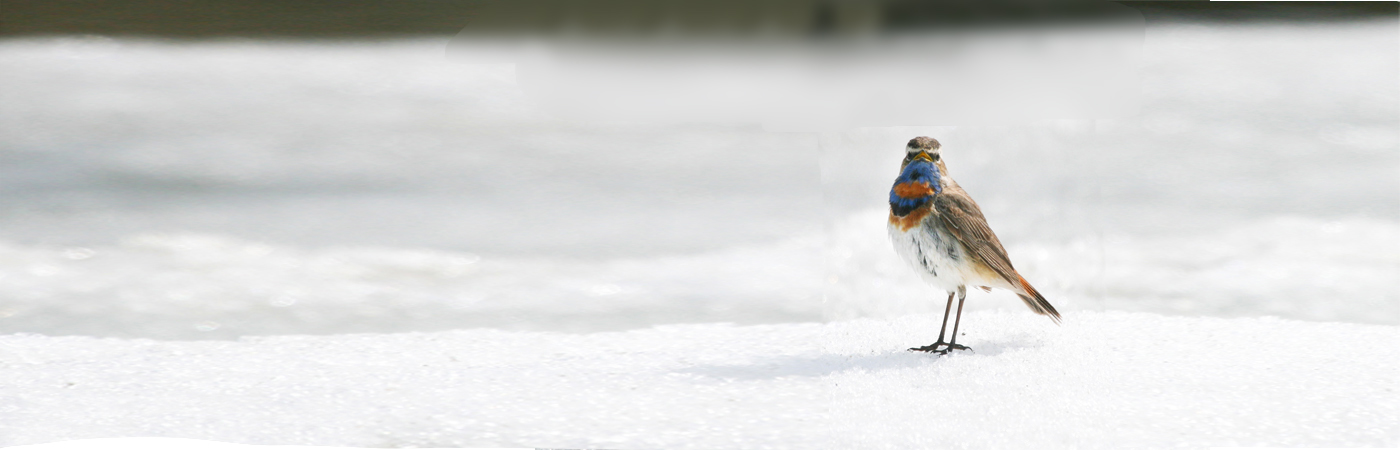



 Vinaceous Rosefinch
 Streaked Rosefinch
 Red-fronted Rosefinch
 Pink-rumped Rosefinch
 White-browed Rosefinch
 Blandford’s Rosefinch
 Pink-tailed Rosefinch/Przevalski’s Finch
 Three-banded Rosefinch


 Noted. It turned out to be a good day a for wacky signs.


