Today was a truly fateful day. Seeing me about the leave the house to begin local patch visit number 684, my 12-year-old daughter asked me, “Daddy, what do you hope to see today?” I didn’t think, the words “Yellow-browed Warbler” seemed obvious. “It’s a rare bird in Oxfordshire but there have been lots on the east coast and one or two might stop off inland. But I’ll take anything.”
Once out in Warneford Meadow, the overhead migration was obvious. Not huge numbers of birds, but first light saw Redwings and a few Meadow Pipits and Eurasian Skylarks flying overhead, beneath a light cover of cloud. As the cloud broke up and was replaced by blue skies and sunshine, Barn Swallows started moving. Nearly everything was heading south-west.
I checked the bushes around the meadow and then crossed the golf course. The large areas of scrub near the public footpath can attract migrant birds, but nothing prepared me for when I found myself very briefly locking eyes with what I felt sure was a Marsh Tit. There has been only one previous record of Marsh Tit in the last six years, this was not a bird that I wanted to let go. A few nervous minutes passed before it appeared again, this time giving great views for a few seconds in the scrub. Just like the first record, this Marsh Tit was very mobile, looking like a migrant passing through.
Chasing 40
Delighted with what was already a superb morning, I continued onwards, checking the Lye Valley woods, where a Eurasian Treecreeper was calling, and Churchill Meadow. By the time I was at the top of the Lye Valley, I had recorded 39 species, my best total of the year so far. But I also noted that I had been let down by some common species that I record on most patch visits: Blackcap, Stock Dove, European Herring and Lesser Black-backed Gull, in particular. With early morning gull movement over and Blackcaps becoming much less common by early October, I figured my best chance to get to 40 species today would be to walk back towards Warneford Meadow to try to add Stock Dove to the day list. For only the second time ever, I turned around and walked back across my patch and past the Churchill Hospital. How fate hangs on these small decisions.
A flock of 4 Great Cormorants passed overhead, taking me to 40 species for the visit and justifying my retraced steps. The small Boundary Brook valley is full of elder trees. Stock Doves sometimes perch up here, warming themselves in the early morning sun. I paused on the footpath by the hospital, scanning the elder trees. A small flock of Western House Martins flew over, and the first Eurasian Siskins of the year passed overhead, calling.
There is a movement in a nearby willow tree. It is a warbler. “That looks small,” I think to myself and I raise my binoculars:
The huge supercilium and the double wing bars that adorn this tiny green and white warbler, nearly knock me off my feet. “Yellow-browed Warbler!” my brain screams, as a wave of adrenaline washes over me. I fire off a few pictures as the bird pauses on the edge of the willow, a tiny visitor from Siberia:
The Lye Valley’s first-ever Yellow-browed Warbler then flies into the denser cover of the valley. Despite the intense levels of adrenaline, I start recording bird calls, just in case it calls. Fortunately, it does:
A few minutes later the Yellow-browed Warbler flies back to the willow tree where I first saw it, before returning again to the cover of the valley. I wait another fifteen minutes, but see or hear no further sign of the bird. I use this time to put the news out on the local Whatsapp group. Unfortuntely I did not see Stock Dove, but 43 species in a couple of hours in Headington is a fine haul.
Dream patch find
Yellow-browed Warbler is a dream patch find. Rare enough in the county to attract interest, but common enough nationally to be a viable target for local patch watchers. This was the first Yellow-browed Warbler in Oxfordshire this year and about the 26th ever, as per the county annual reports. The recent increase in records of this species is obvious:
In other times, I would have spent the rest of today drunk on champagne, celebrating a superb patch find. These days, I’ll just be smiling all weekend. After all, there is always tomorrow morning.
Google Translate version of the Falsterbo Bird Observatory blog from 9th September 2024, Swedish to English:
“Finally, a change of weather! The last time has been a bit stressful. Day after day of sunny and very hot. The wind has been steadily blowing from the cheese sector. In the morning sometimes reasonably weak, but then usually increasing to become healthy towards lunchtime.From Nabben, the counters have recorded fewer than 1,000 birds for several days in a row. It’s probably some kind of record low. Unfortunately, we have several groups of foreign visitors here right now. They get the wrong impression, as there are very few birds to see”
The confusion between the Swedish word for east (öster) and cheese (ost) produces a splendid mistranslation here. But this apart, spare a thought for those poor Falsterbo bird counters. Barely 1,000 migrating birds a day, producing record low numbers of migrating birds when the wind is in the east/cheese. For those of us with inland local patches in the UK, where nowhere near 1,000 migrating birds a year are seen, these record-low numbers still seem incredibly high. Context is everything.
Wanting to experience bird migration with an eastern flavour and on a greater scale than that which we usually see in the UK, Ben Sheldon and I arranged to visit Falsterbo Bird Observatory, at the very southern tip of Sweden. Ben knows Sweden well and despite denying that he is fluent in the language, he can happily chat away in Swedish, he knows all the bird names plus the slang name for Montagu’s/Pallid Harrier (Stängshök – a contraction of Stäpphök and Ängshök). Raptors are a particular attraction at Falsterbo. Last year Ben visited Falsterbo and saw fourteen species of raptor in a day, including all four species of Harrier within thirty minutes.
The week before saw a record-breaking 11,750 Tree Pipits recorded in a single day, with a nice backup cast of Citrine Wagtail, Ortolan Bunting and over 150 Honey Buzzards. We were not expecting those numbers to be repeated, but we hoped for some decent raptor and passerine migration. But then disaster: the wind turned to the east.
Easterly winds in September are high on the wish list of many birders in the UK, particularly those on the east coast. Migrating birds, on land and sea, are often pushed towards our shores from continental Europe, sometimes resulting in high counts or records of unusual birds. However, easterly winds do not bring joy to the birders at Falsterbo. What they want are light south-westerly winds. In these conditions, migration can be truly spectacular. Easterly winds hold up migration in southern Sweden, the stronger the wind, the more of a barrier it presents. Our first full day, Friday 6th September, was a hot 28 degrees, with strongly gusting easterly winds. Bird migration effectively ground to a halt.
We stayed at Falsterbo Bird Observatory, which provides self-catering youth hostel-style accommodation:
From the Observatory it is a 25-minute walk, or a 5-minute drive, towards the end of the peninsular. The watchpoint of Nabben is the base for the official bird counters and a pre-dawn gathering place for visiting birders. The counters start before dawn and are allocated different species to count. Even before the sun rises, the dominant species of Western Yellow Wagtail and Tree Pipit pass overhead, calling constantly.
A Nabben watchpoint sunrise selfie (TB left, Ben, right).
There is a large pool with wide muddy margins opposite the Nabben watchpoint. This area attracts many waders:
Common GreenshankPied Avocet
Over the sea, a Caspian Gull flew north and two Black-throated Divers, in fine summer plumage, migrated south:
Standing and listening
Eurasian Sparrowhawk migration was immediately obvious, with a regular stream of low-flying birds heading south down the peninsular all weekend:
Falsterbo is famous for its pipit and wagtail migration and even on a quiet day the calls of Western Yellow Wagtail (presumably mostly thunbergii) and Tree Pipit are constant. This one was screaming to make itself heard above a passing aircraft:
We recorded nearly 150Tree Pipits during our two-and-a-half days at Falsterbo. Whilst this would be a huge number by UK standards, by Falsterbo standards it was positively dead. Our 150 Tree Pipits were barely 1% of the 11,750 Tree Pipits recorded on the previous Tuesday: a 99% decrease in migrating Tree Pipit numbers! But even 1% of the peak Falsterbo migration is still greater than the number of birds recorded at most UK sites and it is always a joy to see and hear Tree Pipits:
We enjoyed birding next to the Lighthouse, at Falsterbo fyr. We spent several hours watching visible migration here and were joined by Liam Langley, his friend Vicktor and Richard Hall on Sunday morning.
The trees in the lighthouse garden provided shelter from the easterly wind, allowing us to hear flight calls more clearly. The trade-off was that this sheltered spot, filled with warm-blooded humans, provided the perfect feeding station for early morning biting insects. I had the novel experience of sustaining multiple mosquito bites through my long-sleeved shirt. Migration highlights here included a fly-by Wood Sandpiper, a few Western Marsh Harriers, an Osprey and a Red-necked Grebe over the sea, plus a Common Cuckoo, a Common Reed Bunting and the usual overhead stream of WesternYellow Wagtails and Tree Pipits.
Ben “no liquid, except coffee, shall pass my lips in daylight hours” Sheldon kept me well supplied with coffee. Here he pours out the holy liquid in the pre-dawn light, next to Falsterbo lighthouse.
Show me the honey!
Having spent the mornings watching and hearing gentle passerine migration, including 10 Common Crossbills over Kolabacken, we would then move the short distance to the large open heath at Skanörs Ljung. This is a well-known raptor watchpoint and we were joined by Ray Scally, who was also staying at the Observatory over the weekend. We spent a total of 7.5 hours here and eventually saw eleven species of raptor, but it was hard going. After standing for so long, we found ourselves throwing envious glances at those that had the foresight to bring portable chairs:
Chair envy at Skanörs Ljung
Finally, we saw some Honey Buzzard passage. Few sane adult Honey Buzzards were going anywhere in those winds. They were probably hunkered down in woodlands across southern Scandinavia digging out wasp nests, waiting for a nice south-westerly airflow. The few Honey Buzzards that we saw were all juveniles, with the vast majority being dark birds:
Dark juvenile Honey Buzzards over Skanörs Ljung
In some ways, this plumage most resembles Common Buzzard, although structurally they appear very different. This composite image from the weekend shows some typical Honey Buzzard shapes:
The long head and neck stand out, as do the long tail and bulging secondaries. We eventually had a close approach from this gorgeous pale juvenile Honey Buzzard:
Ben skilfully picked out a trio of Black Kites from one kettle of soaring raptors:
Juvenile Black KiteJuvenile Eurasian Hobby
Other raptors we saw here included Osprey, Western Marsh Harrier, Hen Harrier, Eurasian Sparrowhawk, Red Kite, White-tailed Eagle, Common Buzzard and Common Kestrel.
Birding The Bridge
We also explored Lilla Hammars näs, just to the north of the Falsterbo peninsular. This headland holds a large waterbird roost at high tide. We parked at the end of the wonderfully named Kumliens väg…
… before walking out to the headland, where thousands of waders, a huge gathering of over 600 Mute Swans, plus various other waterbirds including 12 Great White Egrets were all seen.
Lilla Hammers näs provided good views towards the Øresund Bridge. This 15 km-long structure links Sweden to Denmark. It’s a pretty special drive over the bridge, especially when the road leaves the bridge and descends into a tunnel under the sea, via an artificial island. But it is not a cheap drive. The full price bridge toll is 673 Swedish Krona, or £50, each way. We finished the weekend in Denmark, birding a wetland site near the airport, shamelessly padding out our Danish lists on eBird.
Western Marsh Harrier and the Øresund BridgeEuropean Golden Plover
It is always something of a risk visiting a migration watchpoint, you are at the mercy of the winds and the weather. We were unlucky to visit Falsterbo during a period of strong easterly winds, which temporarily held up much bird migration. But the great thing about Falsterbo is that even when it is operating at only 1% of its potential, it is still a fabulous place to witness bird migration. Our next mission: to return in weather more conducive to bird migration to experience Falsterbo at something nearer 100%.
The eBird trip list for the weekend can be found here.
Good weather to find migrating birds inland, is not good weather. The wind must swing around to the compass’s cooler side, ideally the east or north-east. The clouds need to roll in and frequent showers help ground birds that would otherwise pass high overhead, undetected. Good weather for cycling is rather different. Light winds, moderate to warm temperatures and dry roads are the cyclist’s dream. So, if you want to find lots of good birds by bike in Oxfordshire, you need to be prepared to brave the elements. Or see nothing.
I am very experienced at seeing nothing. I did Big Days in 2017 and 2018 that saw glorious, hot sunny days with blue skies, but with precious few birds. We crawled to a total of 104 species in 2017 and 106 species in 2018.
Ben Sheldon, Thomas Miller and I first discussed doing an Oxfordshire Big Day early in 2023. This Big Day would be different. We would not use a car, but would rather see how many species of bird we could record in Oxfordshire, just using our bikes. Unfortunately, I was unavailable at a family wedding on the best date that they could both make in late April 2023. Ben and Thomas spent a full day in the field and saw an incredible 112 species as a team, all by bike. This was only just short of the all-time record of 117 species, set by Wayne Paes, Tom Wickens and Manoj Noir on 9th May 2021. We were sure that the record could be broken by a team using just bikes, providing the weather cooperated. We agreed to set aside the weekend of April 27th and 28th for our 2024 Big Day attempt and would make a decision on which day to use based on the weather forecast.
The forecast leading up to the weekend changed on a daily basis. Like most of the spring of 2024, it would be cool to cold. The winds were forecast to swing around to the north-east on Friday evening. Cloud cover was guaranteed. And there would be rain. How much rain was forecast seemed to vary between the different weather forecasts. All agreed there that would some light rain at first on Saturday, but that Sunday morning would be dominated by a heavy band of rain. We agreed Saturday looked best and made plans for a Big Day on Saturday 27th April. Then on Friday night, the forecast changed, predicting a very wet end of the day, as well as the beginning. We gritted our teeth and decided to stick with Saturday. Sunday looked even worse.
I opened my front door at 04:15am on Saturday morning. The petrichor was strong in my nostrils, and it was beginning to drizzle. I could smell the rain. I cycled down to The Plain roundabout, at the bottom of the High Street in Oxford, and met up with Ben and Thomas. At just after 4:30am we began the hour-long ride out to the Chilterns. The rain caught us before we had left Oxford. By the time we passed Stadhampton, some 10km/6 miles from Oxford, we all had soaking wet feet. I had hoped that the moment that I became soaked through would happen much later in the day than this. By the time we began the long hill up past Watlington and onto the Chiltern escarpment, we were all drenched and the temperature was only just above freezing.
Watlington Hill is a well-known climb amongst local cyclists. The first section is quite steep and favours the stronger, lighter riders. Everyone goes up it at their own pace. Thomas led the way, being a strong cyclist and a good climber, I followed next, followed by Ben, laden with a rucksack containing a small scope. There is always a nice feeling of satisfaction on completing the climb. Thomas and I waited at the top and Ben cycled up towards us, but with some horrifying news. Halfway up the hill, a Long-eared Owl had flown across the road in front of him. Climbing Watlington Hill in the pitch dark and freezing rain is painful enough. To miss what could be the bird of the day, and so early in our Big Day attempt, was excruciating. As all three of us had not seen the owl, we could not count it in our team total. Things went from bad to worse, as our first stop, for a scarce local breeding bird, was a failure and we did not see or hear it. Things then went from worse to downright dangerous. On top of the Chiltern escarpment, the cold north-easterly wind was strong, chilling our wet bodies to the bone. I have never felt so cold and so wet on a bike.
We cycled to Cowlease Wood to get some woodland species at dawn, but by the time we arrived, Thomas was going hypothermic. He was shaking like a leaf and was unable to use his hands to change from cycling to walking shoes. Ben had an emergency down jacket in his backpack and gave it to Thomas to try to raise his body temperature. Hypothermia commonly causes impaired cognitive function. I could tell that Thomas was beginning to lose it, because a short while later he said that he thought he had heard a Redpoll flight call.
We began birding, whilst I tried to keep the thoughts of hypothermia from my mind. I tried to use eBird to record the species that we saw, but I could not feel or use my fingers. Birding was also made difficult by the sheer number of Firecrests singing. This species has dramatically increased in the county over the last twenty years. It was hard to hear anything behind the curtain of constant Firecrest song. Then Ben said “Redpoll!” Was he going hypothermic too? I tried to blank out the high-pitched screaming from the Firecrests and there, in a rare quiet moment, was a classic Redpoll trill. A singing male Lesser Redpoll, and even better, a flyover Siskin too. Two species that we had not anticipated recording in late April. Singing Mistle Thrush, Nuthatch and Treecreeper also added three species onto our list that can be tricky on Big Days. As it turned out, we found at least 10 Lesser Redpolls in the woods, including several singing males.
We cycled back to our scarce local breeder, who finally showed itself and then we began the ride to the Oxon Downs in the south of the county. The rain had stopped, the cycling warmed us up and we were seeing birds. What could possibly go wrong?
Despite smashing into a submerged pothole and puncturing my front tyre, our visit to the Downs was productive. There are not many pairs of Stonechat or Meadow Pipit breeding in the county and a Tree Pipit was a real quality bonus, as was a Wheatear and a flyover Cuckoo. However, our misses here balanced out the positives. Despite much scanning of an appropriate area, we could not pick out a Stone Curlew and we did not see Grey Partridge either. We met up with Tom Wickens, who had provided us with much invaluable information beforehand, was doing his own personal Big Day by bike and was carrying his own ‘scope. Incredibly, he was braving the sub-zero windchill and regular rain showers in shorts:
From the Downs we headed back into the flatlands and visited Appleford Gravel Pits. Open water brought a rapid increase in our trip list with a few Swifts and all the hirundines present, plus Little Grebe and our only Grey Wagtail of the day. A flooded field between Didcot and Abingdon looked superb and produced our first waders of the day: 3 Little Ringed Plovers, a Green Sandpiper and a first-summer Ringed Plover, expertly picked out by Ben and Thomas. A fine male Yellow Wagtail took us to #84 species, just after midday.
Then there was the second-longest ride of the day, to Farmoor Reservoir, where news had reached us of Little Gull and Arctic Tern passage. Sure enough, both species were on F1, three fabulous summer-plumaged adult Little Gulls and at least 2 Arctic Terns, both great species to pick up on a Big Day:
The café at Farmoor provided much-needed hot food and coffee, before we walked over to the Pinkhill hide and the River Thames. 4 Common Sandpipers were on the bank of F1 and 2 Snow Geese flew over, a feral surprise. There were no Kingfishers visible from the hide, but one was calling and briefly glimpsed on the Thames, our only Kingfisher of the day. A singing Garden Warbler at Pinkhilll was species #93, as we left Farmoor for Wytham Woods. Could we get to Otmoor with 100 species already seen? If so, we knew we would be on course for a great day total.
Despite it being after 2pm we had not seen or heard a Green Woodpecker, so it was a relief to hear one yaffling at Wytham, where Marsh Tit and Little Egret were also added.
We skirted around the north part of Port Meadow, but failed to pick up any Cattle Egrets, despite some being present all week. We met Adam Hartley at the Port Meadow floods, in a very efficient five-minute stop where we added 2 Great White Egrets, Shelduck and our only 2 Dunlin of the day.
2 Ring-necked Parakeets in Marston Meadows became species #100, as we began the cycle ride out to our final destination: Otmoor. We were on target.
We started on the Oddington side, scanning the flood field for waders, ducks and gulls. I had become aware that it was very reassuring to have one of the country’s leading gull identification experts with you on a Big Day. If there was anything slightly white-headed or immature in the gull department, we just pointed Thomas Miller at it and waited for an identification to come out. So, I was completely shocked when, as he scanned the Otmoor floods, he declared “What sort of gull is that?!” I was flabbergasted. It must be NEW TO SCIENCE! Further examination revealed a first-summer Black-headed Gull, half a mile away, with the sun behind it and mostly hidden in vegetation. These amateurs, eh?
The flood field was very productive. Wigeon and Pintail were new ducks; Grey Plover, Curlew, Black-tailed Godwit and Redshank were new waders. An unringed Eurasian Crane was present and there was a Barn Owl perched in a hedge.
By 7pm we were on the Otmoor bridleway, having seen 108 species, more than either of my car-based Big Days. We were now trying to get as many species on the list before a heavy band of rain moved in and dampened down bird activity. We saw the Otmoor Barnacle Goose, finally connected with a calling Bullfinch, before a Peregrine became species#111. We walked up to the screens and added Pochard, a booming Bittern and a Marsh Harrier. It took a while, but eventually we heard a squealing Water Rail and at least 2 Grasshopper Warblers began reeling in the carpark field.
As the light went and the rain started, we were on 116 species, including two species of feral geese (Snow and Barnacle) and an unringed Eurasian Crane. We had not heard or seen a Snipe yet, so walked back towards the Wetlands Watch hide. Eventually, in little light, we heard a Snipe singing, and then one drumming too. This species took us level with the 2021 record total of 117 species. Then, a superb end-of-day magical moment was provided by Thomas finding a Short-eared Owl quartering The Closes. Species #118 for the day, the most species seen in a day in Oxfordshire and all recorded by bike and on foot!
Could we go further? In total darkness and pouring rain, the day ended as it had begun. We cycled back into Oxford in the rain. We gave the Lye Valley Tawny Owls a few minutes to call, but it was always a long-shot in the heavy rain. We finished, tired but very happy after 142km/92 miles cycled and some 16km/10 miles walked, on 118 species. With Ben’s Long-eared Owl flypast and Tom Wickens hearing a Tawny Owl on the way home, 120 species were recorded in Oxfordshire on 27th April 2024 by just the four of us, using only bikes.
One of these men is not called Tom, but between them they have seen 120 species in Oxfordshire in day. Left-to-right: Ben Sheldon, Tom Bedford, Tom Miller & Tom Wickens. Otmoor at dusk, 27th April 2024.
For comparison, a combined across-county effort by birders in neighbouring Buckinghamshire on the same day, produced 124 species, only four more species than our small group of bike-powered birders in Oxfordshire. We did not see Cattle Egret, Red-crested Pochard, Stone Curlew, Grey Partridge, Hobby, Sparrowhawk, Redstart or Whinchat in our total, so there is still scope for the record to be extended. If the record is broken again, those involved may have to endure similar weather. May they suffer less than we did!
Many thanks to everyone who helped us out with information and scouting, both before and during the Big Day, and the support from the local birding community. Ben has helpfully provided the list for the day:
(Well spotted, Linnet does appear twice on this list! One of the entries should read “Jackdaw”, so the overall total is not affected).
I began exploring the Lye Valley area in early 2019, following a serious running injury, which meant that my first few visits were on crutches. The Lye Valley area is an eclectic mix of habitats, containing what was “Oxfordshire’s first lunatic asylum“, a WWII hospital, a golf course and an 8,000-year-old alkaline fen with Special Scientific Status. These are not typical habitats for finding a variety of birds and there was no open water, but the position of the Lye Valley area, in an elevated location on the edge of a small escarpement overlooking east Oxford and the River Thames, meant that some migrant birds might be found too.
With regular coverage, a surpringsingly diverse selcetion of bird species were recorded, including the first county scarcity, a Pied Flycatcher, found in August 2019 with Dave Lowe. This new booklet, published by the Oxford Ornithological Society, describes the birds found in this green corner of urban east Oxford over the period 2019-2023.
Here is a little preview of this new report:
This new booklet uses data from over 800 eBird checklists submitted during the 2019-2023 period to describe the occurrence, arrival/departure dates and high counts of local breeding birds. As hoped, this green area surrounded by housing and hospitals also attracted a variety of migrant birds. Through their migration routes, these birds connect urban east Oxford to sub-Saharan Africa in the south and to the Arctic tundra in the north. The Birds of the Lye Valley Area draws all these bird records together, beautifully illustrated by the author’s photographs. Or so he tells us. Order a copy today! This bird report is a not-for-profit publication, any surplus funds raised from sales will go to the Oxford Ornithological Society.
Having equalled my all-time total of 81 bird species recorded in the Lye Valley area of Headington in 2022, what would 2023 bring? This area (the Lye Valley LNR, Southfield Golf Course, Warneford Meadow and the Boundary Brook Wildlife Corridor) is surrounded by the housing of east Oxford and has the Old Road Campus and the Churchill Hospital within it. I have had an MRI scan and COVID-19 vaccinations on my local patch, bringing new meaning to the concept of total birding.
January 1st 2023 could have hardly begun any better: 40 species recorded, my best on this date, and a new species for the area – Firecrest – all in the first couple of hours of light. The checklist is here. That the first visit produced 45% of all the bird species that would be recorded in the whole year says much about the variety of urban birding and the patience needed. That first day also saw a flyover Skylark and a wintering Chiffchaff, neither guaranteed in January:
A bitterly cold spell in the second-half of January, covered the local Moorhens in ice…
… but brought in some common winter birds, such as Redwings:
There were also uncommon visitors. The second Common Gull ever flew over, and a Snipe was seen on several visits. January 23rd was a Lapwing day, with 58 flying south in small flocks:
There then followed a superb burst of good birds. Steve Sansom glimpsed a Water Rail on 24th, and I managed to relocate it the following morning, the first for the Lye Valley area:
Two Goosander flew over on the 28th, yet another second-ever record here, one of the themes of the year. This brought the January total to 55 species, and already 63% of the total number of species for the year had been recorded:
February was much quieter, but more new species for the year were added in March, with a flyover flock of Golden Plover on 8th and the beginning of waterbird migration which saw Canada Geese and Cormorants overhead and this Little Egret on the golf course:
And there were Grey Herons, both adults and young birds:
1st April saw the first trans-Saharan migrant arrive, a Willow Warbler, but the spring of 2023 turned out to be desperately quiet, with the only bird of note being a Brambling on April 17th:
Local breeders were all that I had to show for near-daily effort between mid-March and early May:
2023 was a good year for Garden Warblers, with one pair probably breeding:
It was superb to be able to hear Garden Warbler song on most visits between early May and early June:
With the addition of the common Warblers, Swift and Hobby, the year list stood at 74 species by 31st May, the highest total ever reached by this date. This total included the second patch record of Egyptian Geese, as a pair spent a long weekend on the golf course:
But as is often the case, the period between late May and August, the “death zone”, produced no new birds at all. I was reduced to photographing other things:
Fox cubEmperor Dragonfly, devouring a Small Copper butterflyI saw this Magpie, presumably feeding on ticks on this male Muntjac, on several occasions. Juvenile Green Woodpecker
The local Sparrowhawks had a successful season, fledging three young. Only when the first week of August arrived, and with it a returning Lesser Whitethroat, did the year list move on. An excellent January had been followed by a quiet spring and summer, but then came a truly astounding August. A number of Yellow Wagtails were heard and seen flying over. This year I made more efforts to record the flight calls of migrating birds:
This recording of a flyover Yellow Wagtail came out nicely. I like the way the flight call emerges from a background of calling Blue Tits and lawnmowers on the golf course, before the bird passes overhead, typical August birding here:
Nothing prepared me for the next three weeks. On 17th August I found a Corn Bunting on Warneford Meadow, the first Oxford city record since 1980 and the third new species for the Lye Valley in the year. It was quite a moment:
August 30th saw my first, and the Lye Valley’s second, Redstart. It very nearly stayed for a photo…
… and 2 Spotted Flycatchers on the same day:
Both these birds were eclipsed by a superb Pied Flycatcher, the second I’ve found in the Lye Valley area and found on my birthday and was the 81st species for the year, equalling my previous best annual total, so all the more sweet! This bird was one of only three seen in all of Oxfordshire during 2023:
A new Lye Valley area species total was set on September 16th when this Reed Bunting flew over calling. They all count!
The decline of House Martins across the county is very sad. This species has only been recorded in late September in recent years, as small flocks migrate south, passing low overhead in the first few hours of light. This year birds were recorded on September 20th and 23rd. A flyover Lesser Redpoll was species number 83 and was the last regular species that I needed… unless I got lucky with a Woodcock in the autumn. Then a couple of real surprises lifted the total to phenomenal heights. First, a Great White Egret circled over Churchill Meadow, followed a few days later by not one, but two, Great White Egrets and a Little Egret, amazing records for an area with no standing water:
Another flyover finch, the Lye Valley’s second Linnet, was seen and recorded flying south on October 23rd, species number 85:
There was also some decent Woodpigeon migration, with a peak movement of 920 birds in 90 minutes on 20th November:
I only had one target for November: Woodcock. Nearly all the previous Lye Valley records have been in this month, all four of them. On November 18th, in pouring rain, after much tramping through wooded areas, a Woodcock lifted from the ground under the trees by Boundary Brook stream, species number 86 for the year. And that was that. Or so I thought. I still visited regularly throughout December, but held out no realistic hope of adding another species. On December 27th, again in the rain at dawn, I splashed across a very wet Warneford Meadow and was astounded to flush a snipe, from just in front of me, on the edge of this wet patch:
In 573 previous patch visits, I have not flushed a snipe from Warneford Meadow. Even better, this bird looked tiny, rose silently, and flew low and direct into the long grass in the background. Surely this was a Jack Snipe? I walked towards the grass and the bird rose again, this time I got binocular views of it, and noted no obvious white on the trailing edge of the wing and two prominent gold scapular streaks. I thought it would land again, but at the last moment, it lifted off the meadow and flew north, at rooftop height, a stonking garden tick for somebody, if they were quick enough. An end-of-year surprise, species number 87 for the year, a cracking Jack Snipe!
What a year. I visited the Lye Valley area 153 times in 2023, recorded 87 bird species, three of which were new for the area (Firecrest, Water Rail and Corn Bunting). I walked some 800km, or 500 miles, and spent over 230 hours hours birding there. It has been a constant source of joy. Except for the Death Zone. Next year I will walk 500 miles more and will see what I can see. There is a song in there somewhere.
Whilst at work last week, I popped outside of the building to take some meter readings, only to find that there was a flock of 15 Ring-necked Parakeets in the tree at the back. A few local birders have suspected that the parakeet roost that held over 40 birds last winter in north Oxford, had moved into east Oxford. Ring-necked Parakeets seem like much more of an east Oxford kind of bird, so it felt appropriate to see them on this side of town. But where was the roost site?
I saw the flock of 15 birds fly over the building and leave to the east, but I lost sight of them behind the local houses. Intrigued, I kept an eye open at dusk on the following few evenings and discovered that a large flock of parakeets routinely gathered in an alder tree on Henley Avenue, visible from my workplace. There were a lot of birds. On December 12th, I counted at least 56 Ring-necked Parakeets in the top of the tree:
Birds arrived from about 15:30 in small groups and gradually worked their way up to the top of the tree, calling noisily. At 16:25, in near-darkness, the entire flock left and flew to roost in a couple of tall conifers in the back garden of a house on the corner of Florence Park Road, a short distance away. Both the pre-roost tree and the roosting trees are marked on this map:
I think this is the highest count of Ring-necked Parakeets in Oxfordshire to date. Birds have been breeding in the city for a few years and from the numbers present at this roost site, the local population is clearly doing well.
Despite being an introduced species, and one that may present some challenges for some native bird species, I always enjoy seeing and hearing parakeets. They are brightly-coloured and charismatic birds. The pictures below, taken in London, show the faint pink neckband on male birds that gives the species their other common name, Rose-ringed Parakeet. The tail is blue on the upper surface and yellow underneath and their grey-blue irises are also pretty cool:
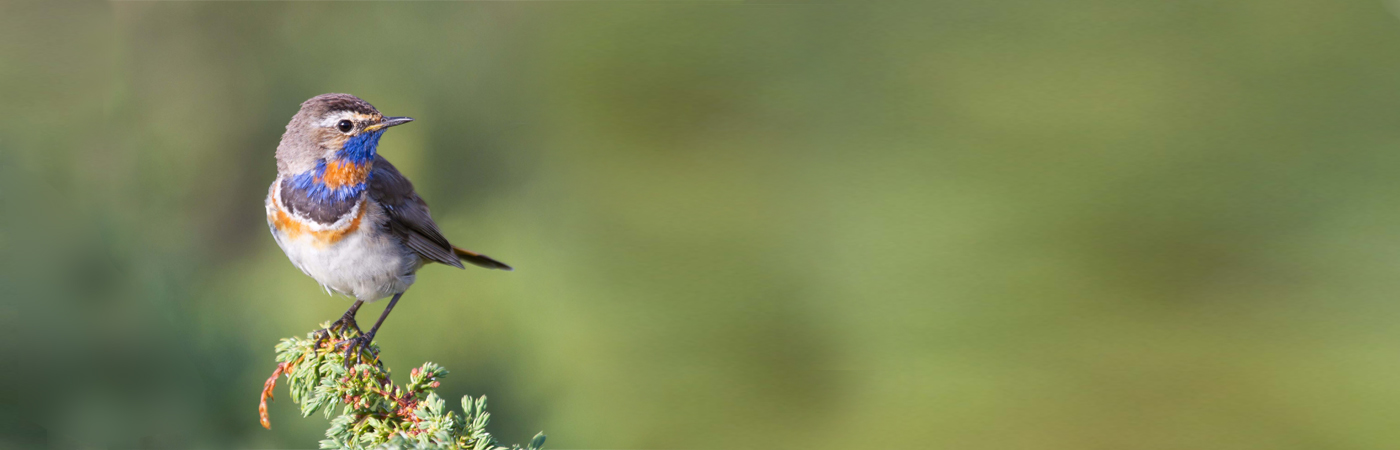
Andy Last and I spent the final days of September and the first days of October on Shetland, taking the ferry from Aberdeen to Mainland. Having arrived in Lerwick, we took in some of the best birds in the town itself. Birding in Shetland can be a bit surreal at times and this year was no exception. Things started with something slightly blue, in a dung pile:
Bluethroat
Followed by something citrine, all wrapped up in a cloak of grey and white, on a nearby football pitch:
Citrine Wagtail
Was this the most costly Tescos visit ever?
We then made our way to the local supermarket to stock up on supplies to take with us to Unst, the most northerly of the Shetland Isles, and our home for the week. We had just entered the fruit and vegetable aisle when monumental news reached us: there was a Blackburnian Warbler at Geosetter.
With hindsight, our decision to casually finish our shopping before going to see the bird was a mistake. Whilst our bodies appeared calm, our minds were in a state of utter chaos, as we attempted to remember what food we needed, through an adrenaline haze of double white wing bars, black and yellow. This was also reflected in the bizarre contents of our shopping trolley. I asked the question of Andy, what would our friend Dave Lowe do? We already knew the answer. Dave would drop the shopping basket at his feet and take the most direct route to Geosetter, even if this meant punching a hole in the plate glass windows of the store. Think Terminator.
But we took the risk, finished our shopping, and then drove to Geosetter. Almost immediately we realised we had made a mistake. Having performed brilliantly for fourty five minutes, Britain’s fifth-ever Blackburnian Warbler had flown from the more open area near the top of the ravine, into the impenetrable scrub of the lower section. Unsurprisingly, it had not been seen since. We experienced a nasty feeling of despair, rising like an anxious tide. Was this the most costly Tescos visit ever? We forced patience. We joined those searching for a small bird in dense cover. Half an hour passed, with no further sign of the bird. Then another half hour. We scan through the dwarf trees and shrubs again and again. By now our decision to keep shopping was looking catastrophic. I decided to climb to the top of the ravine, I look back and take this picture of Geosetter:
Then there is someone waving in my viewfinder. I put the camera down. He is still waving. I look down at him, at the bottom of Geosetter. A birder has both arms above his head and is waving. This can only mean one thing. “WAVING” I shout at the nearest birders, whilst pointing down the hill at the waving man by the edge of the cover. Everybody looks up at me and then starts running away. Running to him. He has the Blackburnian. And moments later, so do we:
It was not the bright yellow face and breast or the double white wing-bars that struck me most when watching this bird move through the vegetation. It was the sheer amount of white in the tail. The outer two pairs of tail feathers were almost entirely white, creating bright flashes as it flicked around:
The sheer blinding luck of it. We had only been on Mainland a few hours and already had an American warbler in the bag. Plus we had completed our shopping. The pressure was off. We began making our way north towards Unst, taking in an Arctic Warbler on Yell on the way, just to remind ourselves what a proper Eurasian phylloscopus warbler should look like. Very nice it was too:
Then we began our stay on Unst. Our days often began at Hunter’s Wood, a scrubby field with a few dwarf birches and willows in central Unst, near our accommodation:
This area often held migrants and we enjoyed our birding here. We had Tree Pipit, Wheatear and Whinchat on our first visit; Andy found a nice male Crossbill and a Barred Warbler on our second visit, plus there was a Spotted Flycatcher, a Lesser Whitethroat and a flyover flock of Snow Bunting later in the week.
Male Common CrossbillFirst-winter Barred Warbler
Elsewhere, I found a Little Bunting on the road to Valyie, an individual with a strangely long deformed bill (the Little Bunting, not me):
Little Bunting, big bill.
We also flushed an unstreaked acrocephalus warbler from the burn at Burrafirth. This bird didn’t play ball though, we had four brief flight views (noting the lack of a rufous rump) and then it was gone, flying strongly south.
Hunter’s Wood also illustrated the importance of favourable winds when birding Shetland. Some southerly winds had deposited migrant birds in Hunter’s Wood at the beginning of the week but then began days of relentless, blasting south-westerly winds. The migrants that were initially present on the island moved on, but nothing replaced them. We recorded 18 species on our first visit to Hunter’s Wood, 23 on our second, but only 11 on our third, and a meager 7 species on our fourth visit. By the end of the week, Unst had a strange birdless feel, and even common migrants could not be found.
We left Unst to see the Veery at Luna, in north-east Mainland. This lovely new world thrush was a delight to see, feeding happily in the leaf litter under a small row of sycamores. We both agreed, that despite some serious competition, this was our Bird of the Trip:
Veery
Just a hint of a yellow juvenile gape was visible, evolved to stimulate its parents’ feeding response. Would it ever see another Veery again?
Find the snowman.
Our week on Unst came to an end and we travelled south early on October 3rd, with plans to search for the adult male Snowy Owl that had been reported from Shetland’s highest hill (450m) the previous evening. We joined perhaps five or six other birders, searching the alpine-like landscape of Mid-Field, up on Ronas Hill:
There are a lot of rocks up there. And more large white lichen patches than you may think. The cloud base was just below the summit, visibility came and went. We kept searching, coming across Mountain Hares, hiding in the rock field:
Eventually, once again, someone is waving. We walk down the north side of the hill to where the fabulous Snowy Owl has been located:
Male Snowy Owl
No stranger to harsh weather, the Snowy Owl had chosen a spot fully exposed to the north-westerly winds powering in from the Atlantic Ocean, but it seemed unconcerned, as we admired it from afar, a fabulous end to a memorable trip.
Watching the Snowy Owl.
Our complete trip list, with more photos and audio, can be found here.
After the lull in migratory bird movement that is June and July – a period that I just about get through with gritted teeth – August brings more hope. The species that I target are Yellow Wagtail, Spotted Flycatcher and Tree Pipit. None are guaranteed in urban Oxford, but most years see one or two records of some of these species. Passerine migration kicked in early in the Lye Valley this year, with small numbers of juvenile Willow Warblers and the first Lesser Whitethroat of the year all being recorded in the first week of August. The first of the scarce August trio fell on 9th August, when a Yellow Wagtail flew over Warneford Meadow, calling loudly. There was then another quiet period, although large roving flocks of Tits, Chiffchaffs, Blackcaps and Willow Warblers kept up interest. Almost as soon as we entered the second half of August, I struck patch gold. A chunky-looking brown finch was flushed by a dog walker on Warneford Meadow. The movement and the call instantly attracted attention: a hard “tic, tic, tic“, a call like nothing else I had heard on the meadow in over 500 visits. Fortunately the bird perched for a few seconds on a distant oak:
A Corn Bunting! Almost as soon as I said the words, it took off and flew strongly south, over the golf course and away:
Although Corn Bunting now breed quite close to the city, records from within the ring road are exceptionally rare. There are no Oxford city records of Corn Bunting on the OOS database or on eBird. Asking around within the local birding community revealed that the last confirmed record of Corn Bunting in Oxford city was a breeding record in 1980, some 43 years ago! (Bayliss (1982) per Ben Sheldon). Ian Lewington commented that this looks like a juvenile bird, perhaps engaging post-breeding dispersal. Many thanks to Ian and Ben for their input.
My adrenaline levels had only just recovered, when two days later, on Saturday 19th August, I heard a loud clear flight call, the classic high-pitched, buzzy “tzeep“, from a migrating Tree Pipit. Looking up revealed two pipits flying south-west, not that high above trees of Warneford Meadow. I used to try to photograph flyover migrants, but in many ways a recording of the flight call is more definitive evidence of the identification. The challenge of recording Tree Pipits is that they go over quickly and don’t call constantly. As soon as I heard the first flight call, I hit record on my phone, but by the time the birds called again they were too distant for my phone to pick up the call clearly.
Nevertheless, I was stoked, the second of the August trio had fallen and this was the earliest Tree Pipit I have recorded here by two days, plus the first record of more than one bird. Overall, this is the seventh Tree Pipit record at this site over the last four years, some details of the other records are here. Now for Spotted Flycatcher to complete the set!
The Chartreuse Massif lies to the north of Grenoble and with the Vercours Massif, forms part of the pre-Alps:
In the picture below is Rob, one of the finest of men. He and his partner Am are building a house on the massif and are about to start a new life in the mountains above Grenoble.
The local bird life is typically alpine, with Black Redstarts being common and a pair are already nesting on Rob and Am’s house:
Their land also holds breeding Red-backed Shrikes, White Wagtails, Goldfinches and Greenfinches.
Red-backed Shrike
Ravens and Kestrels are frequent overhead, with the occasional larger raptor, such as Golden Eagle, being seen. Buzzards and Black Kites are the default medium-sized raptors:
Black Kite
One weekend we camped out, the valley below us illuminated by the lights of Grenoble. Tawny Owls were very vocal in the local woods. It was fantastic to hear a pair duetting, using the “xylophone trill” call, as described in the Collins Bird Guide, just audible on this recording at the 3-second mark, above the huge number of insects calls:
Higher up on the Chartreuse Massif, there were spectacular views from the ridges:
The view from the Fromagerie du Charmant Som.
There were large flocks of Alpine Choughs, totalling over 60 birds, up here. Some calls can be heard here, with cowbells ringing in the background:
Calling Alpine Chough
Further north is the fabulous Cirque de Saint-Même, a huge natural amphitheatre towering into the sky, with many waterfalls cascading down:
At the top of the cliffs, flocks of Alpine Swifts fed above the tree tops:
Some birds had visibly bulging crops, presumably they breed on the uppermost cliffs:
Alpine Swift, with a full crop of insects.
Favouring lower altitudes, a few Crag Martins fed amongst the Alpine Swift flocks:
Crag Martin
On the way back through central France we visited the grave of Conrad Wenyon, an uncle on my mother’s side of the family. He was a wireless operator in the Royal Air Force, but was killed when his Lancaster was shot down over Bourges in July 1944, as the Allied forces moved through France after D-day. The pilot, Harry Taylor, survived and submitted this report on the loss of the aircraft:
“I abandoned the aircraft at approximately between 400 to 600ft. Unfortunately I did not give the order to abandon aircraft as the intercom failed as soon as we were hit. However I informed the Engineer and Navigator by visual means. Whether the Navigator informed the Wireless Operator I am unable to say. I am also unable to say whether anyone baled out of the rear exits or not. I was unable to approach the persons whose parachute had not fully opened as there were several people around him and consequently I am unable to identify him. The whole of the port wing was on fire and I was unable to put it out by the Graviner switches. I believe it must have been the petrol tanks that exploded”. From the Aviation Safety Network website.
Whether our relative was killed as the aircraft crashed, or whether he was the unfortunate soul who baled out of the aircraft only for his parachute did not open, we will never know. What we do know, is that Conrad was of a generation with the terrible luck to be born to be of fighting age in a time of world war and sadly he paid the ultimate price.
“Through adversity to the stars“, the RAF motto.
The trip report of all the bird species that we saw in France, plus photos and sound recordings is here.
We drove from England into the super intense heat wave in southern Europe. By the time we reached Grenoble, temperatures on the road were high enough to make it frightening to get out of the car:
On our first full day in Grenoble, the severe temperatures generated thunderstorms. The wind felt like a hair dryer on the hottest setting, blasting hot air onto our faces. Pitch-black cumulonimbus clouds swirled above us before unleashing an incredible hail storm, with massive hail stones:
There was only one way to go: up. We headed up into the mountains, where the elevation is slightly cooling, bringing the temperatures back into the mere 30-degree celsius range.
Lac Achard
We walked up through the pine forests from Chamrousse to Lac Achard, at just over 1900m elevation. But even at this altitude, the crushing heat was oppressive. Instinctively we only stopped in patches of shade, grateful for the trees:
The lower meadows, just above Chamrousse, held a small flock of Citril Finches, dropping down to feed on seed heads:
There were small flocks of Common Crossbills in the pines, always vocal and mobile:
A nice female alpestrisRing Ouzel was collecting food on the path, the white-edged flank and undertail feathers just visible, forming a chequered effect:
Spotted Nutcrackers were in the forest. We had a number of flight views, but heard them calling regularly:
By the lake were singing Lesser Whitethroat and Blackcap and these Alpine Choughs dropped in, serenading us with their electronic flight calls:
My next mountain ascent was by bike, up and around the incredible balcony road of Combe Laval, in the Vercours massif. This is not a road for the vertiginous. There is a vertical drop of 500m/1,500 feet on the other side of this low retaining wall:
Alpine Swifts zipped past at eye-level and a pair of Kestrels were feeding noisy young in a nearby nest. The scenery and views were breathtaking:
But the real cycling challenge was the climb up from La Chambre to the Col de la Madelaine, at 2000m elevation. This 19km climb at an average 8% gradient is a climb that has featured many times on the Tour de France. On the final stage of the ascent, as I left the treeline, I became aware of birds calling. There were calling Water Pipits, joining the background chorus of Eurasian Skylarks, Meadow Pipits, Linnets and Goldfinches. I pulled over and made a recording of the Water Pipit calls, a recording that was ruined by my audible hyperventilation as I completed one of the hardest climbs in the Alps at high altitude!
The views from the summit were incredible, with the Mount Blanc massif visible to the north. As I drank in the views, a Quail began calling from the vegetation in the foreground, a real surprise at 2000m elevation:
Mont Blanc, 4807m, as viewed from Col de la Madeleine at 2,000m
Next: the Chartreuse Massif; life and death in the French skies.