French Alps 2: the Chartreuse Massif & life and death in the skies of France.

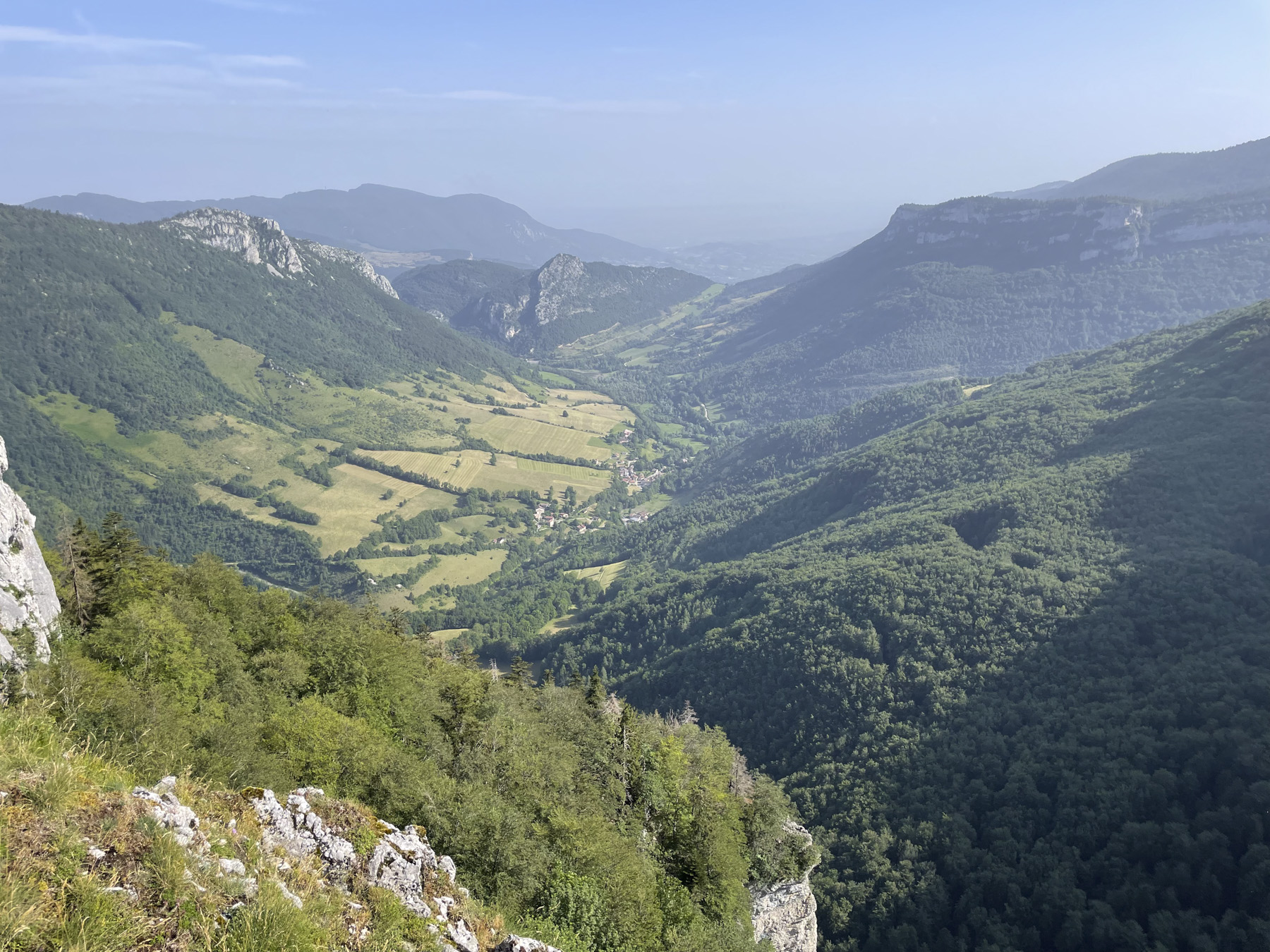
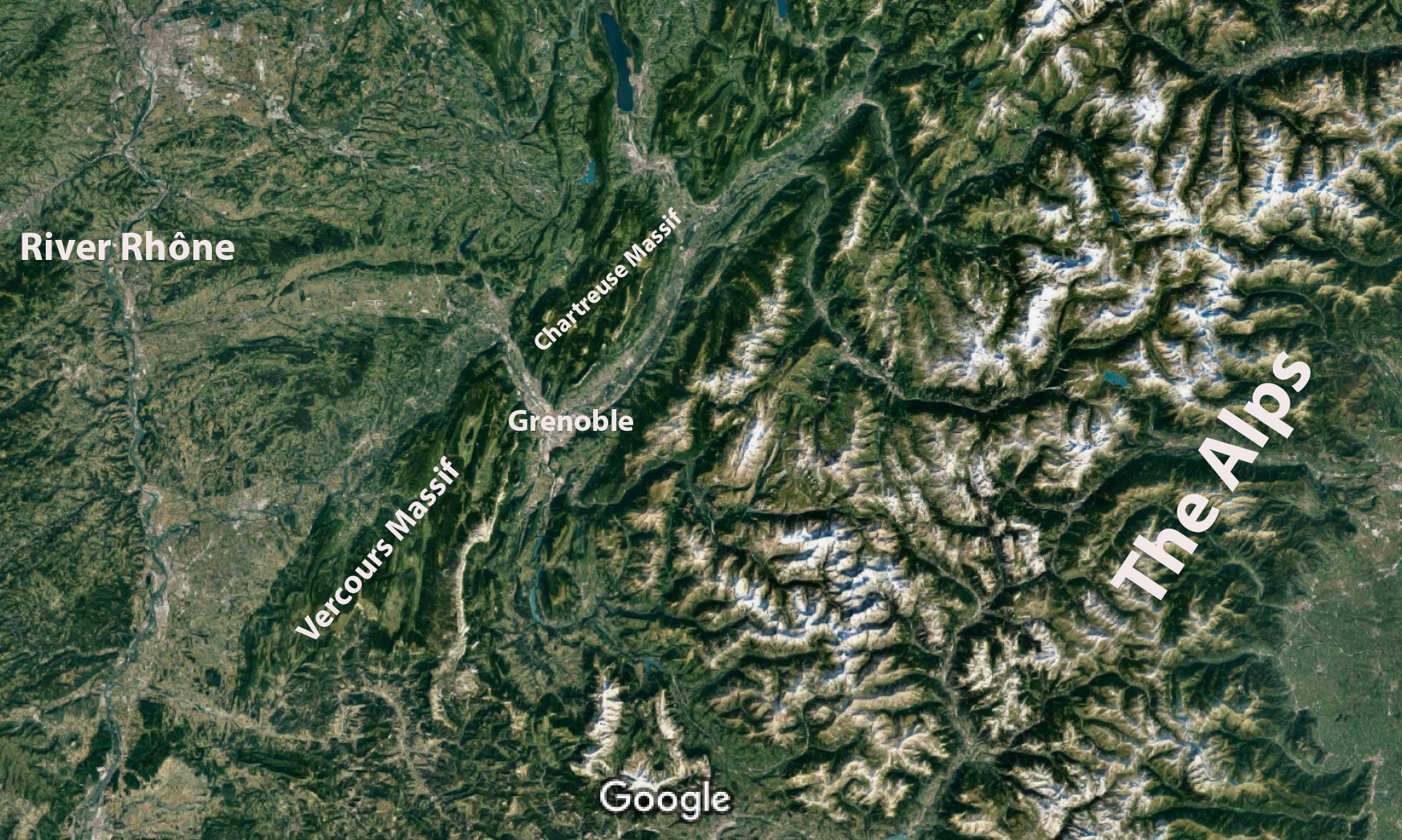
The Chartreuse Massif lies to the north of Grenoble and with the Vercours Massif, forms part of the pre-Alps:
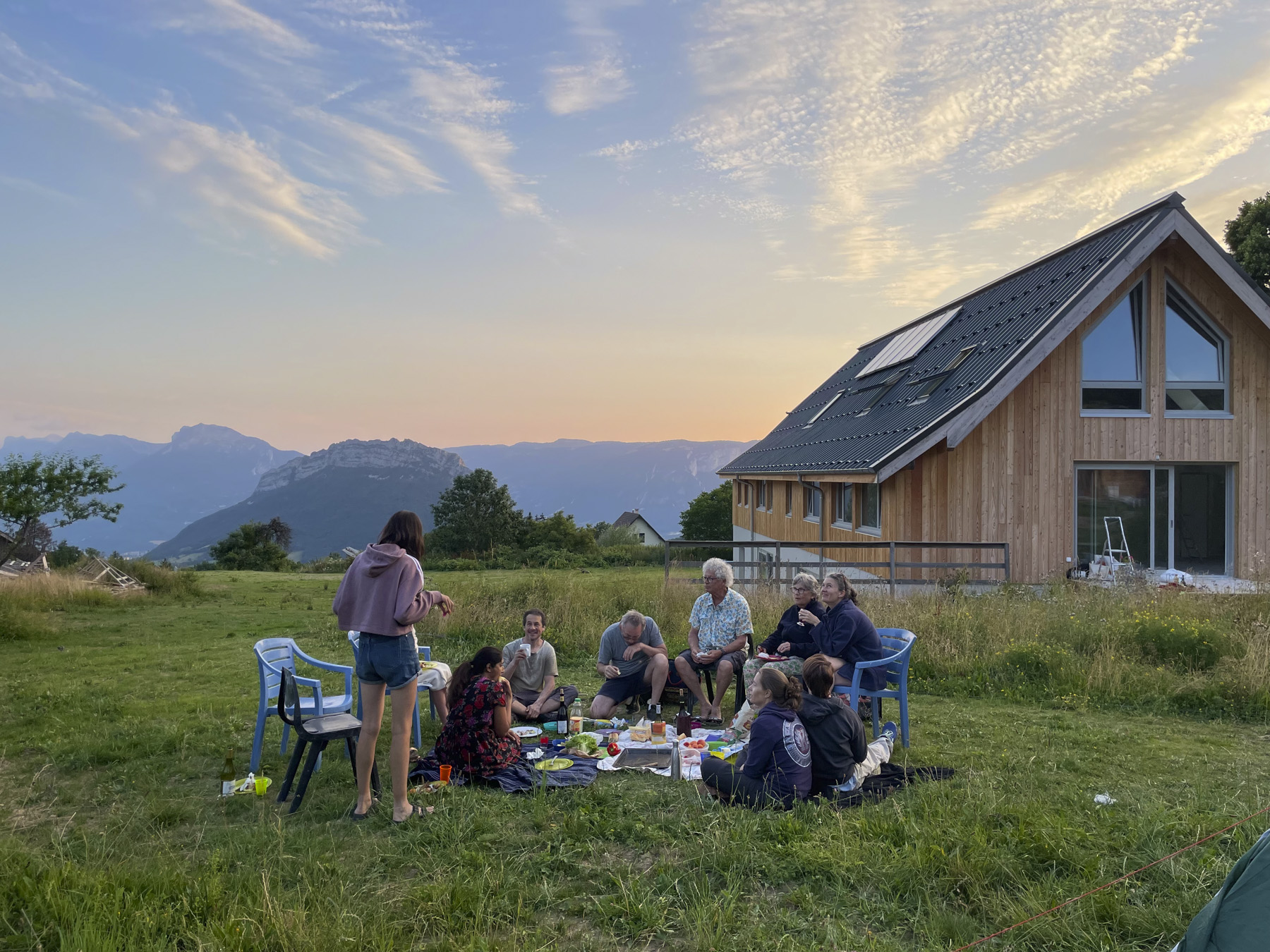
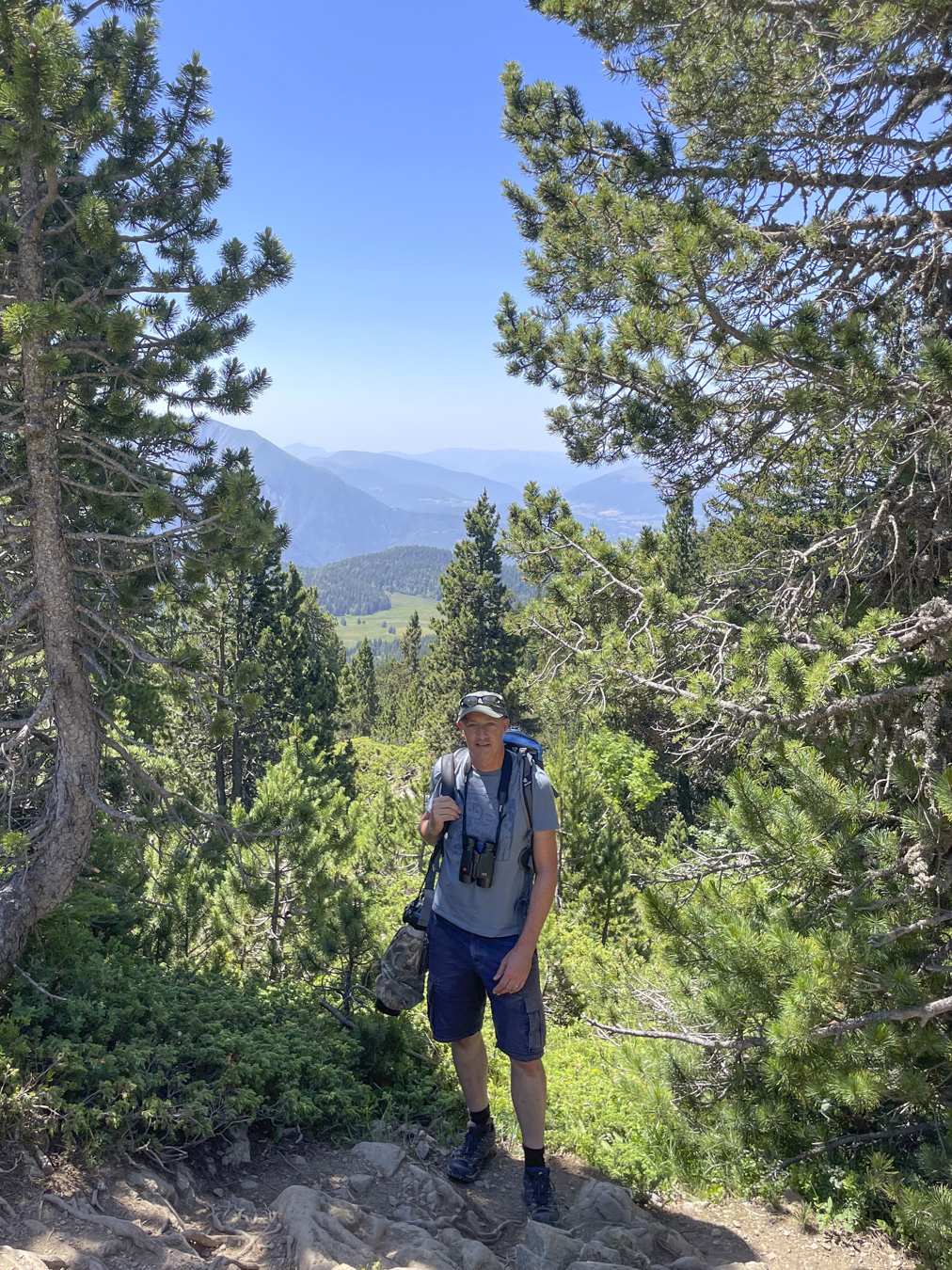
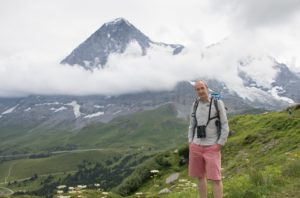
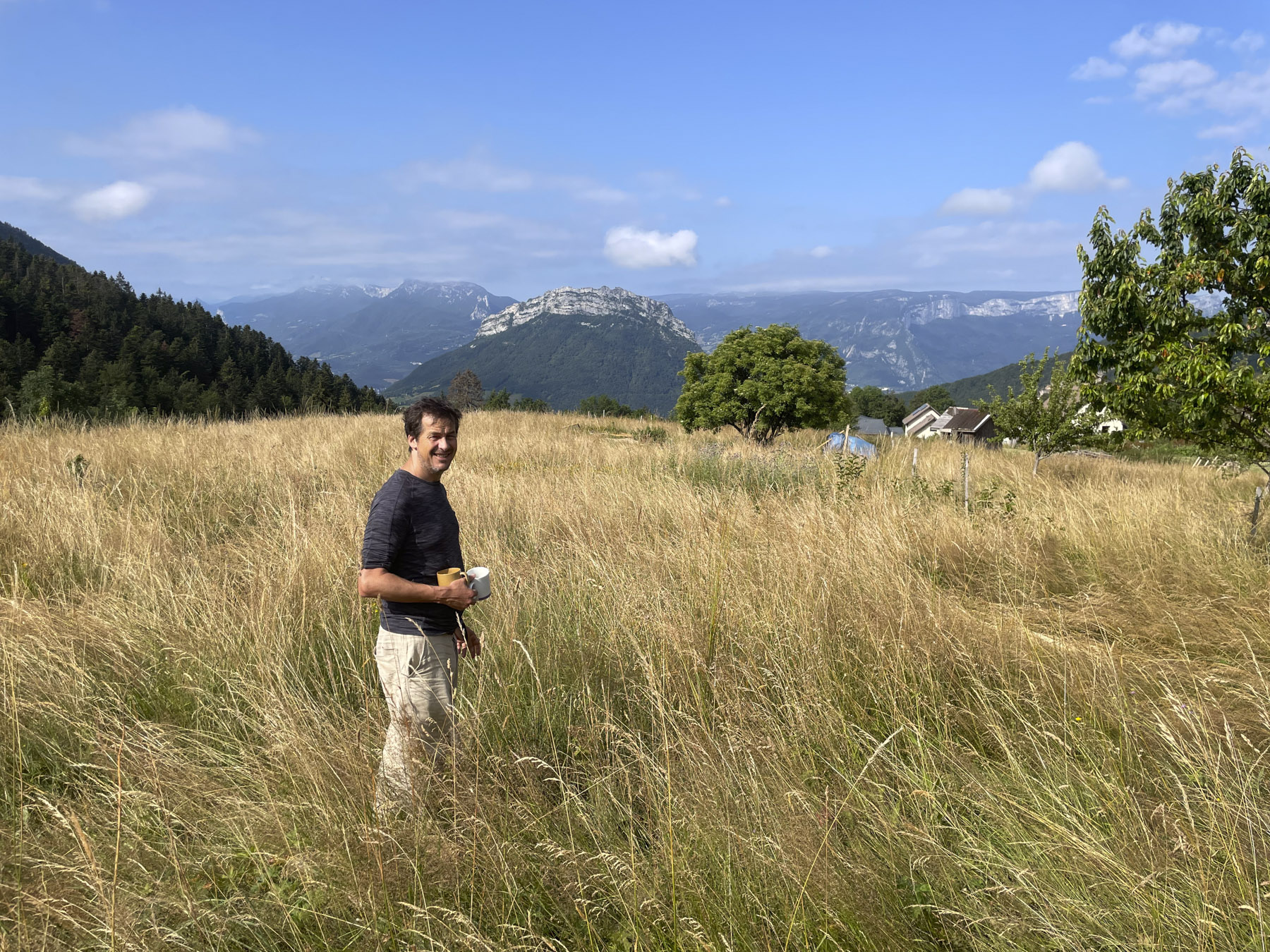
In the picture below is Rob, one of the finest of men. He and his partner Am are building a house on the massif and are about to start a new life in the mountains above Grenoble.
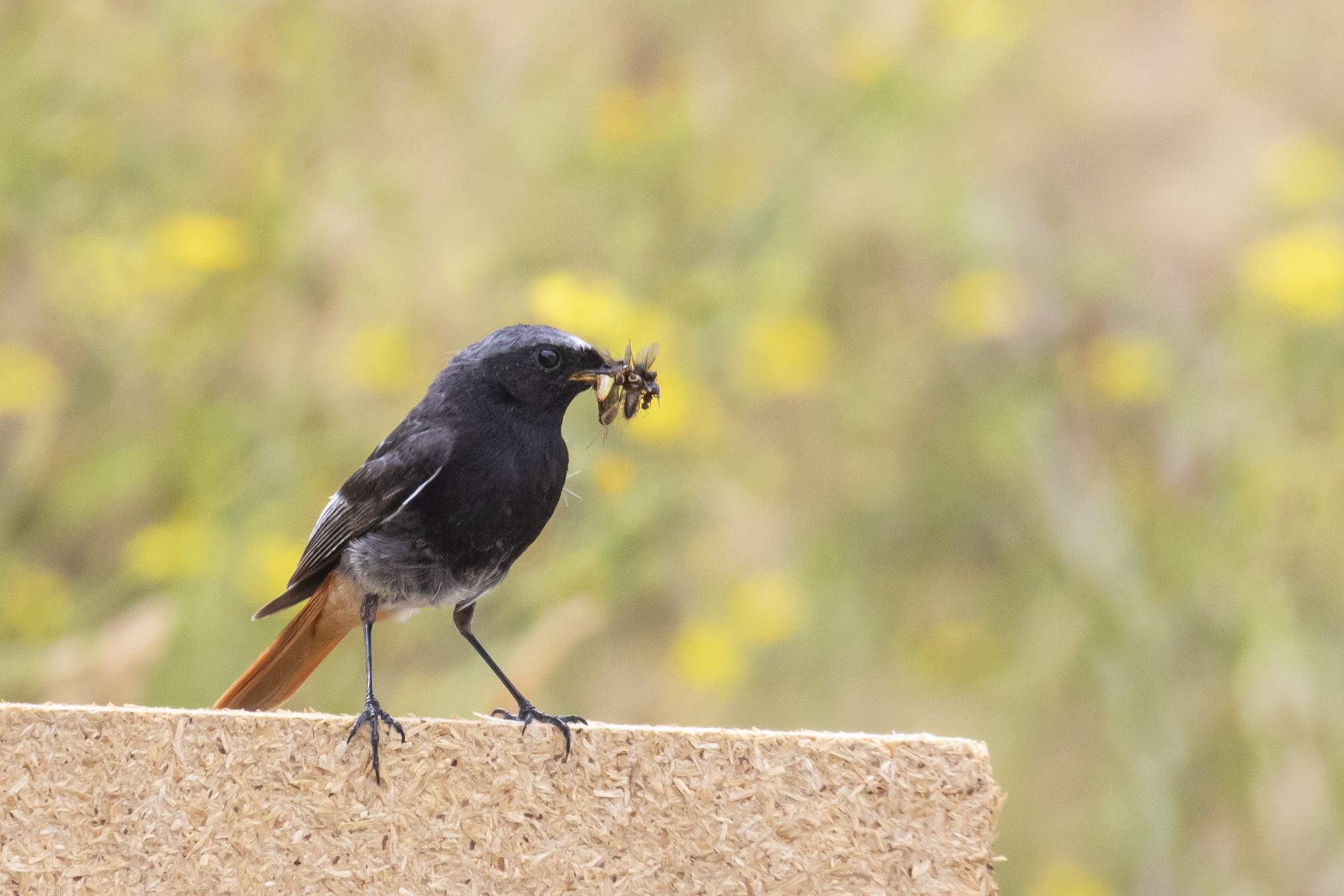
The local bird life is typically alpine, with Black Redstarts being common and a pair are already nesting on Rob and Am’s house:
Their land also holds breeding Red-backed Shrikes, White Wagtails, Goldfinches and Greenfinches.
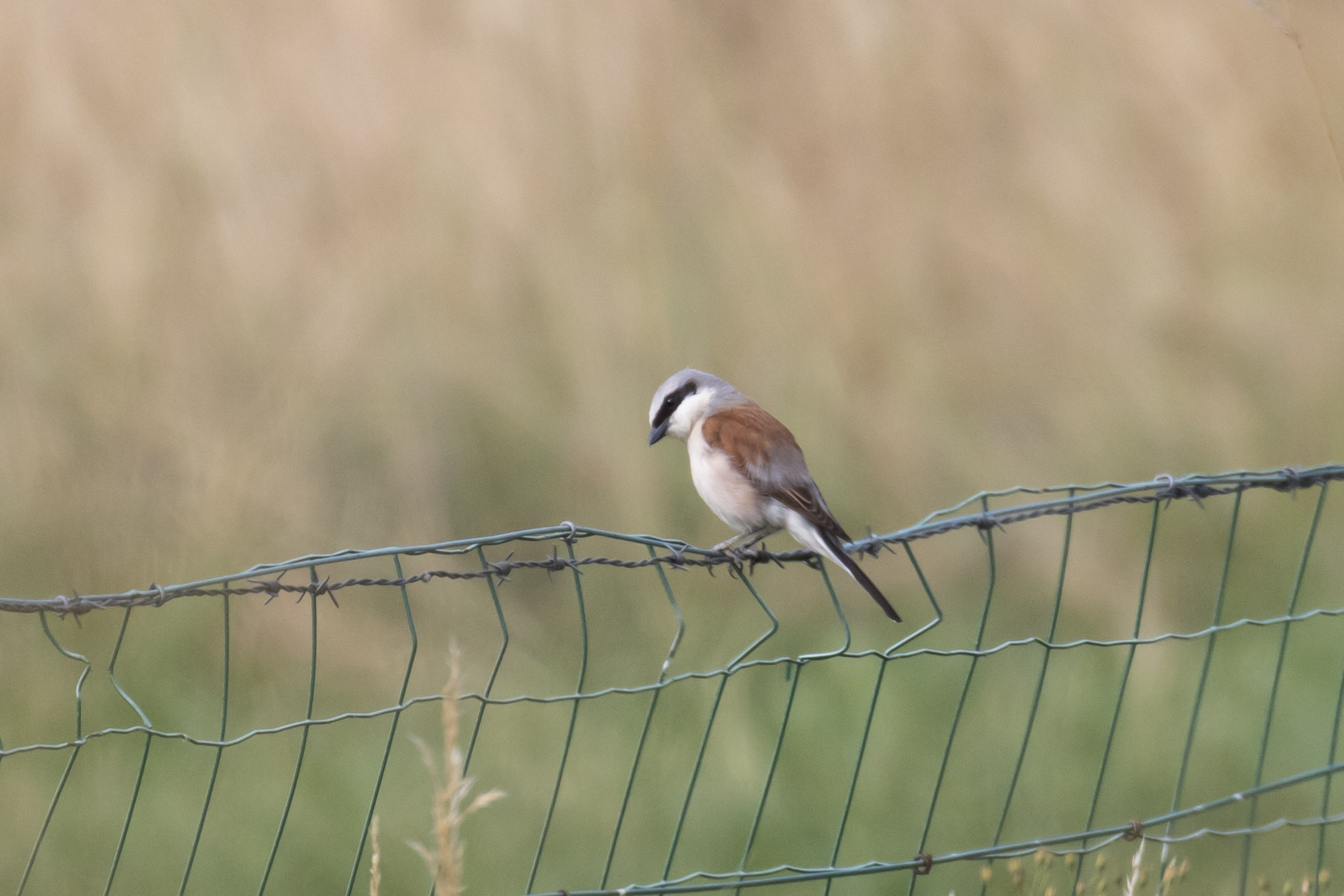
Red-backed Shrike

Ravens and Kestrels are frequent overhead, with the occasional larger raptor, such as Golden Eagle, being seen. Buzzards and Black Kites are the default medium-sized raptors:
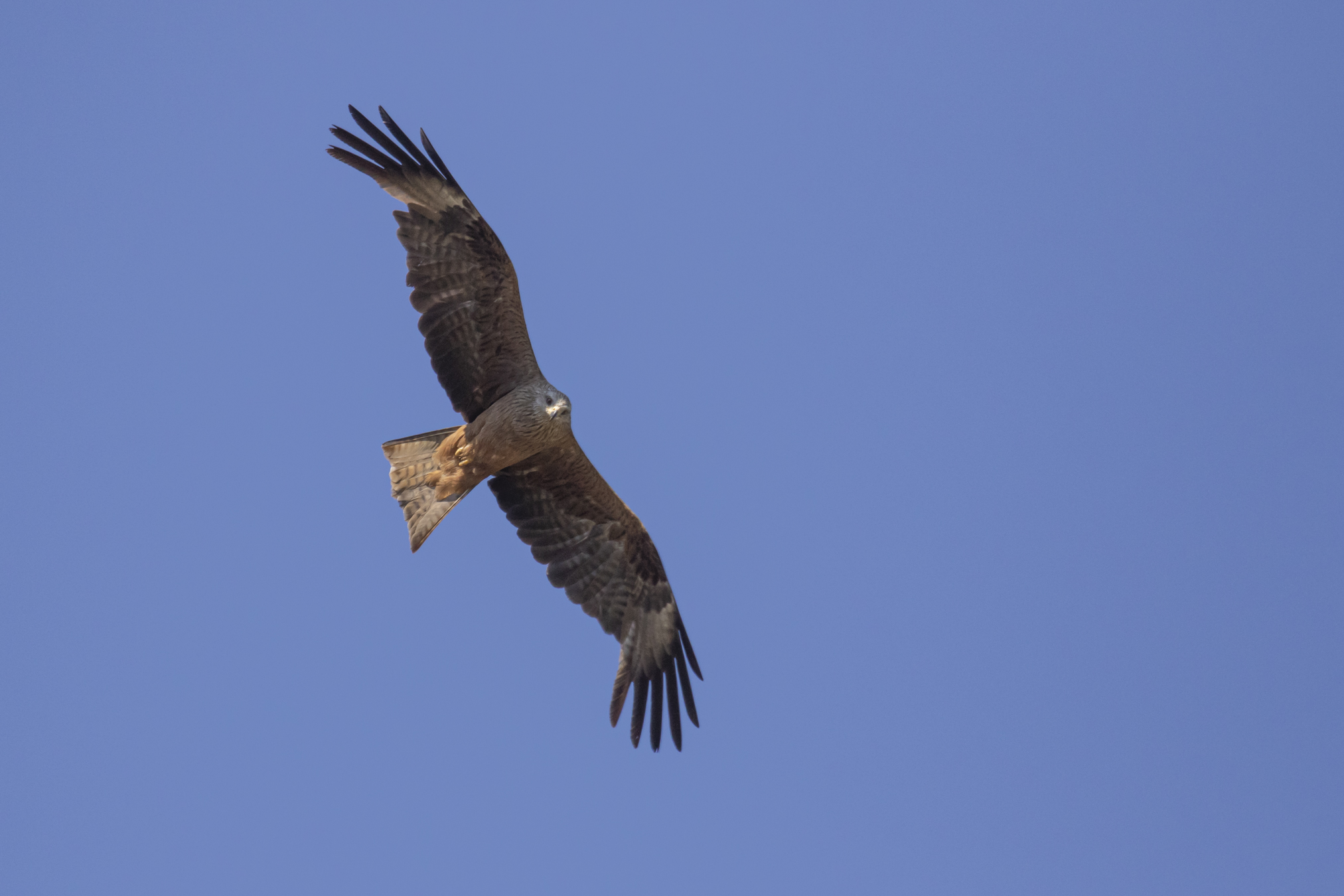
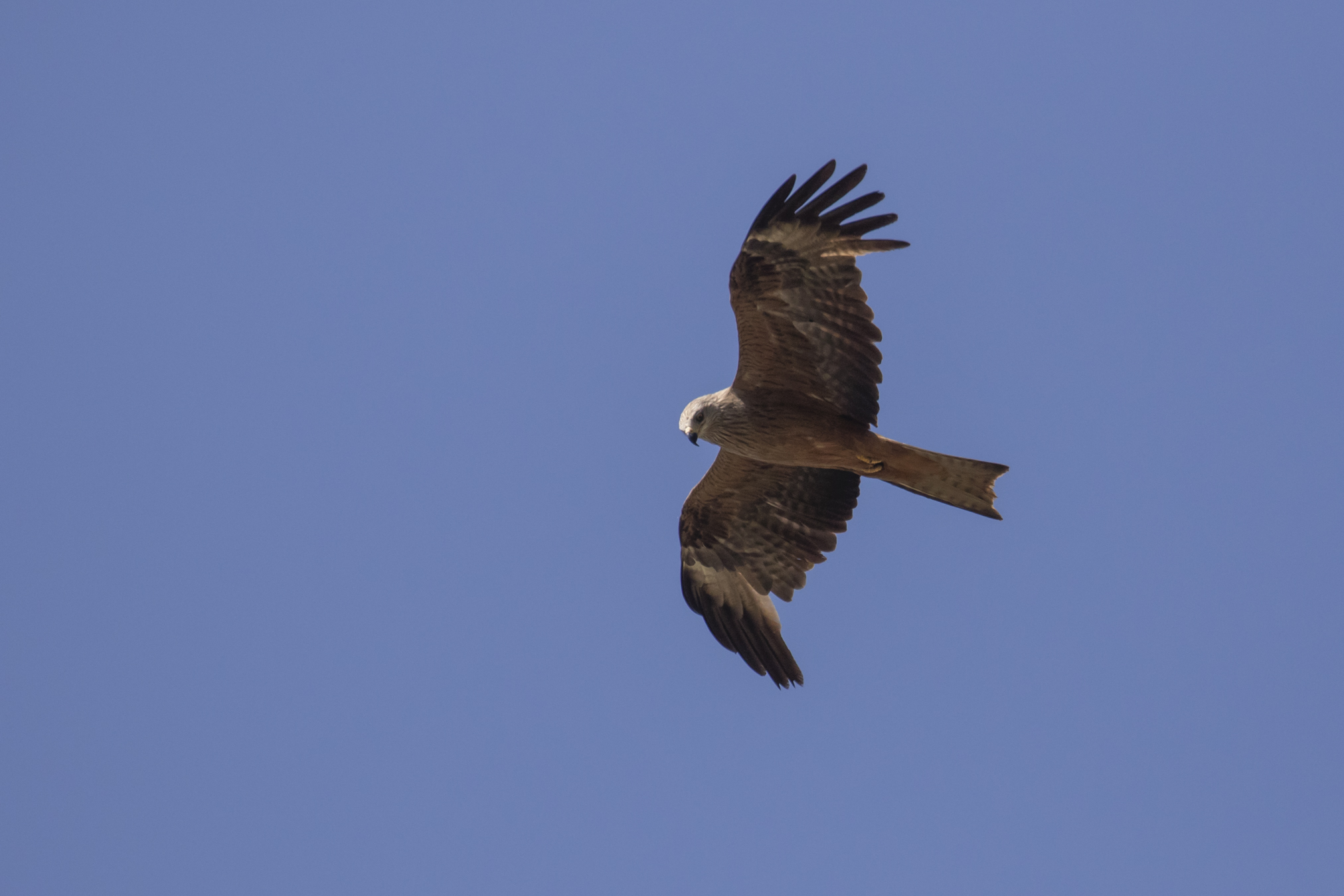
Black Kite

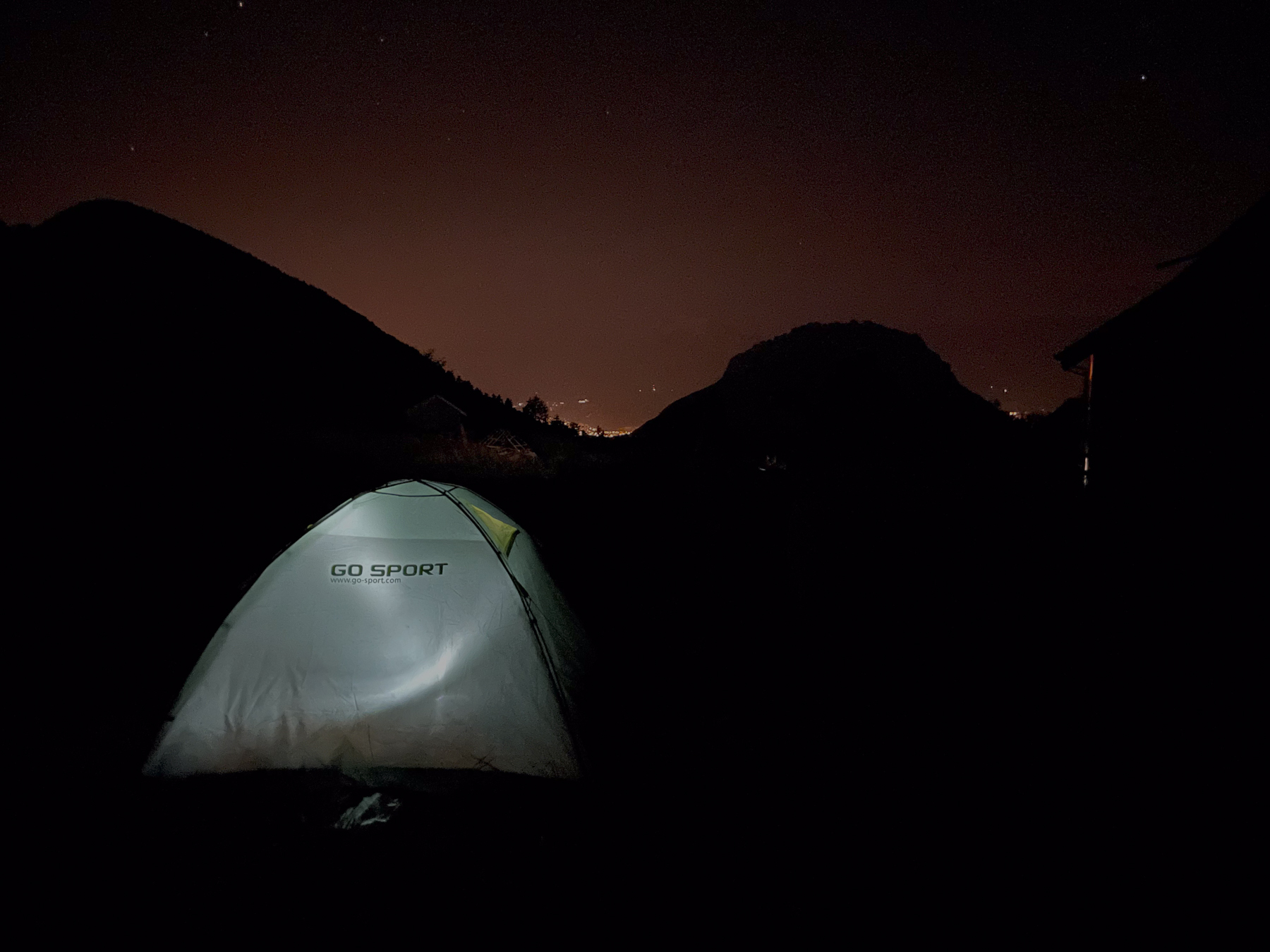
One weekend we camped out, the valley below us illuminated by the lights of Grenoble. Tawny Owls were very vocal in the local woods. It was fantastic to hear a pair duetting, using the “xylophone trill” call, as described in the Collins Bird Guide, just audible on this recording at the 3-second mark, above the huge number of insects calls:

Higher up on the Chartreuse Massif, there were spectacular views from the ridges:
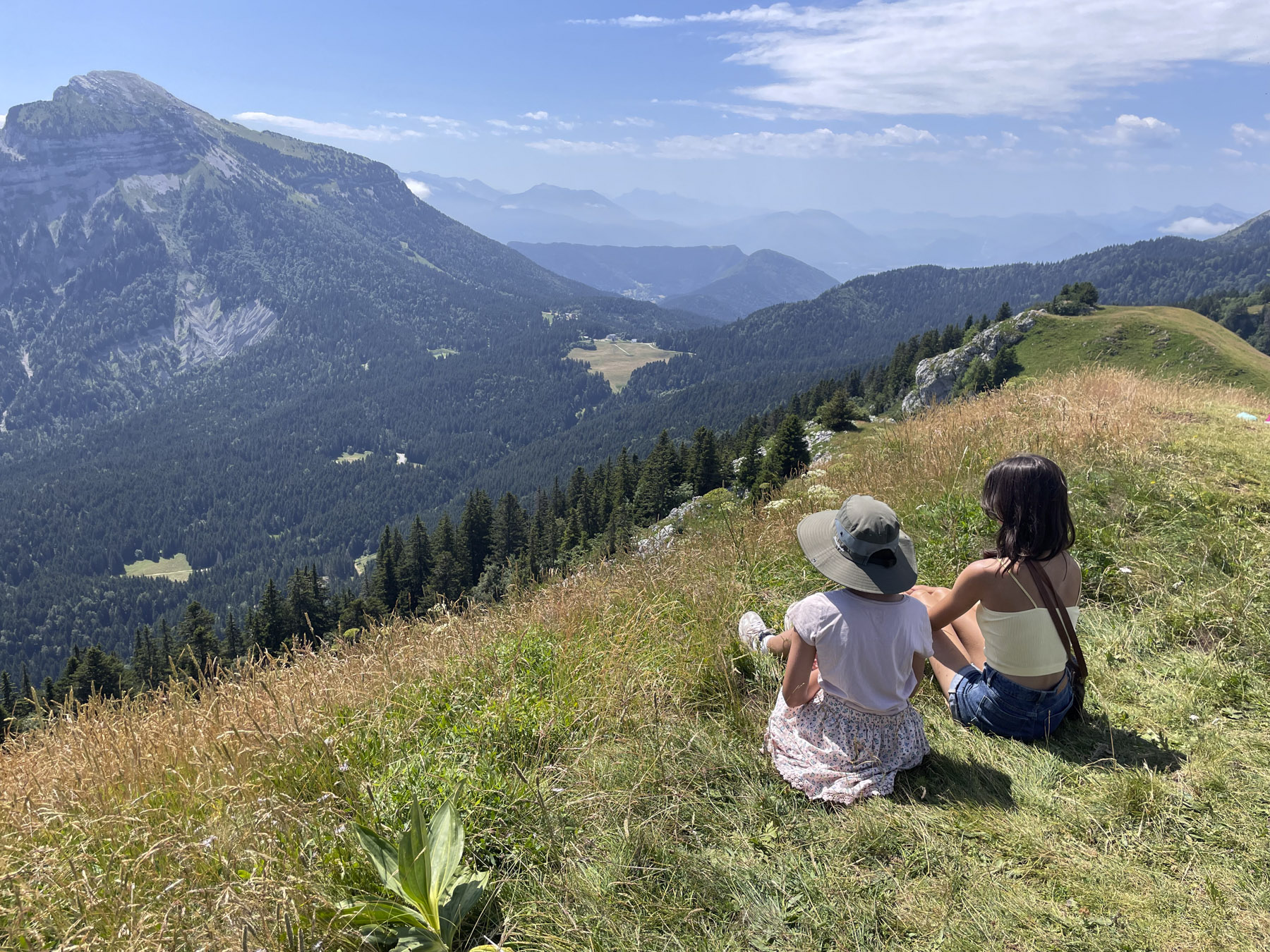
The view from the Fromagerie du Charmant Som.

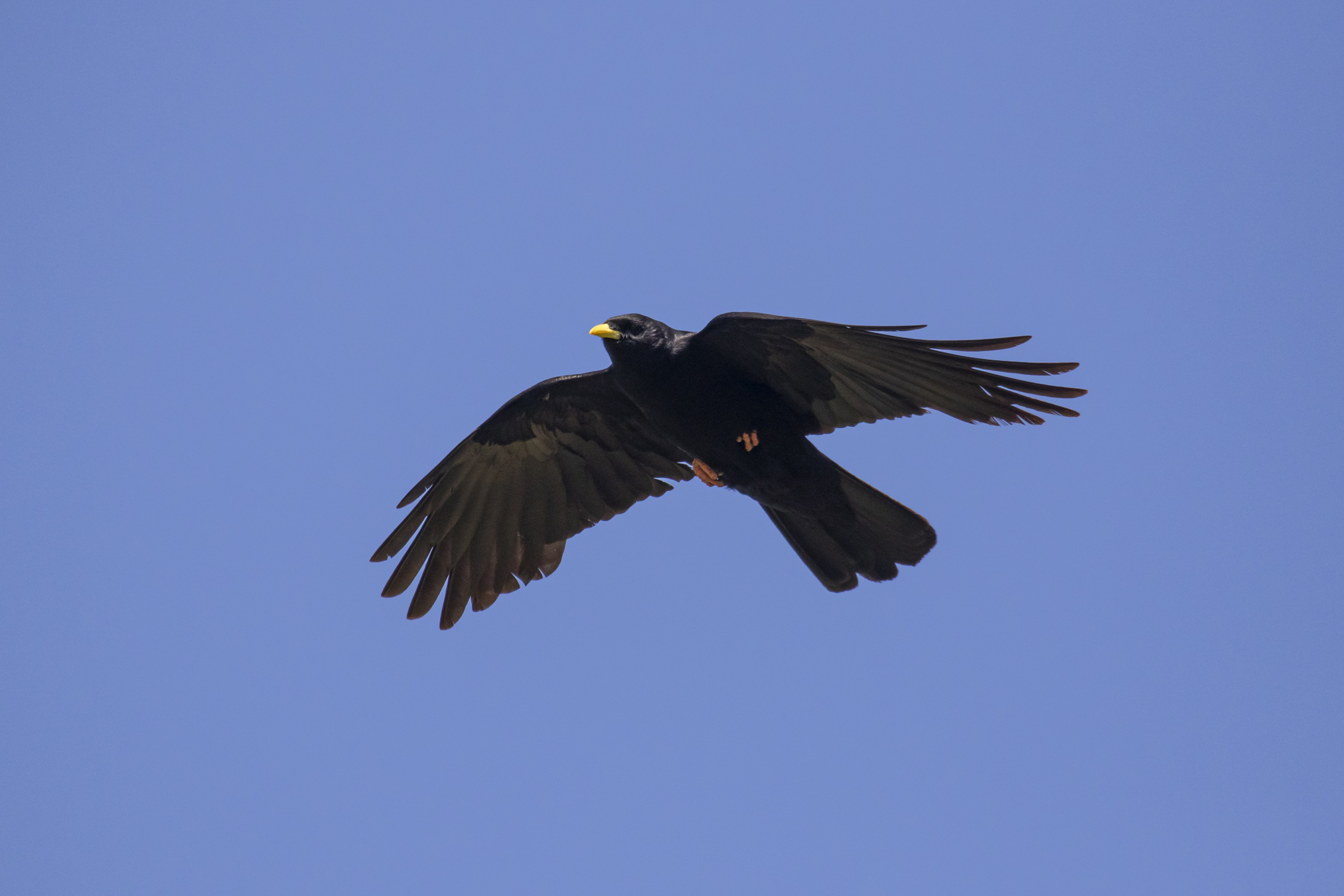
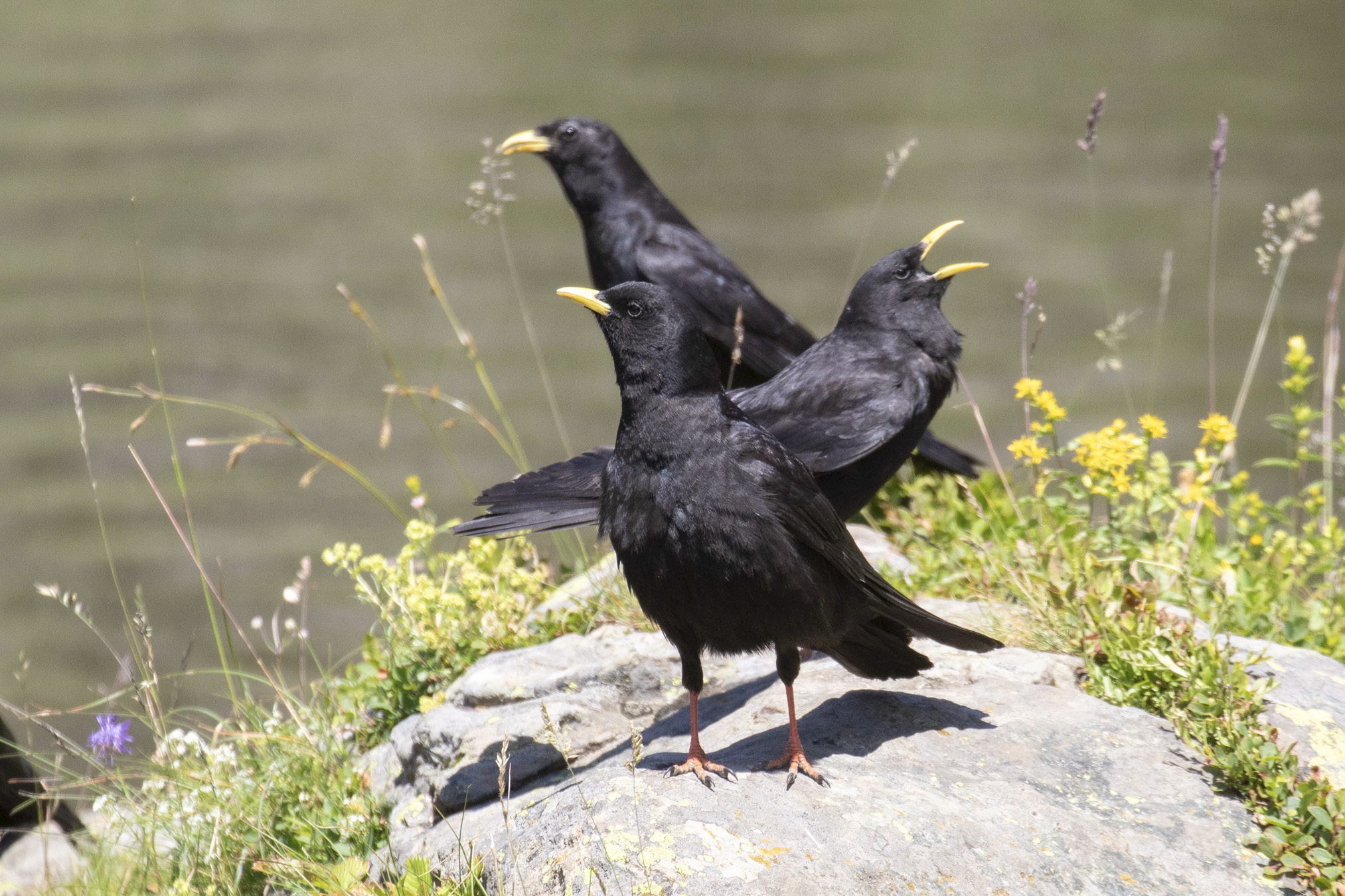
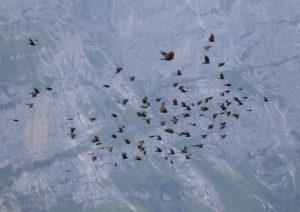
There were large flocks of Alpine Choughs, totalling over 60 birds, up here. Some calls can be heard here, with cowbells ringing in the background:
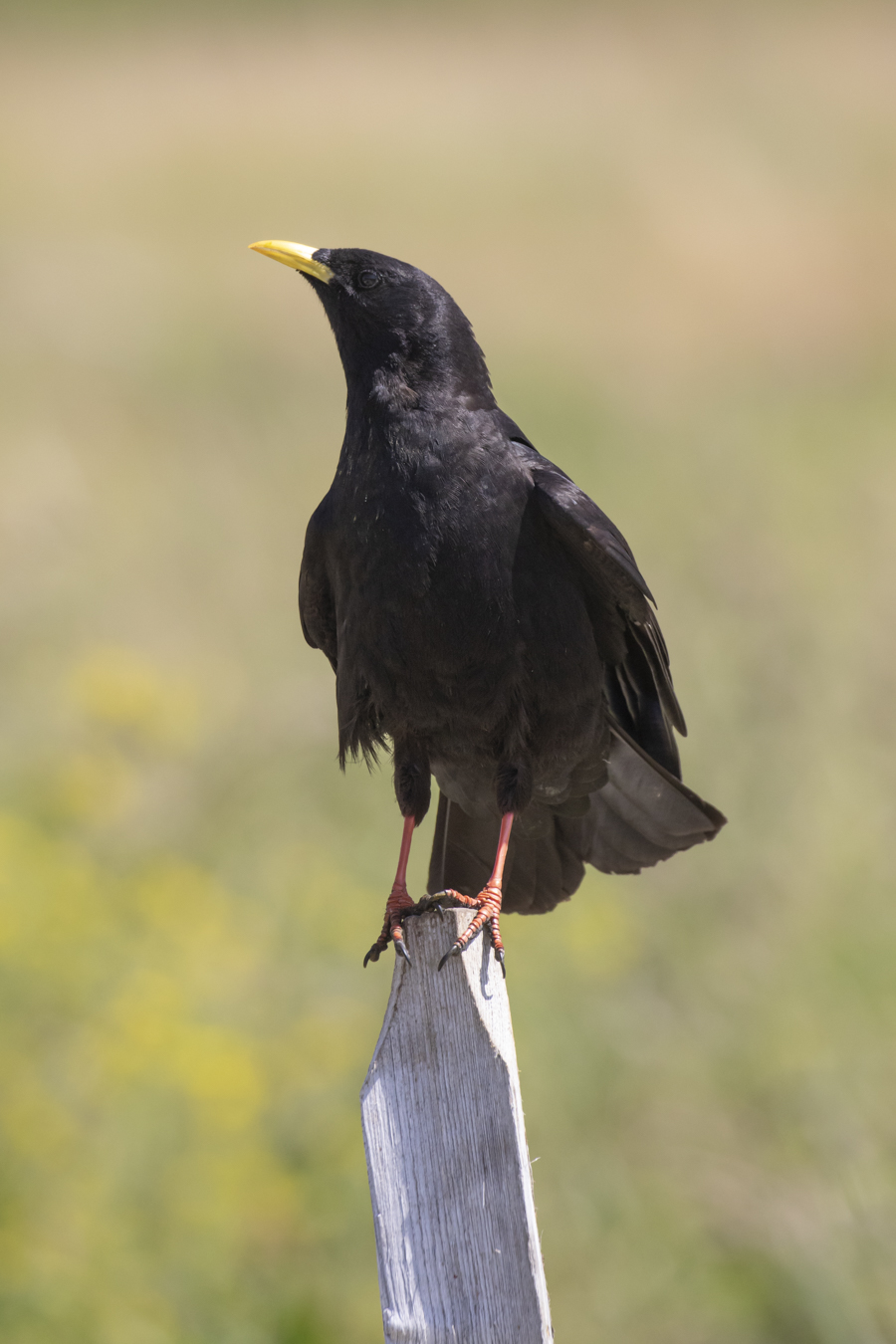
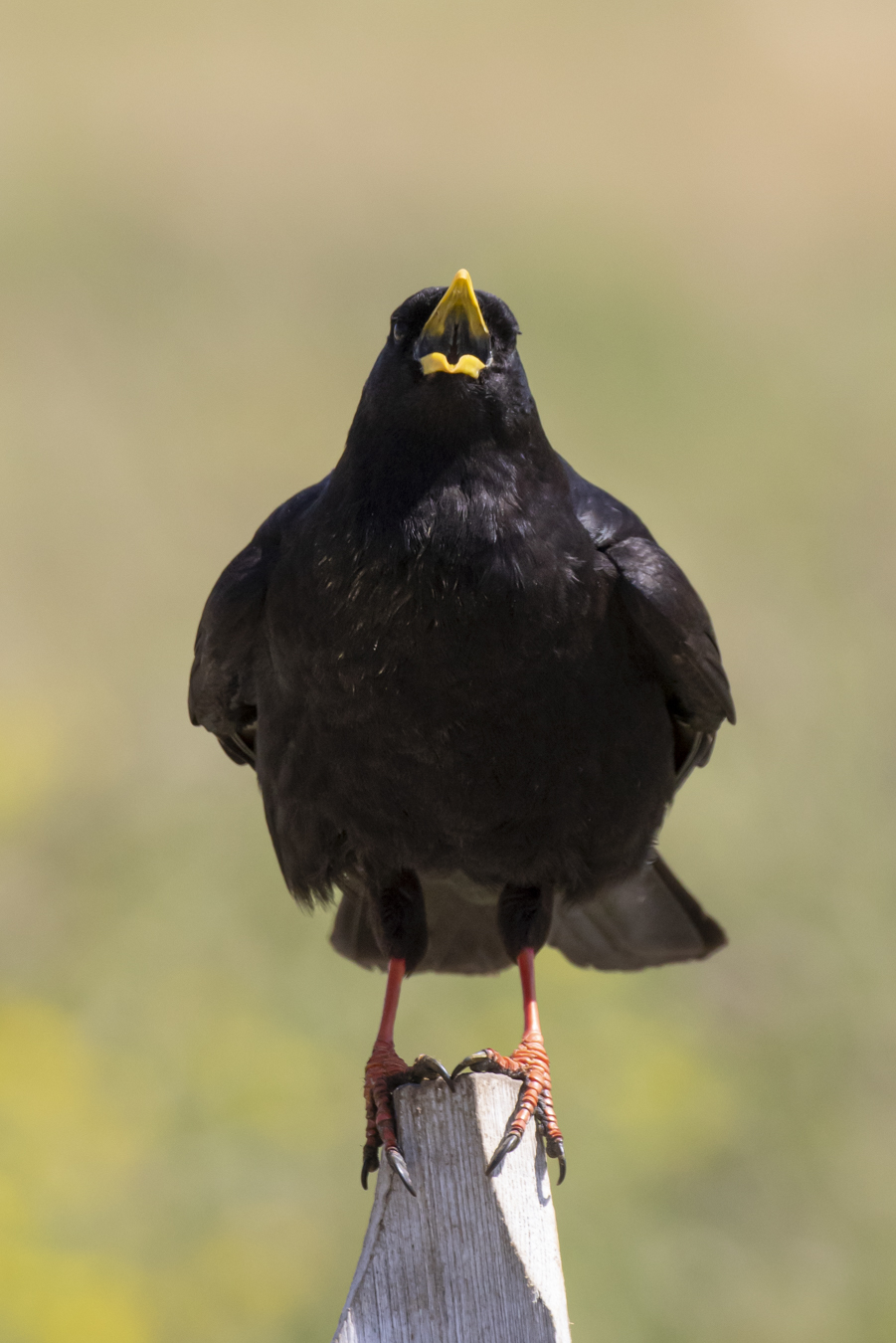
Calling Alpine Chough

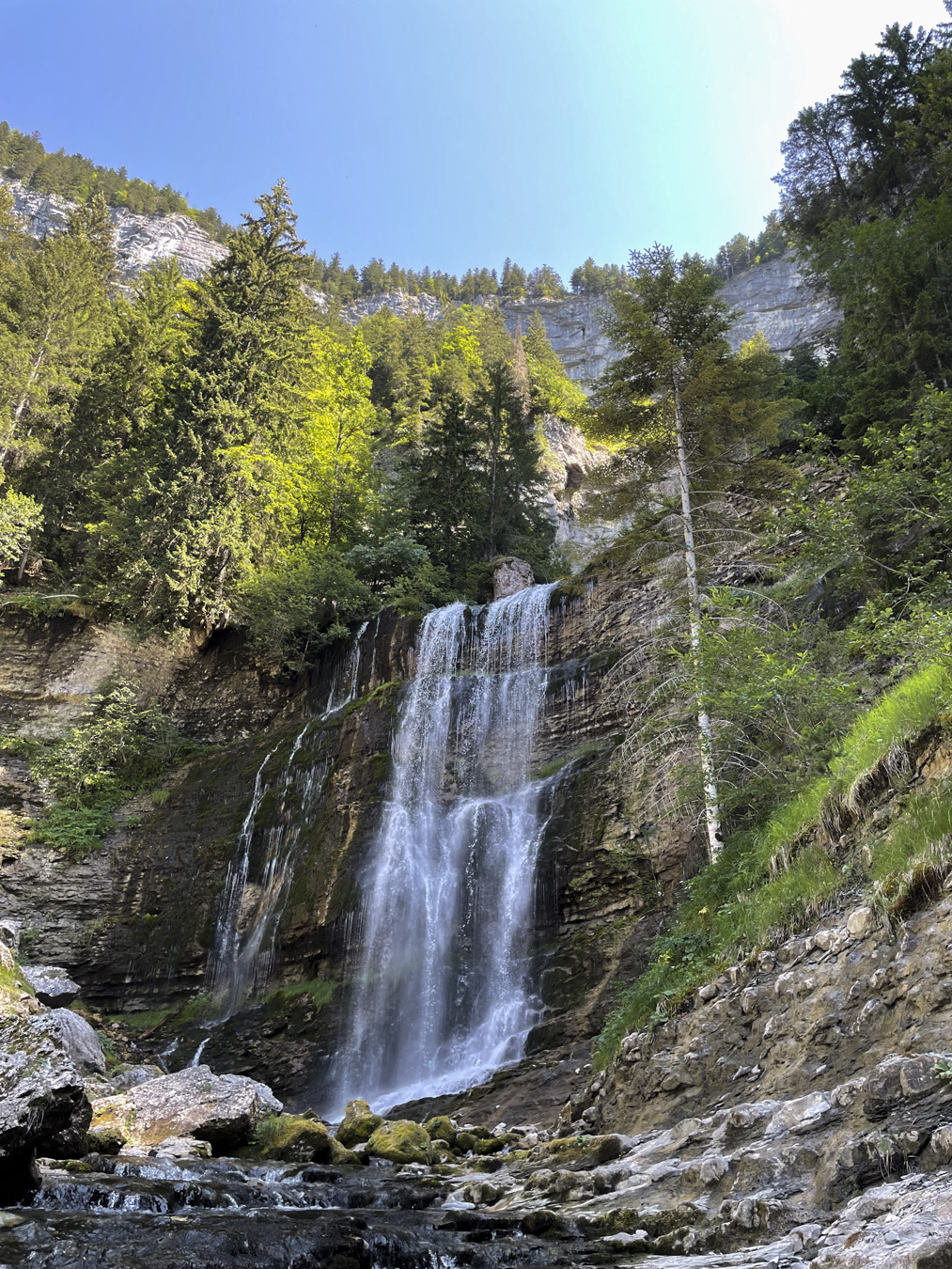
Further north is the fabulous Cirque de Saint-Même, a huge natural amphitheatre towering into the sky, with many waterfalls cascading down:
At the top of the cliffs, flocks of Alpine Swifts fed above the tree tops:
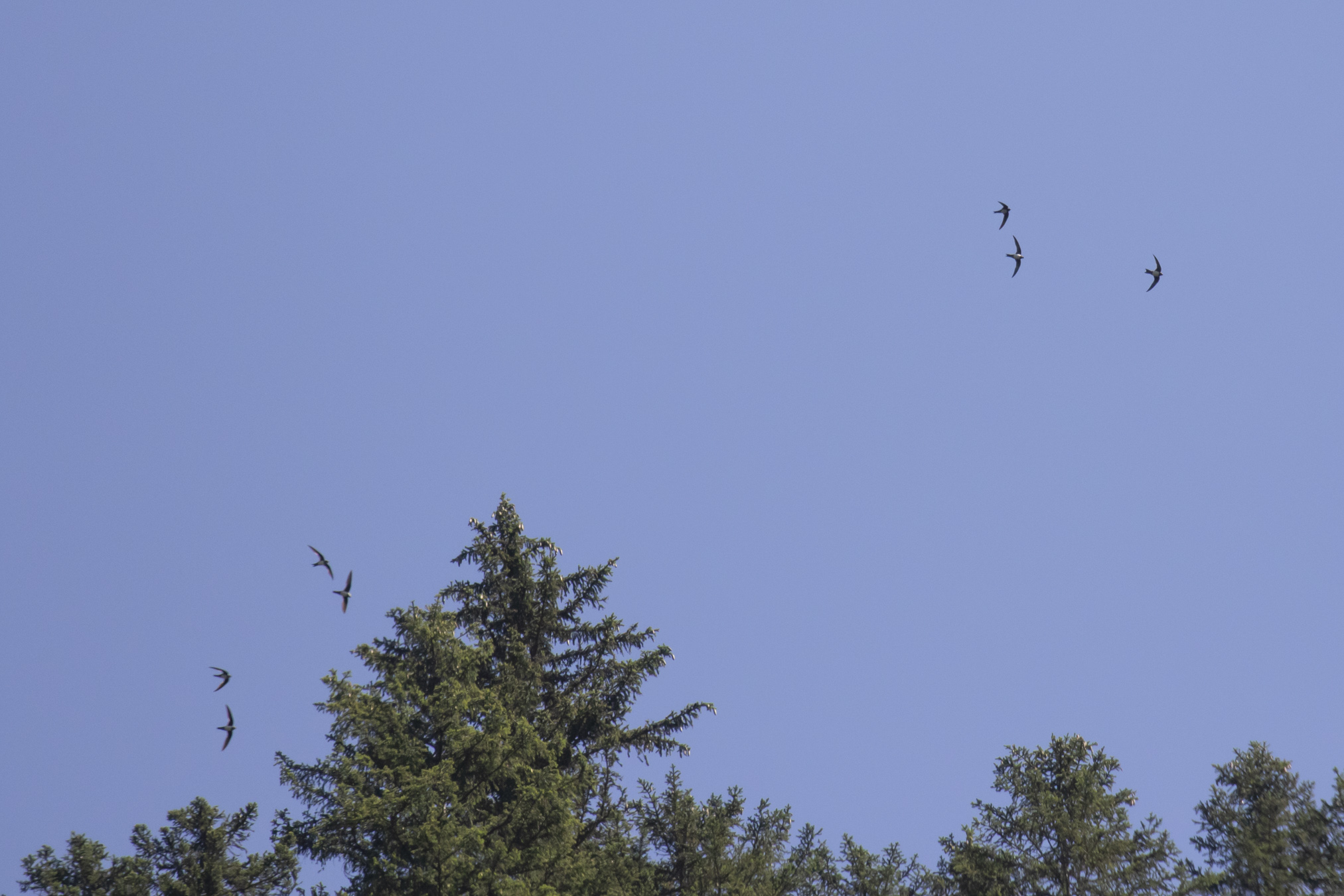
Some birds had visibly bulging crops, presumably they breed on the uppermost cliffs:
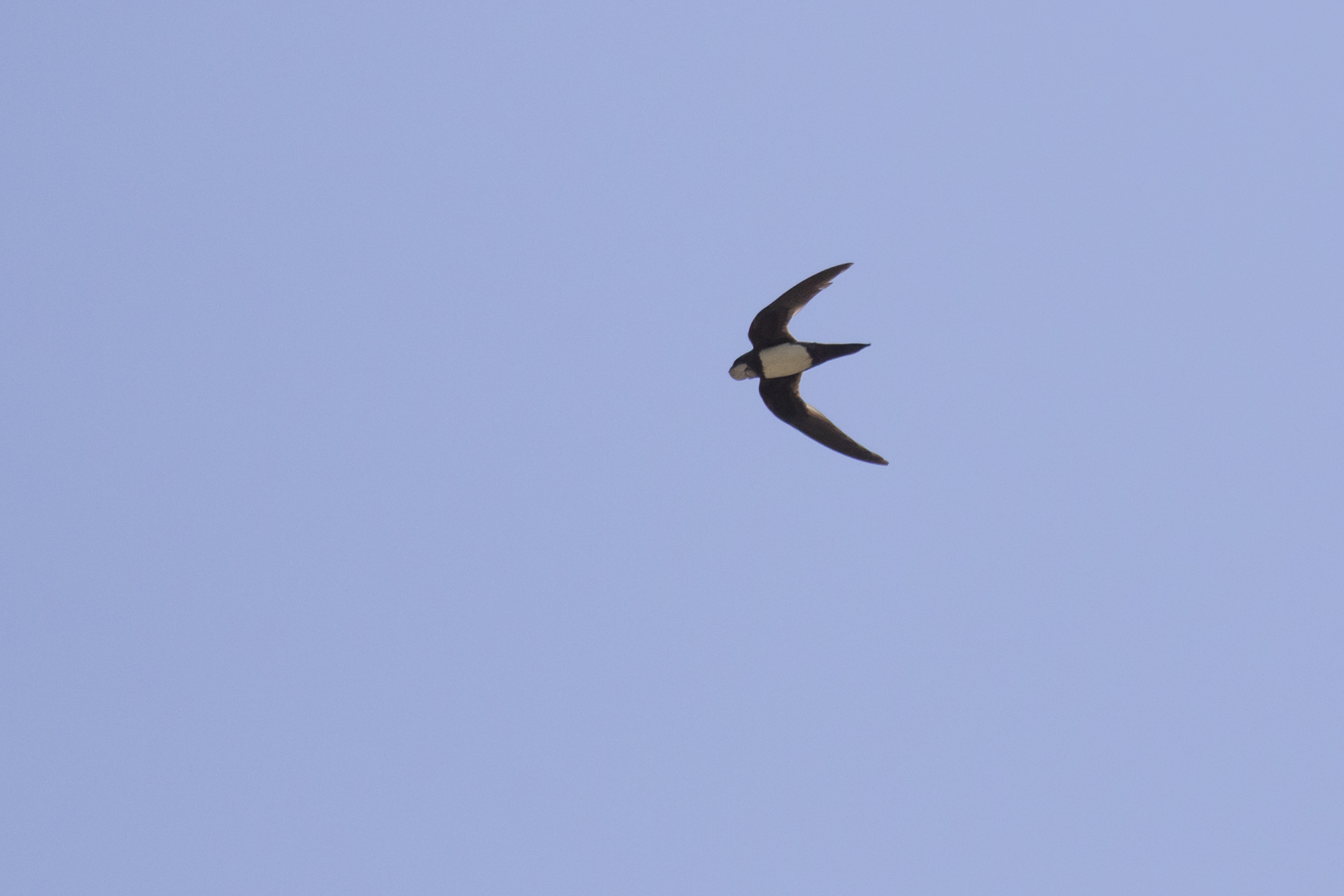
Alpine Swift, with a full crop of insects.

Favouring lower altitudes, a few Crag Martins fed amongst the Alpine Swift flocks:
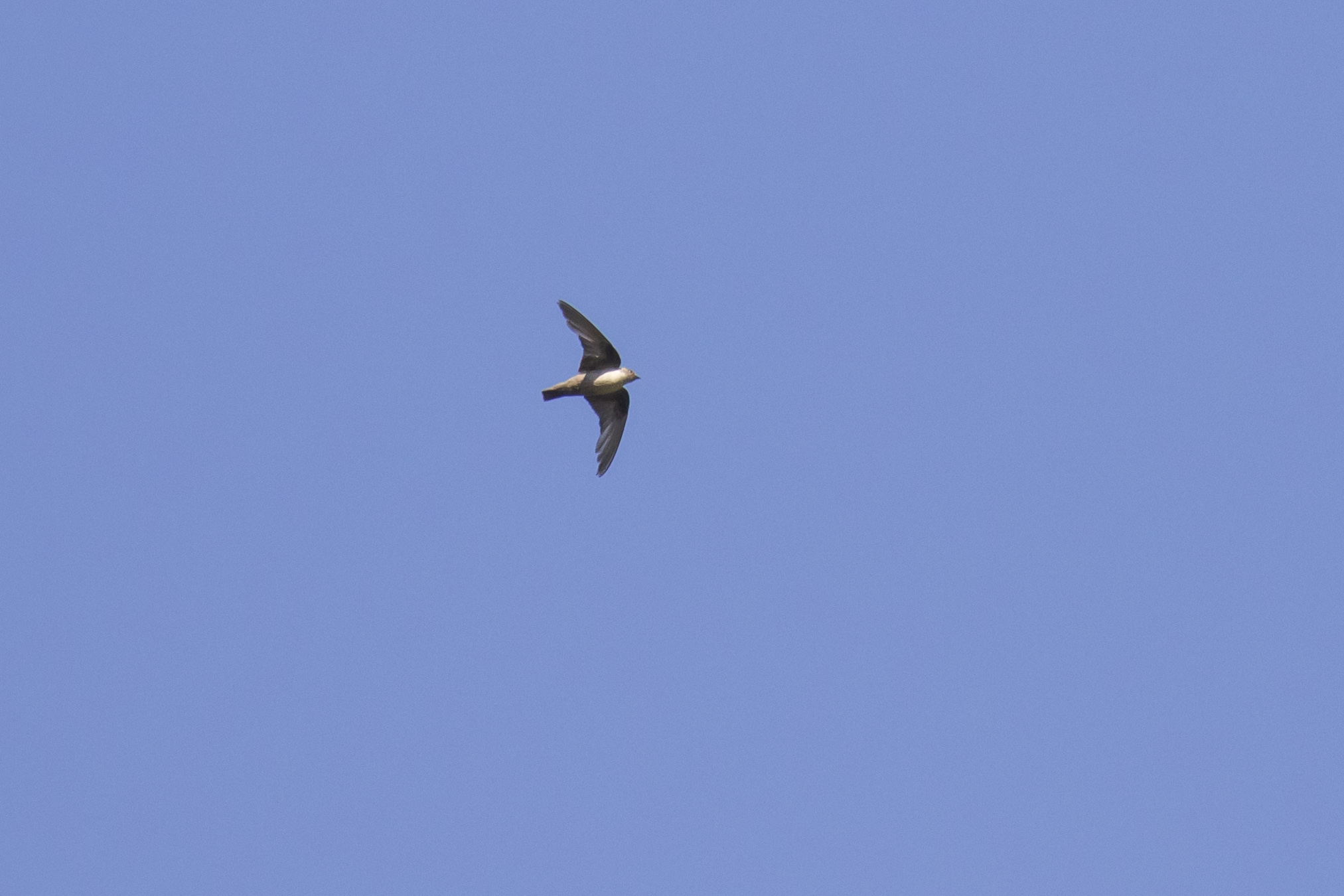
Crag Martin

On the way back through central France we visited the grave of Conrad Wenyon, an uncle on my mother’s side of the family. He was a wireless operator in the Royal Air Force, but was killed when his Lancaster was shot down over Bourges in July 1944, as the Allied forces moved through France after D-day. The pilot, Harry Taylor, survived and submitted this report on the loss of the aircraft:

I abandoned the aircraft at approximately between 400 to 600ft. Unfortunately I did not give the order to abandon aircraft as the intercom failed as soon as we were hit. However I informed the Engineer and Navigator by visual means. Whether the Navigator informed the Wireless Operator I am unable to say. I am also unable to say whether anyone baled out of the rear exits or not. I was unable to approach the persons whose parachute had not fully opened as there were several people around him and consequently I am unable to identify him. The whole of the port wing was on fire and I was unable to put it out by the Graviner switches. I believe it must have been the petrol tanks that exploded”. From the Aviation Safety Network website.

Whether our relative was killed as the aircraft crashed, or whether he was the unfortunate soul who baled out of the aircraft only for his parachute did not open, we will never know. What we do know, is that Conrad was of a generation with the terrible luck to be born to be of fighting age in a time of world war and sadly he paid the ultimate price.
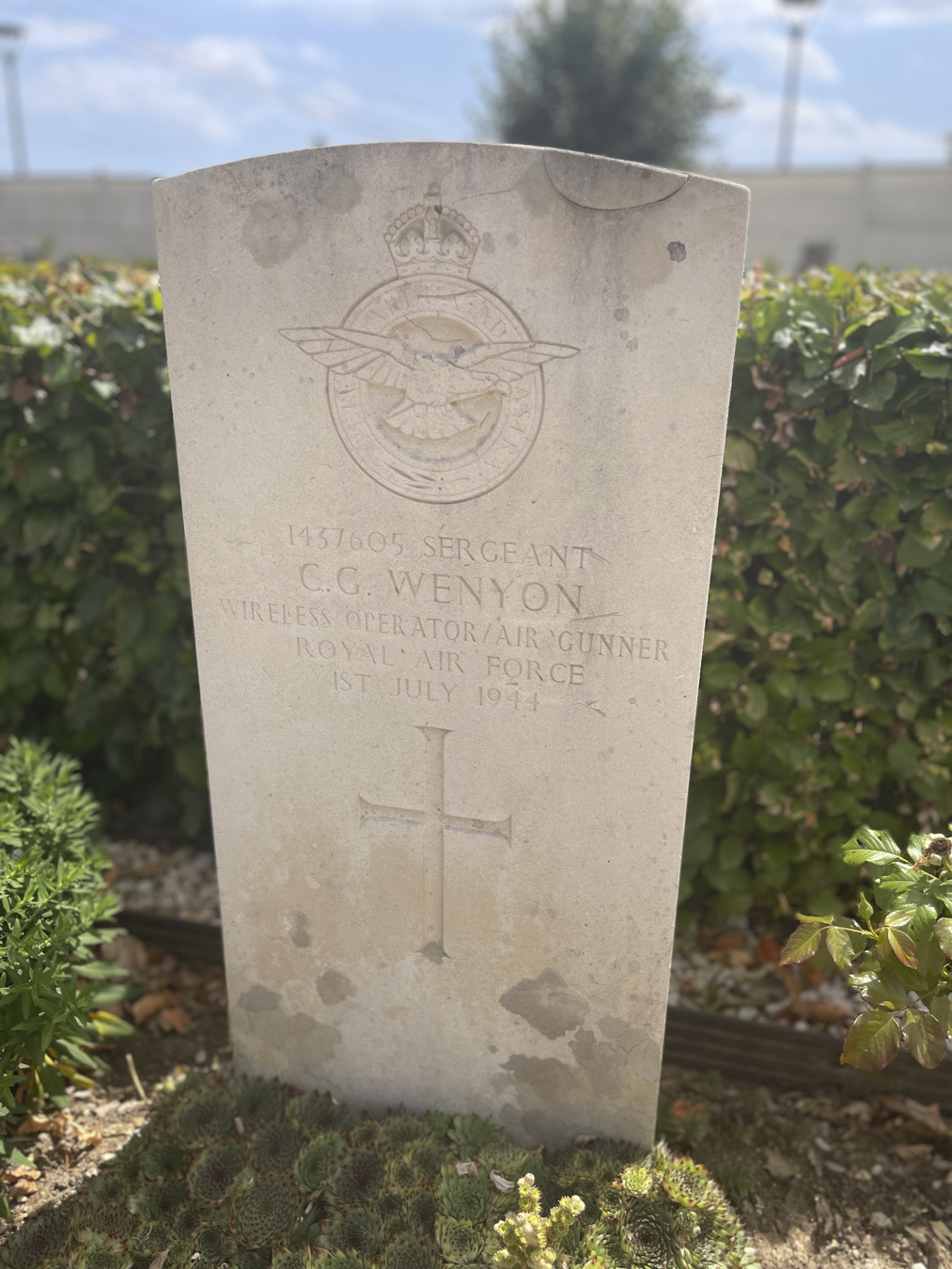
Through adversity to the stars“, the RAF motto.

The trip report of all the bird species that we saw in France, plus photos and sound recordings is here.
French Alps 1: hail, heat and heavy breathing

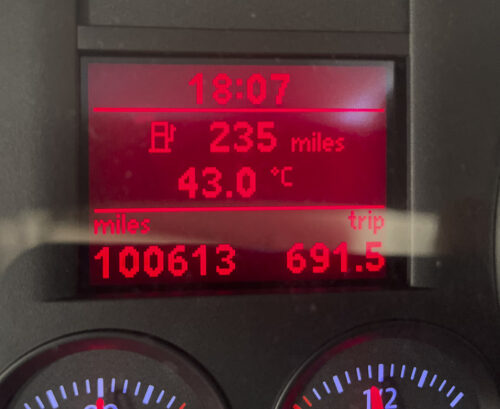
We drove from England into the super intense heat wave in southern Europe. By the time we reached Grenoble, temperatures on the road were high enough to make it frightening to get out of the car:

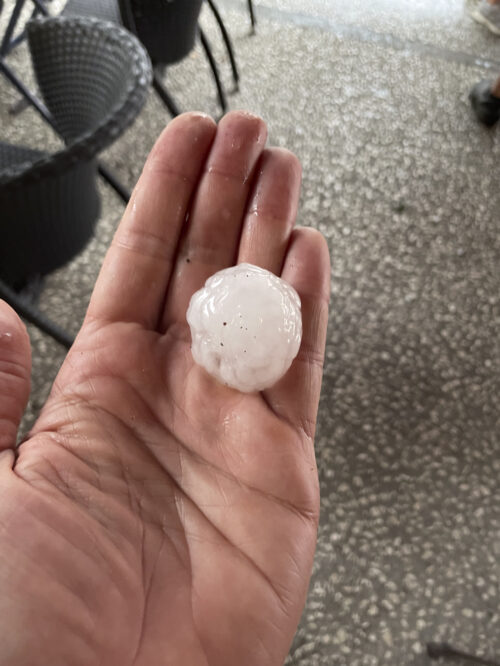
On our first full day in Grenoble, the severe temperatures generated thunderstorms. The wind felt like a hair dryer on the hottest setting, blasting hot air onto our faces. Pitch-black cumulonimbus clouds swirled above us before unleashing an incredible hail storm, with massive hail stones:

There was only one way to go: up. We headed up into the mountains, where the elevation is slightly cooling, bringing the temperatures back into the mere 30-degree celsius range.

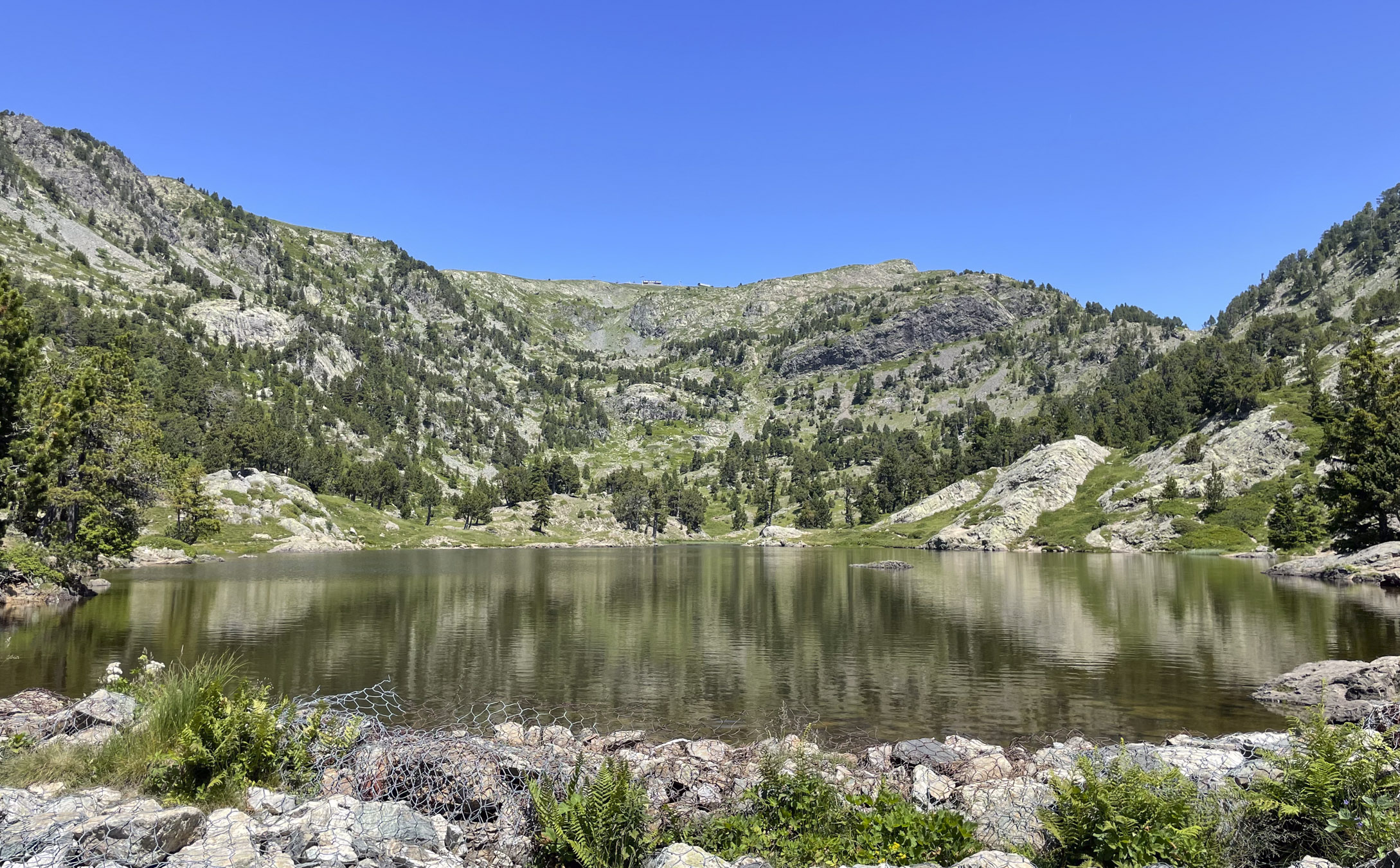
Lac Achard

We walked up through the pine forests from Chamrousse to Lac Achard, at just over 1900m elevation. But even at this altitude, the crushing heat was oppressive. Instinctively we only stopped in patches of shade, grateful for the trees:

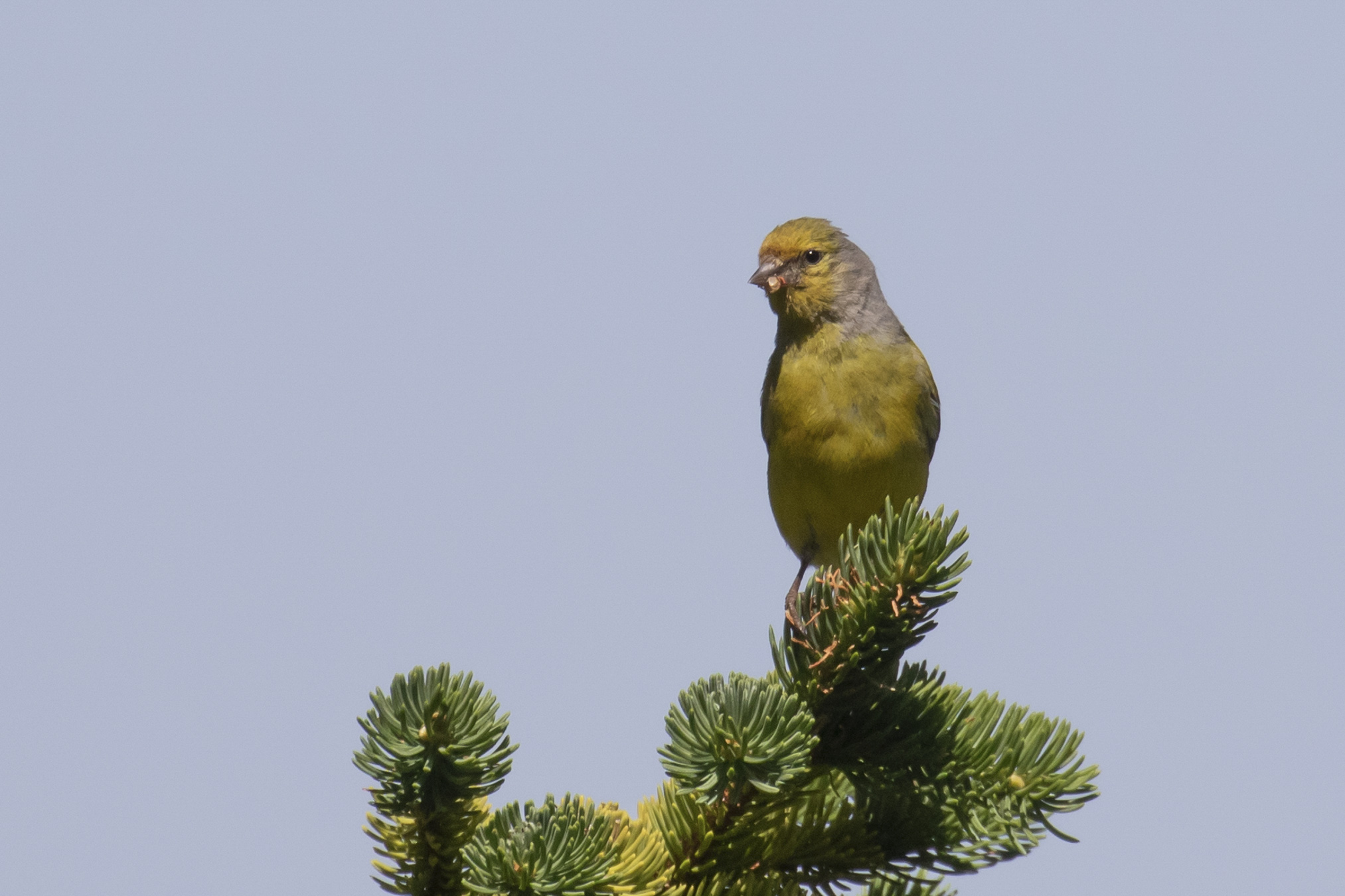
The lower meadows, just above Chamrousse, held a small flock of Citril Finches, dropping down to feed on seed heads:

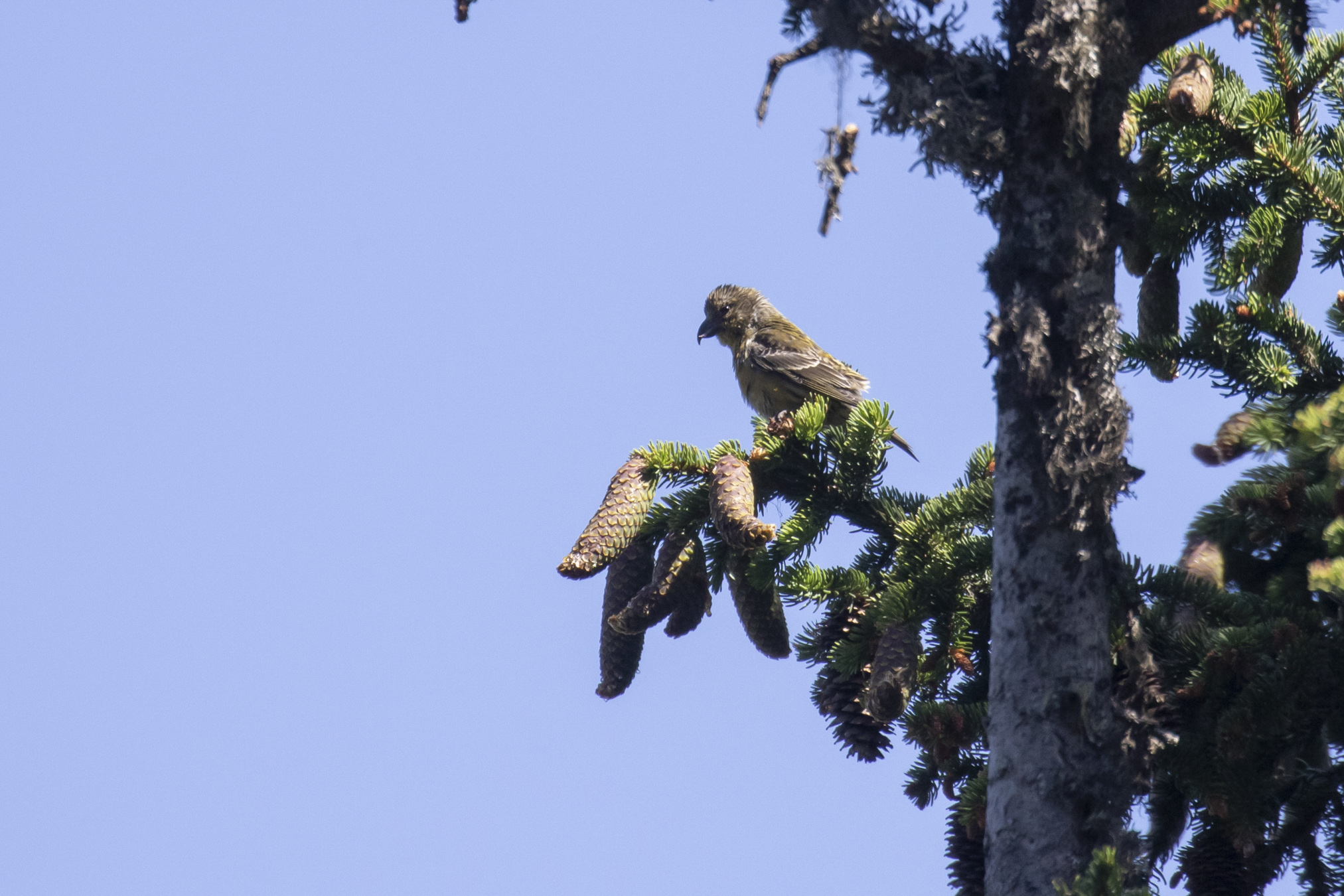
There were small flocks of Common Crossbills in the pines, always vocal and mobile:

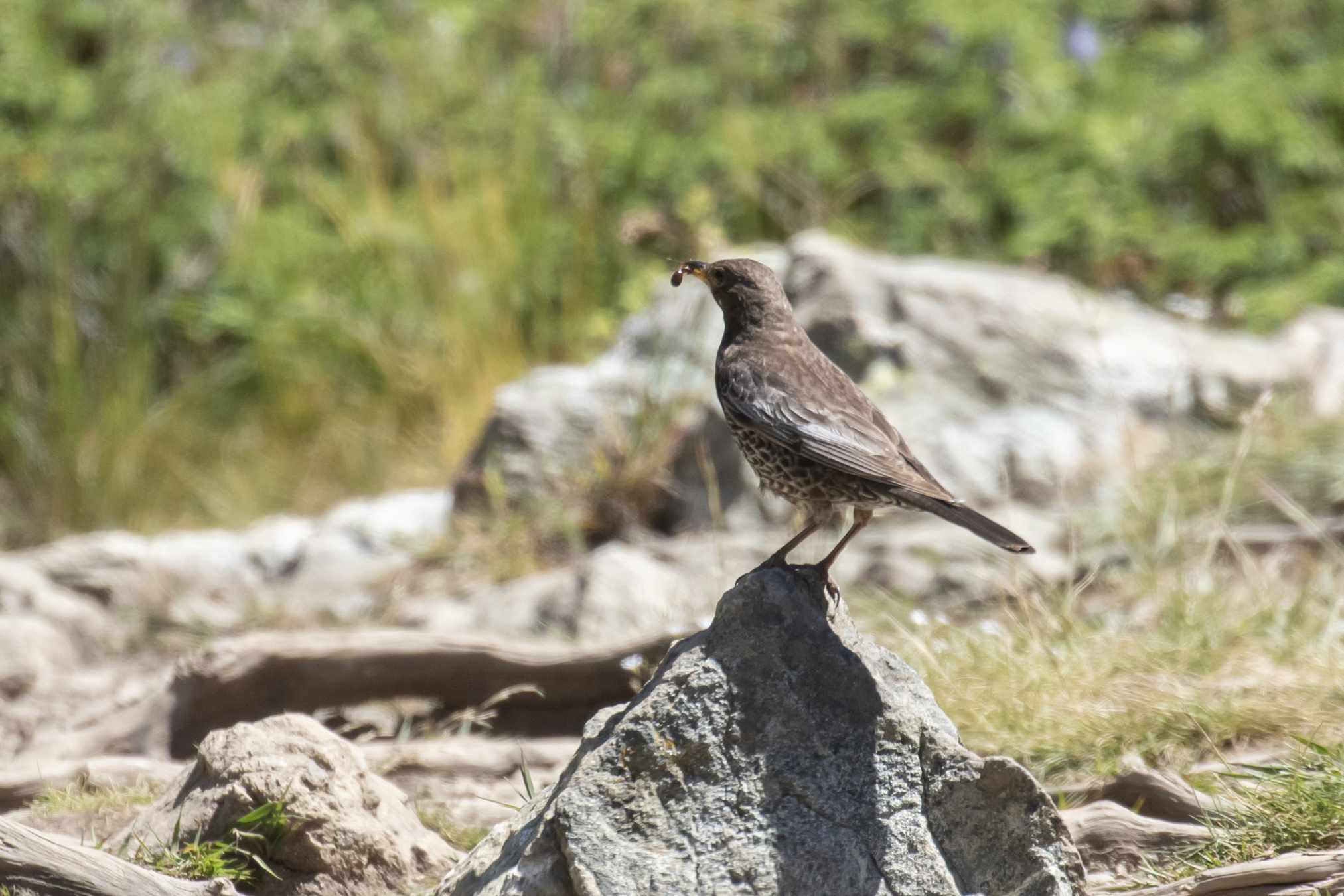
A nice female alpestris Ring Ouzel was collecting food on the path, the white-edged flank and undertail feathers just visible, forming a chequered effect:

Spotted Nutcrackers were in the forest. We had a number of flight views, but heard them calling regularly:

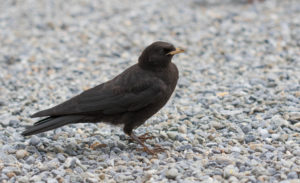
By the lake were singing Lesser Whitethroat and Blackcap and these Alpine Choughs dropped in, serenading us with their electronic flight calls:

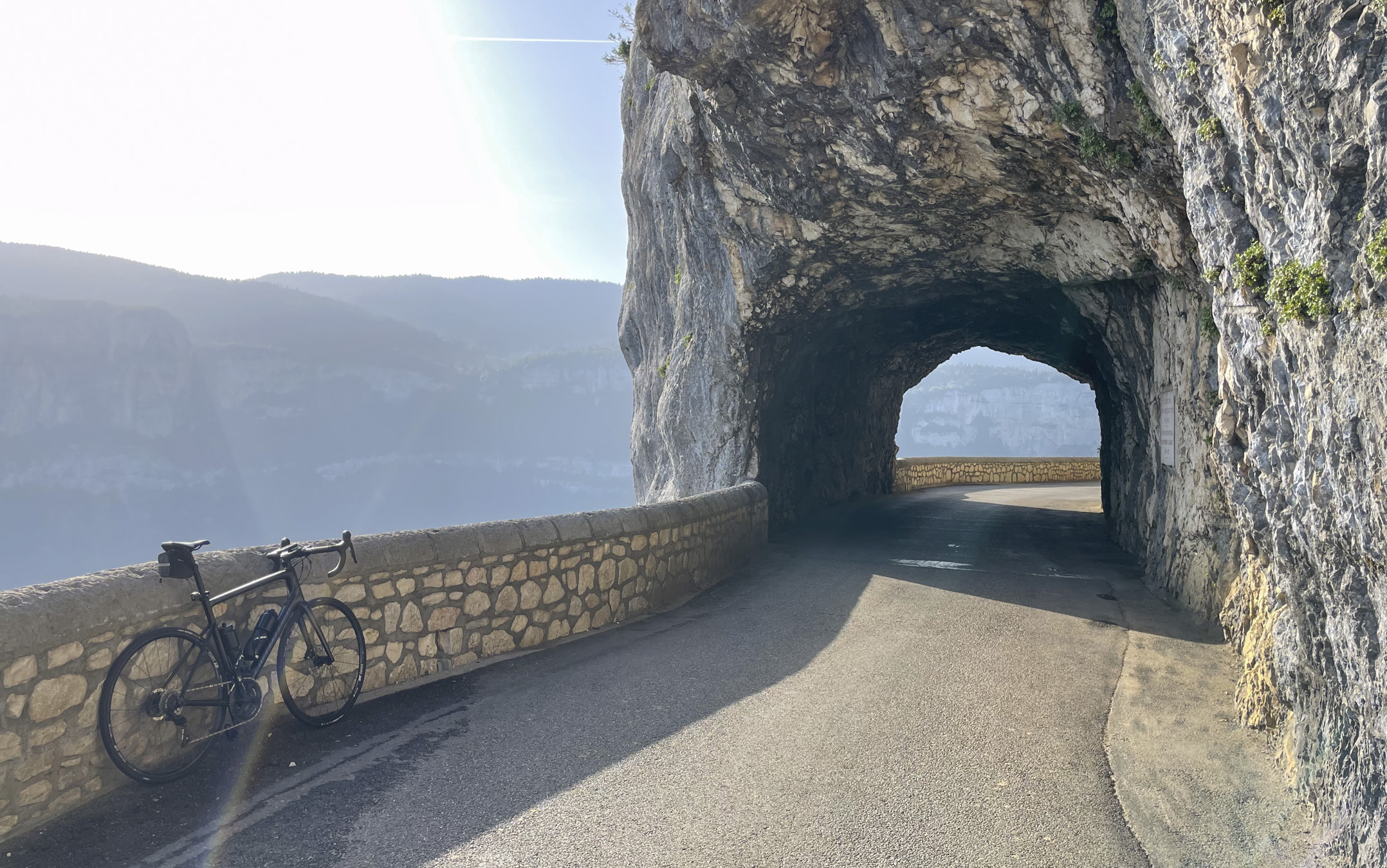
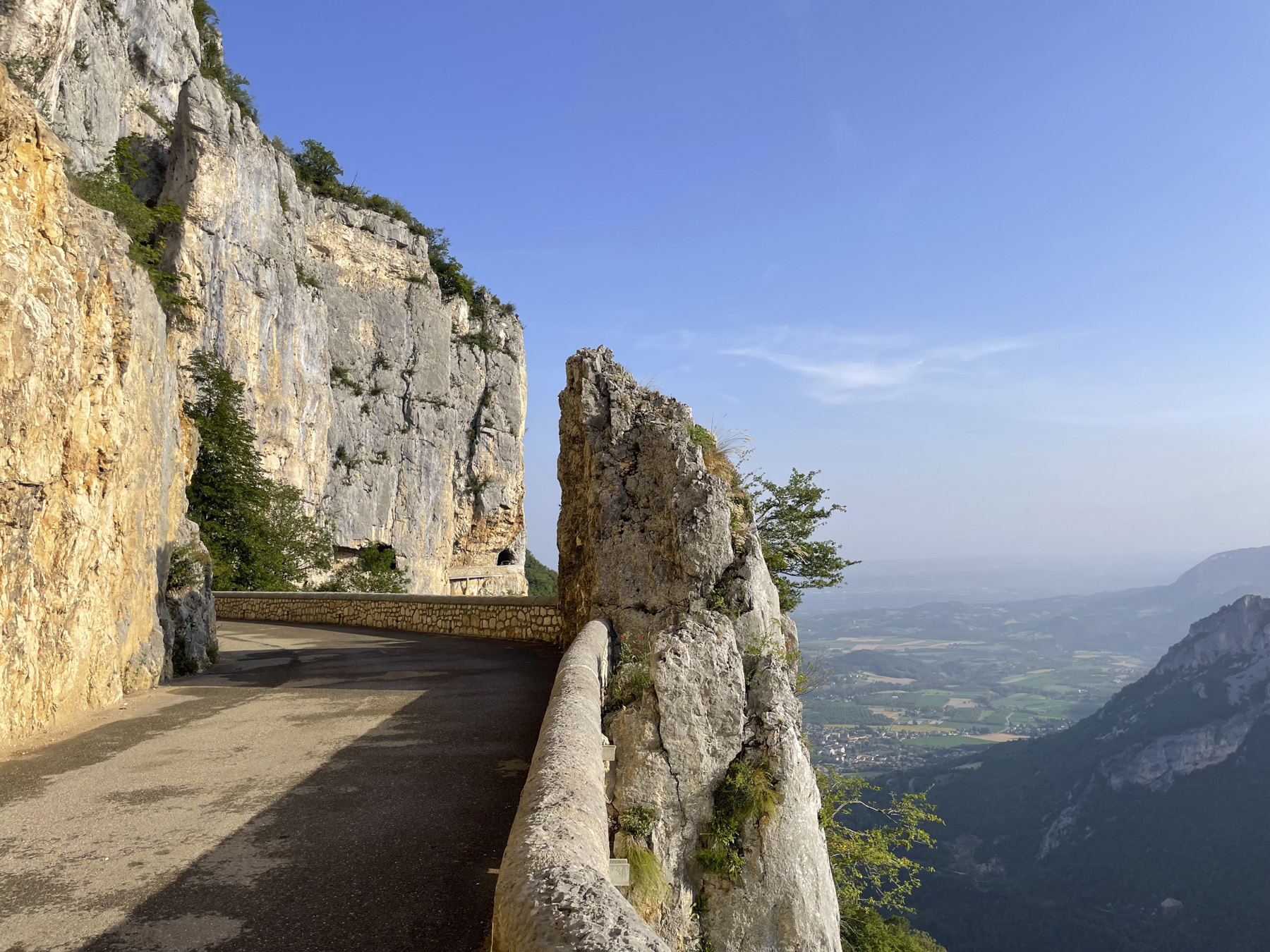
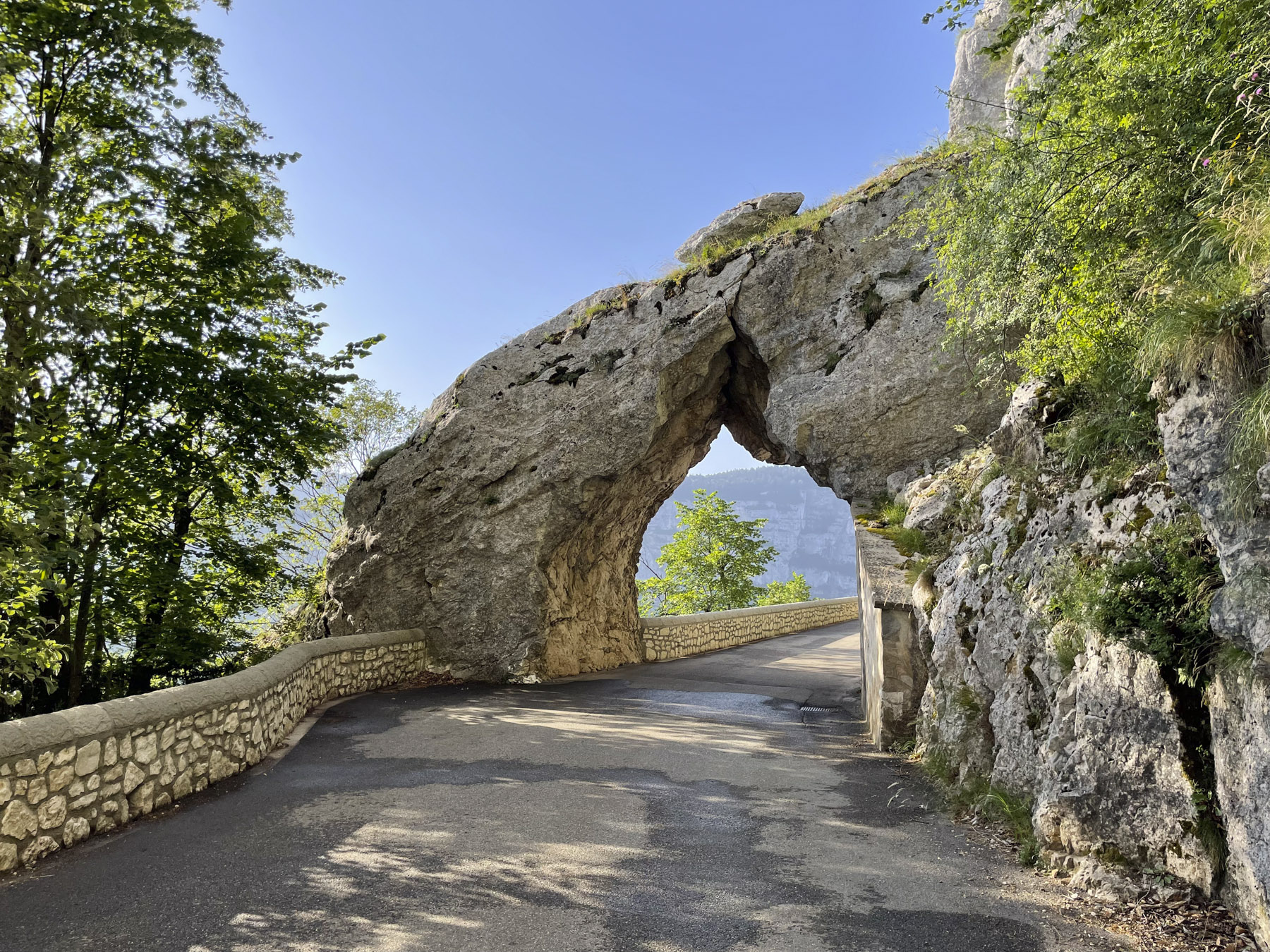
My next mountain ascent was by bike, up and around the incredible balcony road of Combe Laval, in the Vercours massif. This is not a road for the vertiginous. There is a vertical drop of 500m/1,500 feet on the other side of this low retaining wall:

Alpine Swifts zipped past at eye-level and a pair of Kestrels were feeding noisy young in a nearby nest. The scenery and views were breathtaking:

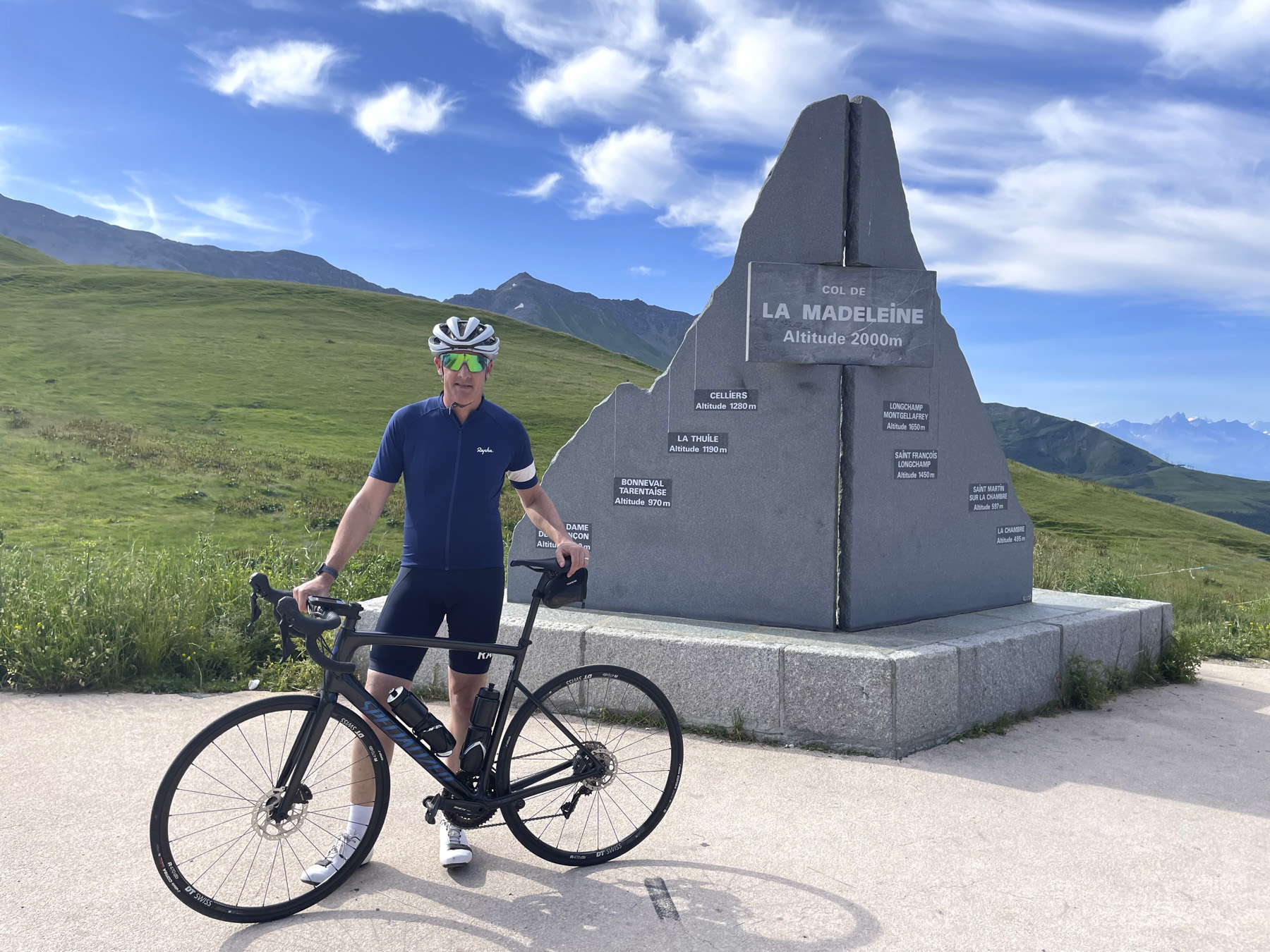
But the real cycling challenge was the climb up from La Chambre to the Col de la Madelaine, at 2000m elevation. This 19km climb at an average 8% gradient is a climb that has featured many times on the Tour de France. On the final stage of the ascent, as I left the treeline, I became aware of birds calling. There were calling Water Pipits, joining the background chorus of Eurasian Skylarks, Meadow Pipits, Linnets and Goldfinches. I pulled over and made a recording of the Water Pipit calls, a recording that was ruined by my audible hyperventilation as I completed one of the hardest climbs in the Alps at high altitude!

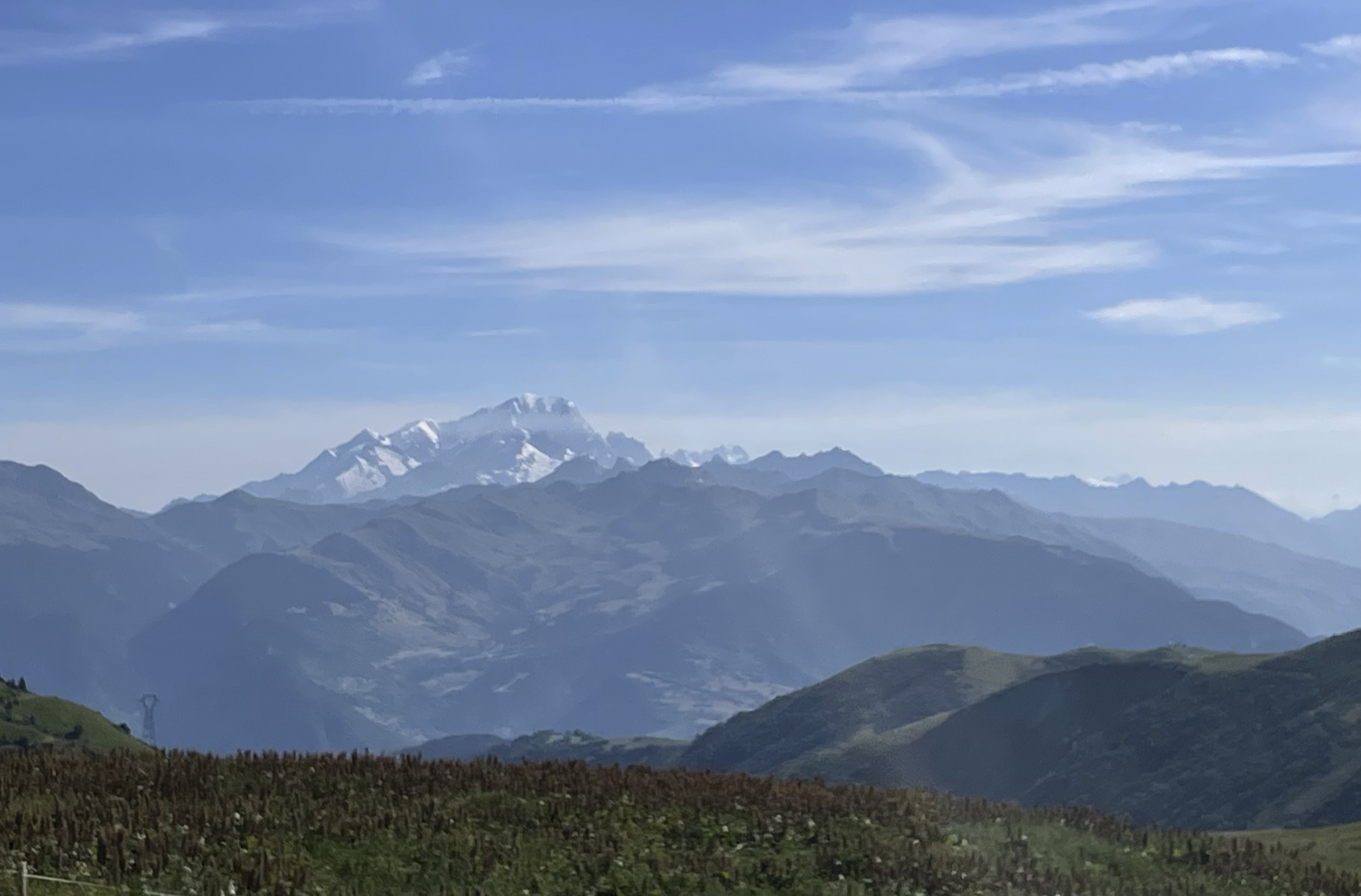
The views from the summit were incredible, with the Mount Blanc massif visible to the north. As I drank in the views, a Quail began calling from the vegetation in the foreground, a real surprise at 2000m elevation:

Mont Blanc, 4807m, as viewed from Col de la Madeleine at 2,000m

Next: the Chartreuse Massif; life and death in the French skies.

Switzerland 2: Kleine Scheidegg

Kleine Scheidegg is a small cluster of hotels around a station that sits on top of a pass well above the Lauterbrunnen valley, at over 2000m above sea level.

Kleine Scheidegg is completely dominated by the north face of the Eiger, or in English, the Ogre. This vertical slab of rock rises right behind the town and extends vertically to a summit at nearly 4000m. It is from the hotels in Kleine Scheidegg that guests used to train their telescopes onto climbers as they attempted to climb the “Mordwand”, the murder wall. The north face of the Eiger was only climbed for the first time in 1938 and “The White Spider” by Heinrich Harrer is still an excellent account of this ascent.

Above: the north face of the Eiger rising through the clouds. I felt sick just looking at it, let alone imagining what it must be like to attempt to climb such an enormous vertical wall of rock and ice. It used to take up to three days to climb the north face. Climbers risked constant rockfalls and freezing to death where they slept, even in summer. Nowadays the current record for a North Face climb is under two and a half hours. Ueli Steck makes it look easy in this short video. Sadly Ueli died less than 3 months ago whilst training for a new route to the summit of Everest:

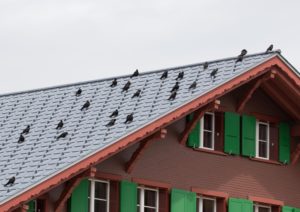
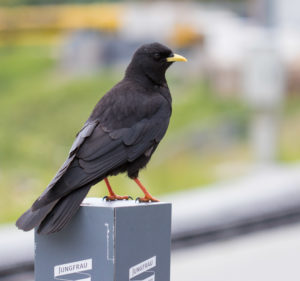
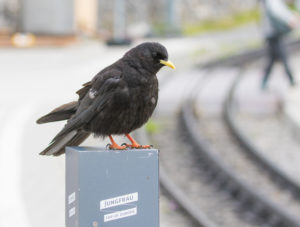
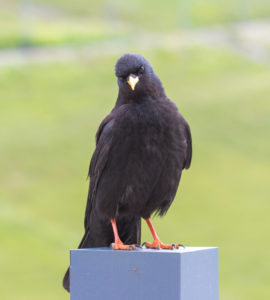
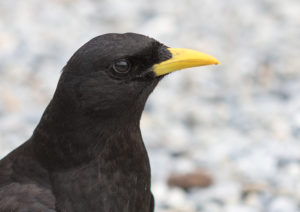
But I was not in Kleine Scheidegg for the Eiger. I was there for the Alpine Choughs. These fabulous high altitude corvids, with bright yellow bills and bright red legs are full of character. I have been to Kleine Scheidegg once before in summer and a few times in winter. This time I had a camera with me. We arrived in town after a 90 minute walk down from the Männlichen cable car. Whilst the family got together some lunch, I went to work on the Alpine Choughs.  They were not difficult to see. The first flock I located were perched up on a hotel roof:

But with an increase in diners at the outdoor restaurants, they soon moved much closer. First onto the roofs above the station:

Then down onto the posts by the railway, opposite tables full of feasting tourists. Some adult birds looked quite smart:

Some less so:

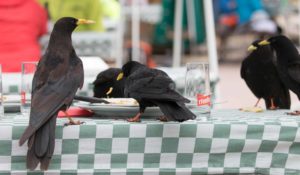
At even the slightest break in human activity, they would swoop down onto the tables and devour left-over food.

There is something rather ignominious in seeing these majestic high mountain birds fighting for scraps at restaurant tables. But it does make getting frame filling pictures easy. Once in a while the flock would rise and fly in front of the Eiger, the evocative call of these birds echoing around the mountains. Then they would return for more chips:

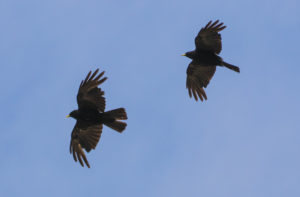
In mid-July most of the adult birds were in active moult, replacing their inner primaries and their central tail feathers. This was particularly obvious in flight:

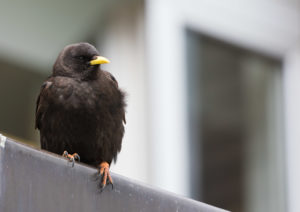
There were also good numbers of juvenile Alpine Chough in town. These youngsters followed their parents everywhere, loudly begging for food. Immature Alpine Chough do not have the bright red legs of adults and the bill is pale yellow with a dark smudge on the upper mandible, near the tip:

But whether adult or young, Alpine Chough are charismatic birds and you won’t get much closer views than in Kleine Scheidegg:

Next: high mountain finches on Männlichen.

error: Content is protected !!