Madeira 3: pterodroma petrels

The main reason that most birders come to Madeira are the pterodroma petrels that breed on and around the island. Modern taxonomy describes the pterodromas that breed on the Desertas Islands as Desertas Petrel; those that breed on highest peaks of Madeira as Zino’s Petrel and the birds that breed on the equatorial Cape Verde Islands as Fea’s Petrel. As Desertas and Fea’s Petrels are virtually indistinguishable in the field, many simply lump them together under the general title “Fea’s Petrels”. Here I am going to call them Desertas Petrels, in order to distinguish them from the Cape Verde breeders.

Neither Desertas nor Zino’s Petrels are particularly common birds, even around the islands. Flood and Fisher (2013) estimate that there may be some 150-200 pairs of Desertas Petrels on Bugio and a total world population of perhaps some 3,000 Fea’s-type birds (including those breeding on the Cape Verde Islands). Estimates of the Zino’s Petrel population on the peaks of Madeira are difficult, but there may be as few as 50 pairs remaining after the catastrophic forest fires of 2010 which affected their breeding colony.

I did visit Pico do Arieiro with Hugo and Catarina to try to hear Zino’s Petrels returning to their colony at night, but we were unlucky with the weather. Whilst it was a humid 28 degrees in coastal Funchal, at 1818m on the summit of Pico do Arieiro, it was only 8 degrees and that was without the significant windchill. The clouds were rolling in and it was not deemed safe to head out onto the edges of the mountains to listen for petrels:
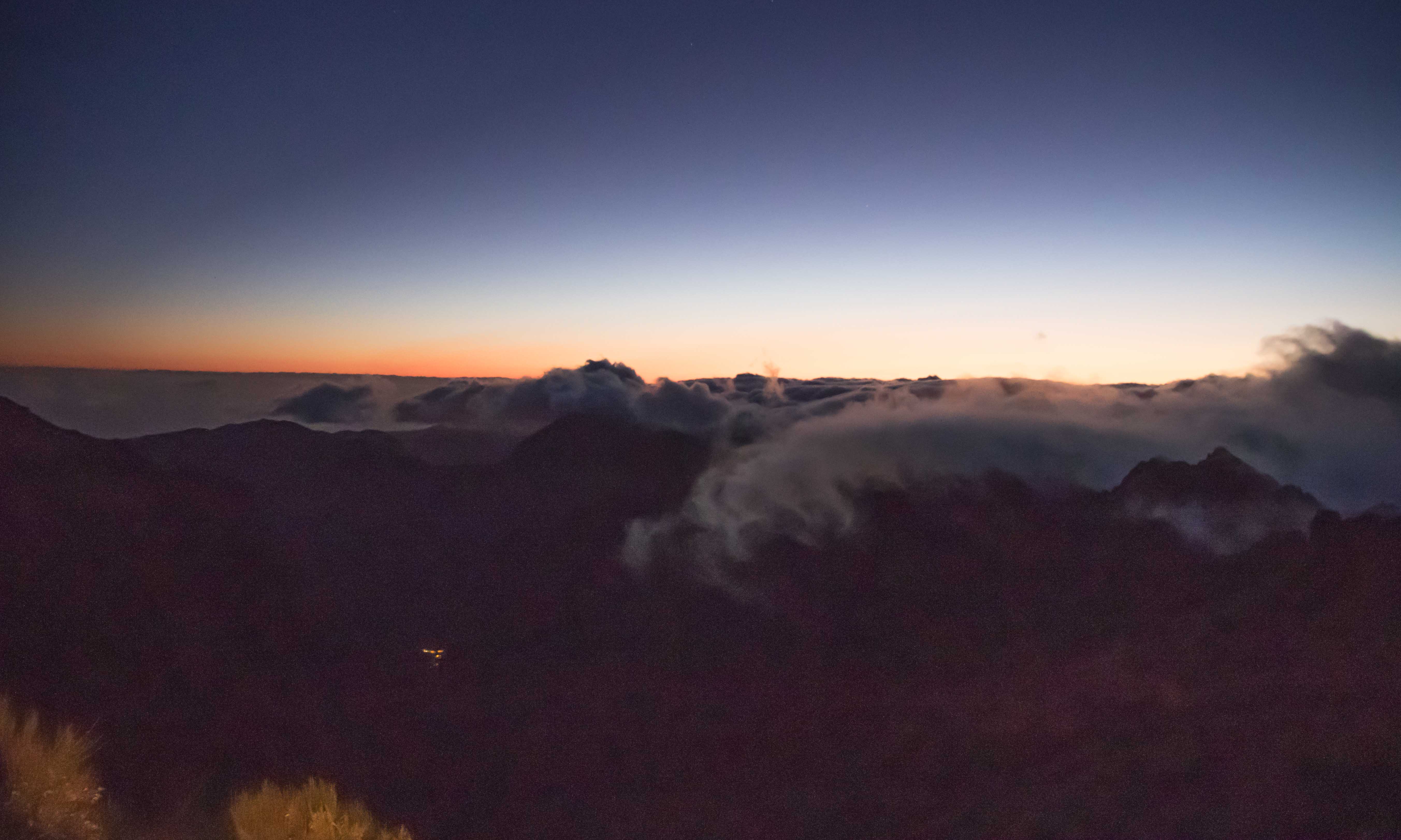
The view from the summit of Pico do Arieiro, the top of the volcano.

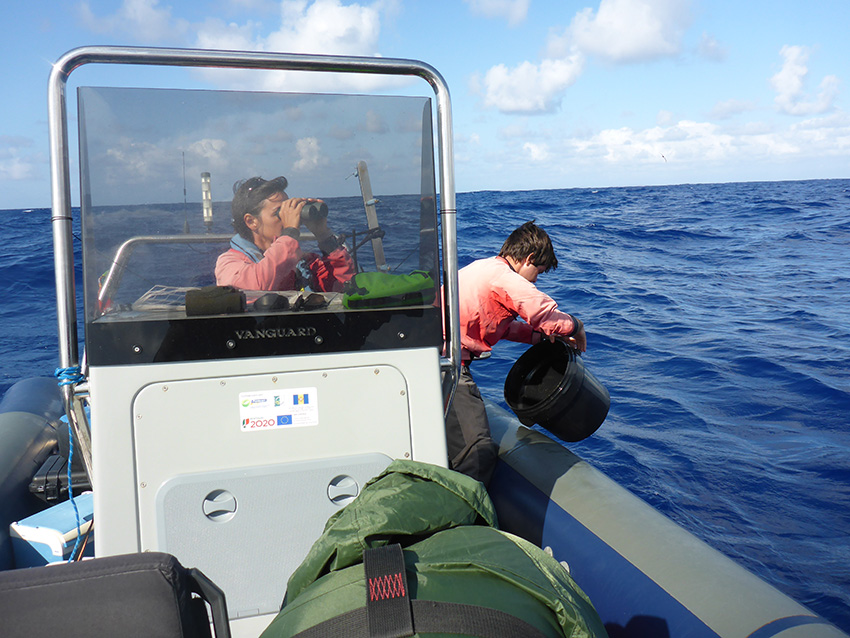
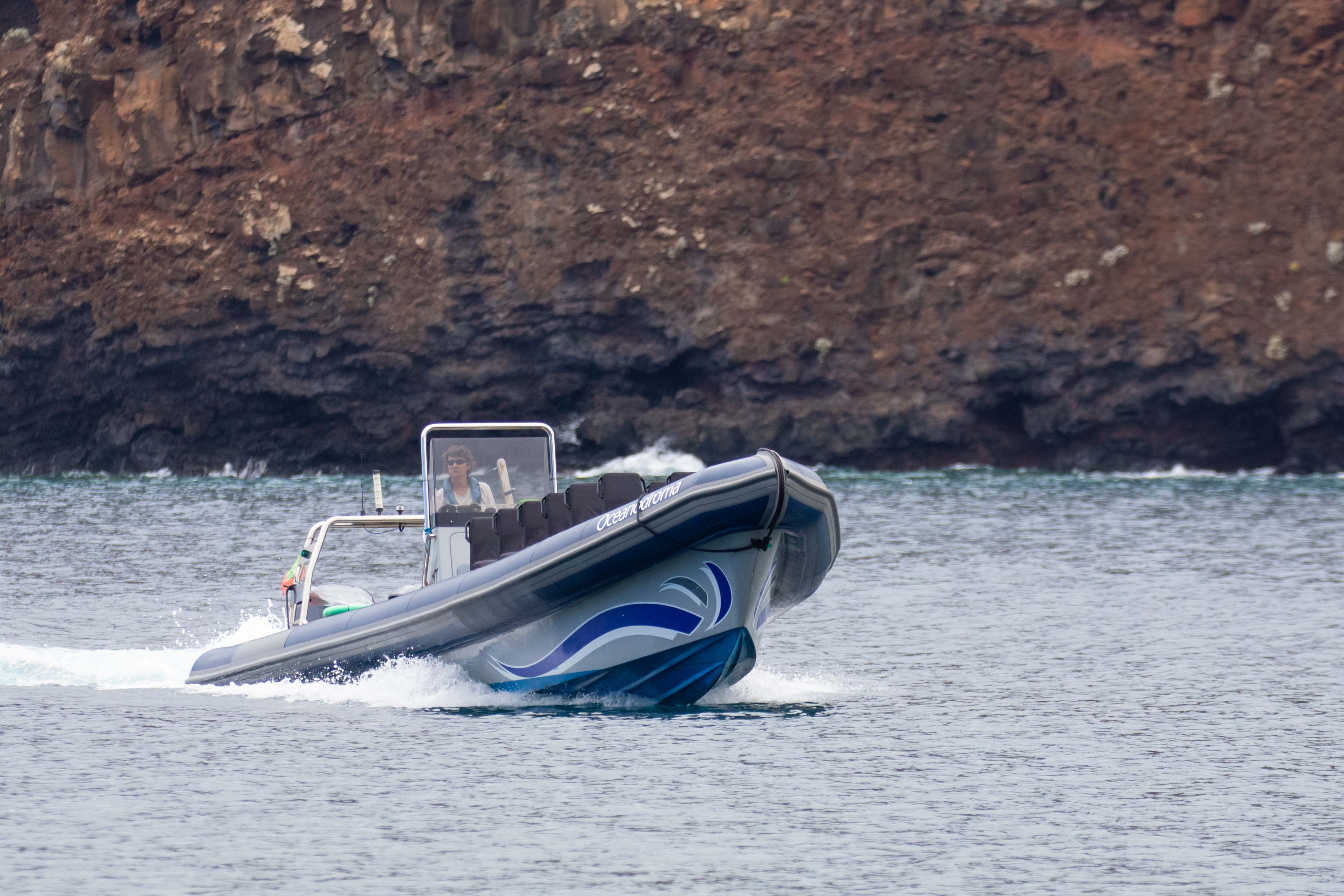
So, my chances of seeing pterodroma petrels would be limited to the three consecutive afternoons and evenings at sea that make up the Windbirds pelagic trips. Getting far enough out to sea to have a reasonable chance of attracting pterodroma petrels takes a little work. Fortunately, Hugo and Catarina make this as straightforward as is possible, but hours at sea are required and sightings are not guaranteed. The boat is a 12 seater RIB, the “Oceanodroma”, fitted out with compression seats, that absorb the impact of the boat bouncing through the waves:
There were 9 birders on our trips, 7 Germans, a Frenchman and me. I teamed up with Fabian Bindrich, a German birder, who I sat next too on all three trips and who has provided some of the pictures in this post. He took this one of me (third from right) and the rest of the team as we waited to depart in Machico harbour, some 20 minutes drive from Funchal.
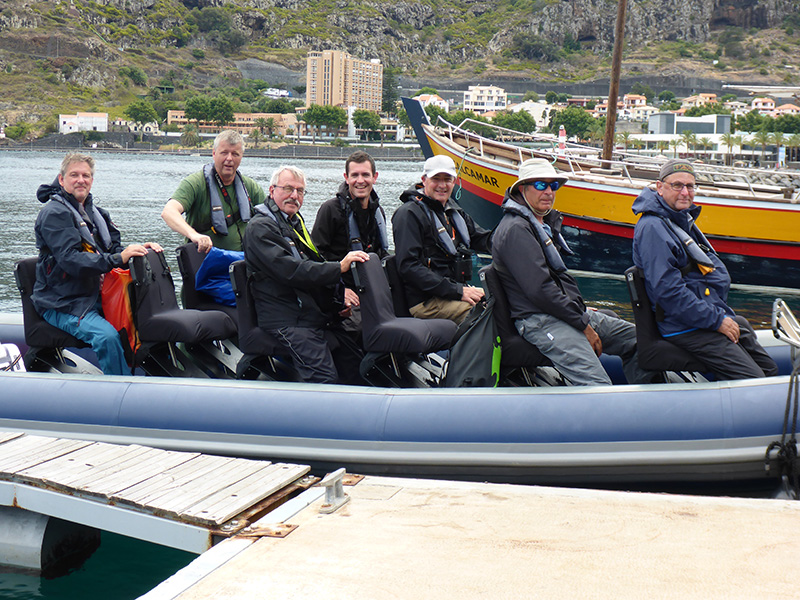
Photo by Fabian

The trips all follow a similar pattern: we travel for up to two hours out to sea. We then spend 4 – 5 hours chumming and drifting, before returning the 1.5- 2 hours back to the island. Our first trip, on Wednesday 30th July, was the most demanding. There was a brisk, force 6 northerly wind and a 1.5-meter swell. These were good conditions for spreading the smell of rotting fish and fish oils from the chum that would attract seabirds, but would make for a demanding afternoon. As Zino’s Petrel was our first target, we would head north, directly into the wind and waves. We were warned on our departure that the journey out would be “extremely wet”. They were right.
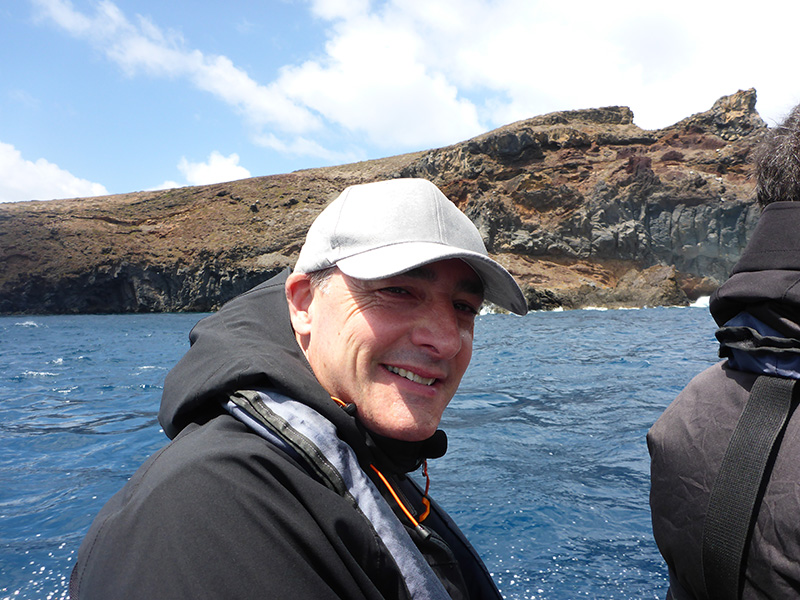
Photo by Fabian

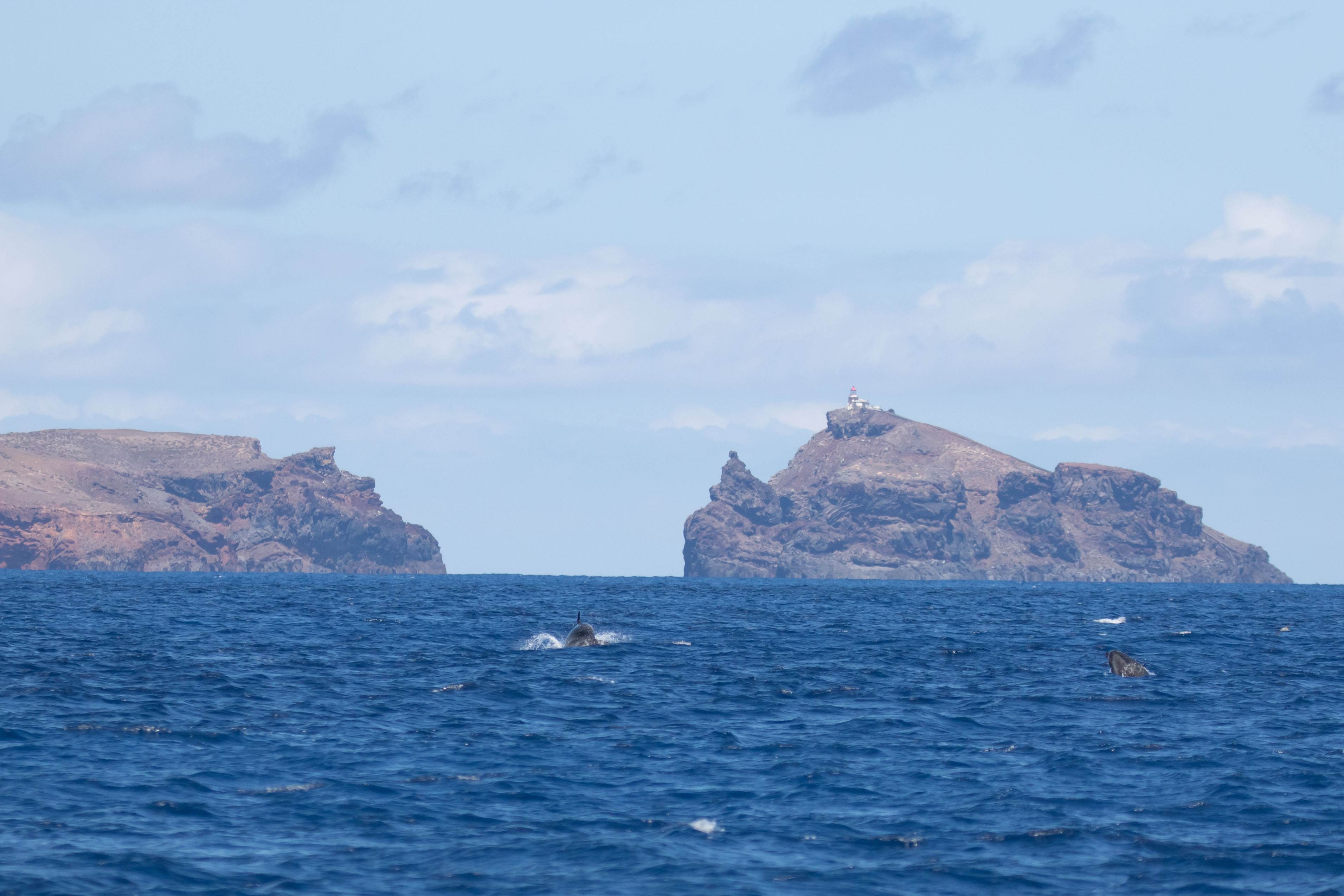
It started innocently enough. We sped out of Machico harbour and headed east, sailing parallel to the long headland that makes up the far eastern tip of Madeira. At the end of the long headland there is an offshore island, Ilhéu do Farol, with a lighthouse on top. Between the two is a narrow gap with a fierce tide race. As we approached, Fabian and I glanced at each other nervously. A two-meter high wall of waves was being thrown up as the wind driven waves from the north attempted to power through the small gap in the headland. The way the waves stood out against the calm of the bay that we were crossing was incredible. “I’m glad we are not going through there” I said to myself, in the same instant that Catarina turned the boat to the port side and we headed straight for the standing mass of turbulent waves.

It was not possible to capture this with our cameras. Our equipment was stored away in dry bags and we were holding on for dear life. I took a picture of the gap on a completely calm day, on our third afternoon. It is the idyllic gap above the splashing Bottle-nosed Dolphin. It certainly was not like this on our first day:
We shot up the first wave and slammed down into the trough behind it, landing with a loud thud. We were heading directly into the northerly wind so there was no escaping the wind or the waves. The compression seats were fantastic, absorbing much of the impact of landing, but it took all one’s concentration to anticipate the hard landings as we hit the bottom of the troughs. Having nothing to do except hang on, I spent some time trying to produce an accurate description of the experience. The nearest I got was this: imagine trying to ride a bucking broncho at the fair. It thrashes around all over the place, but you manage to hang on, constantly using your arms and legs to balance. Add to that image the fact that someone is throwing a cold bucket of saltwater in your face, about once every minute. For 90 minutes. That was our ride out north of Madeira.

After 90 minutes of being slammed up and down, we arrived. It says something about the journey out that I was actually looking forward to spending the next 4 hours drifting and chumming, an experience that usually turns me green. Fortunately, we were well advised by Hugo and Catarina and my system was filled with Stugeron, which kept all sensations of seasickness at bay on all three afternoons.
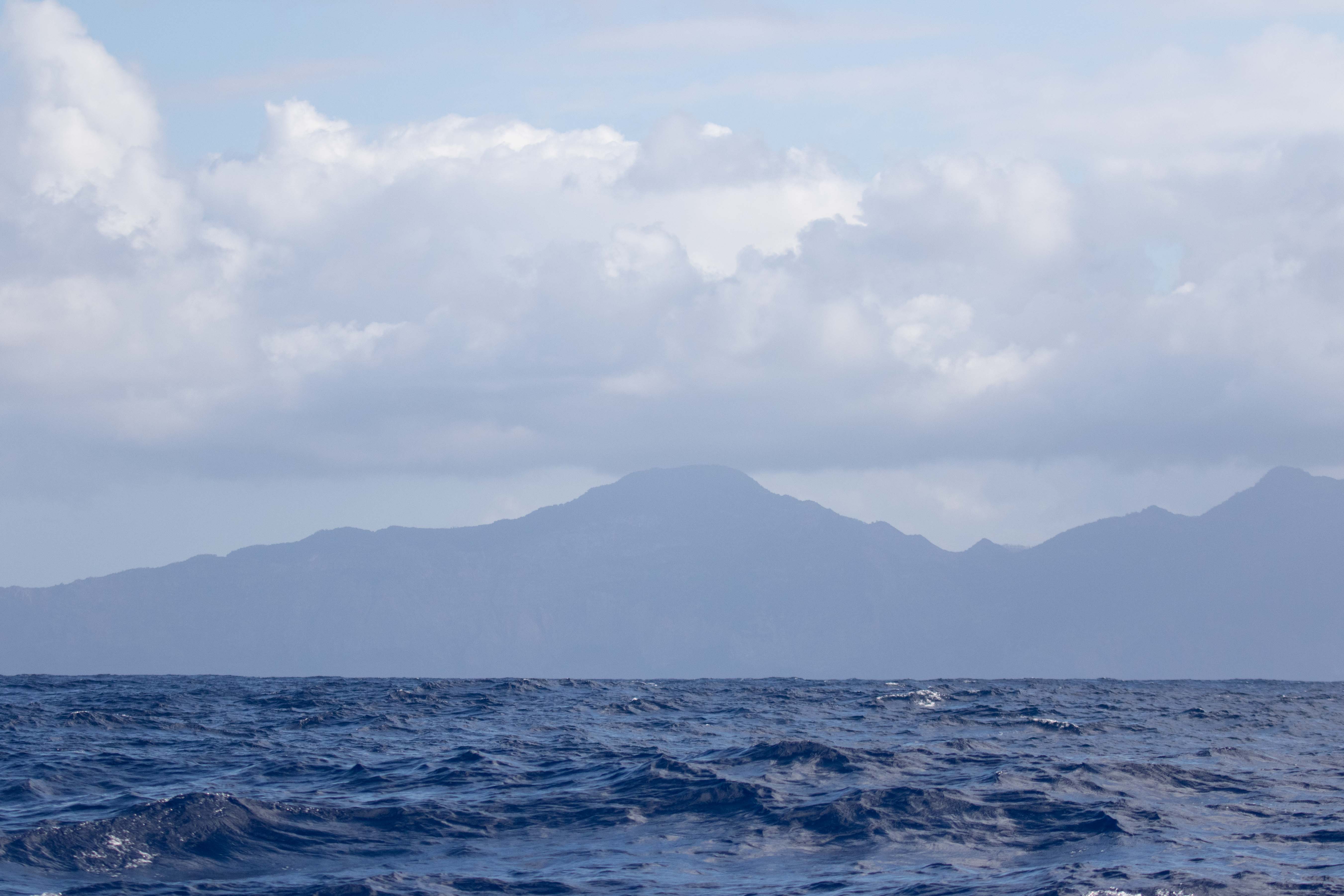
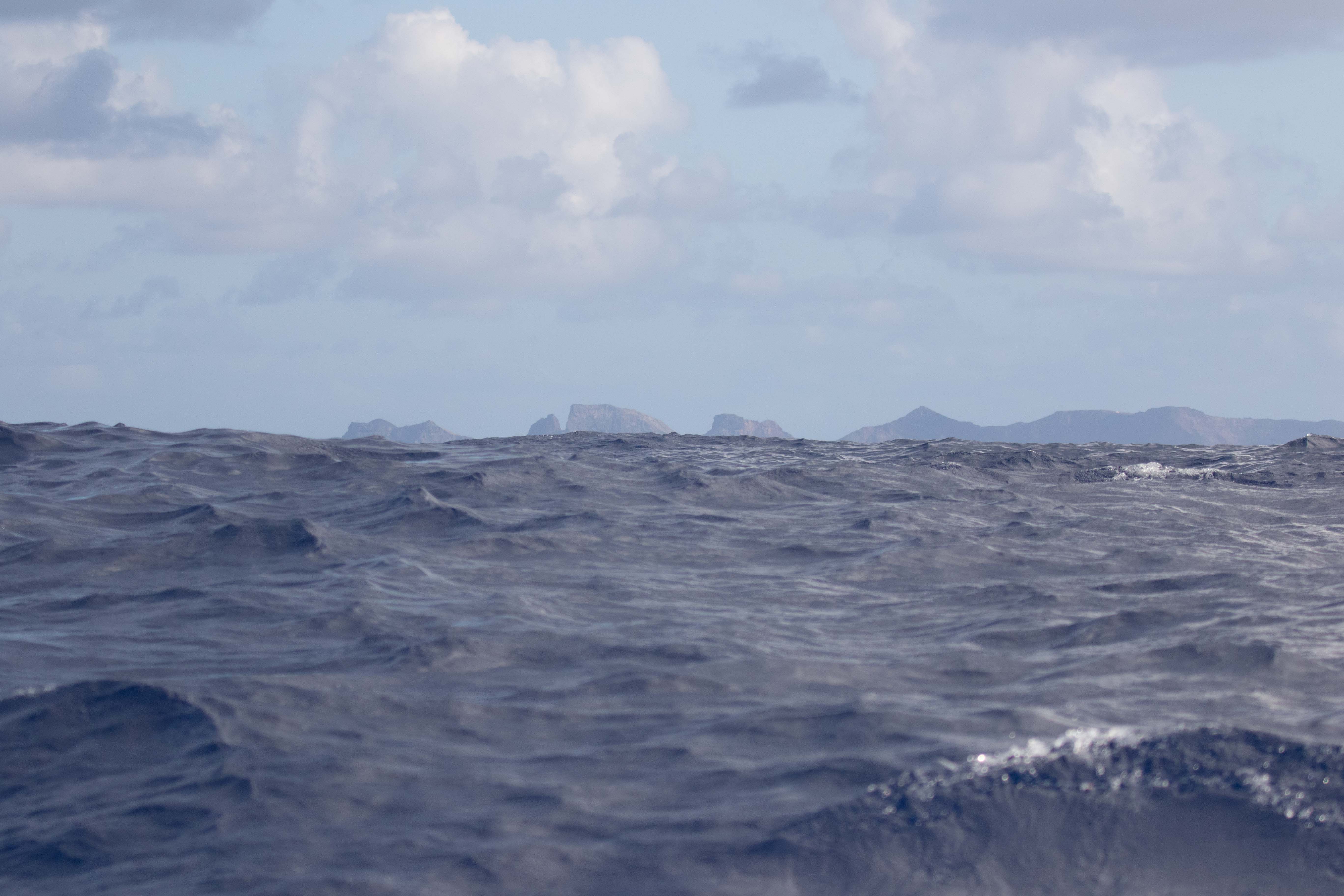
The swell: now you see Madeira…
… now you don’t. Flick between these two images for four hours and you’ll get an idea of what the swell was like.
Catarina on the lookout, Hugo dishing out the chum. He also served biscuits, sandwiches and quiche to us birders. Photo by Fabian

Zino’s Petrel

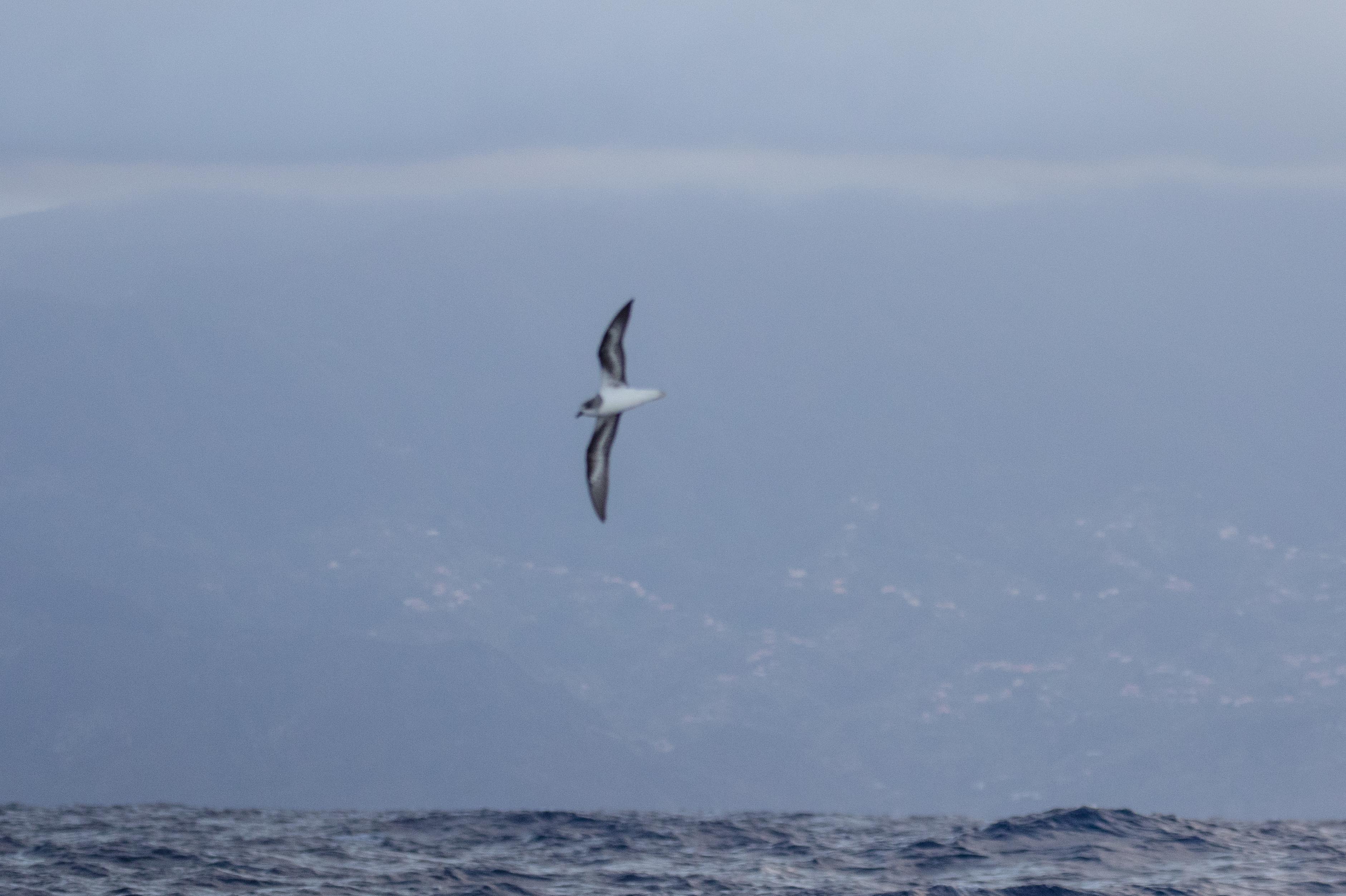
Our main target. Although we had a distant pterodroma petrel in the late afternoon, it appeared directly in front of the sun and then disappeared, unidentified. The afternoon turned to evening. We were surrounded by Cory’s Shearwaters and Bulwer’s Petrels. The light faded. At 20:25 Catrina picked up an incoming Pterodroma, coming towards us from the south. It was slender and lightweight:
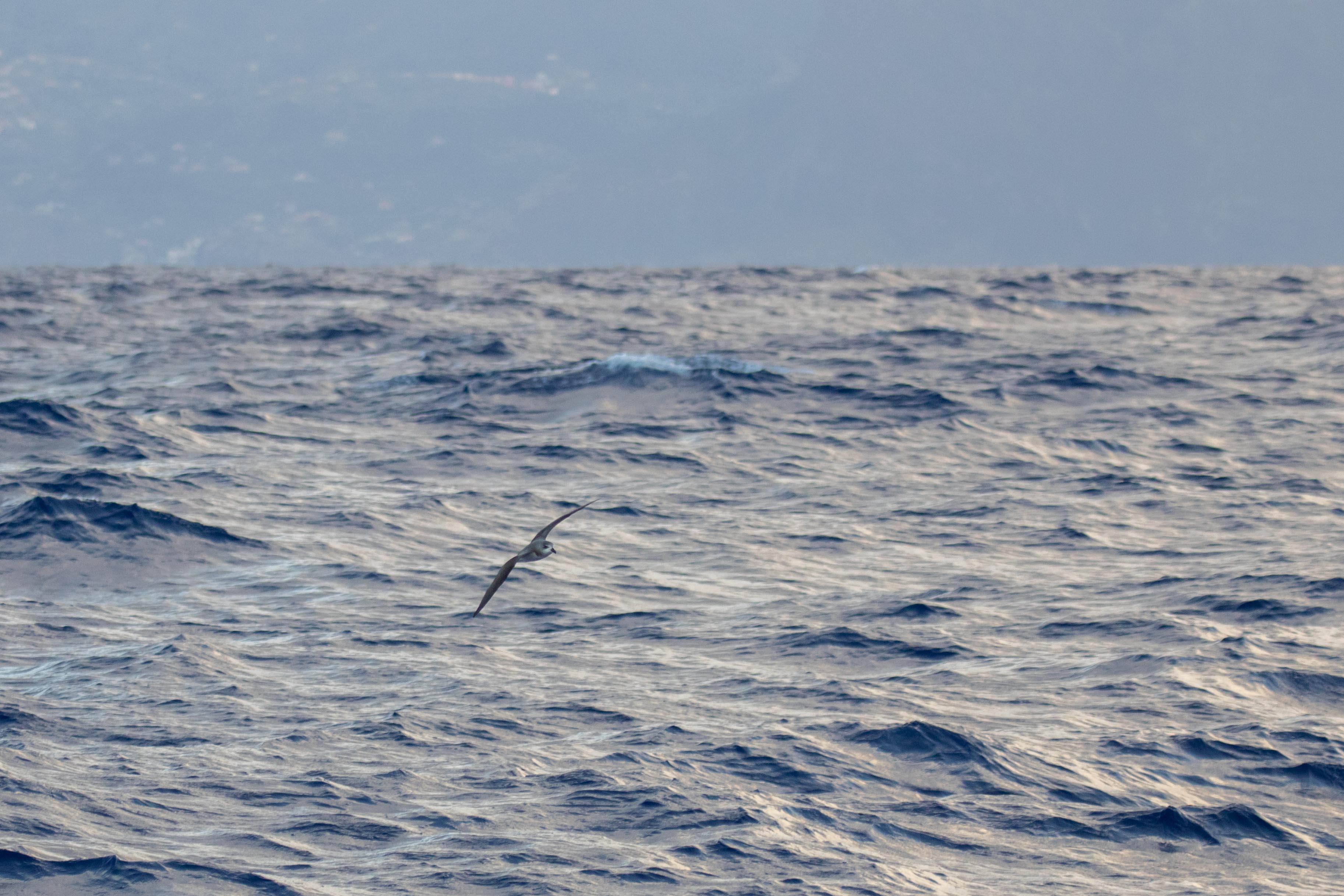
As it approached the slim bill confirmed it’s identity, our first Zino’s Petrel! I awaited cheers or some sign of celebration from the other birders on board, but none came. I expressed my surprise to Hugo later and he explained “Germans celebrate inside”.
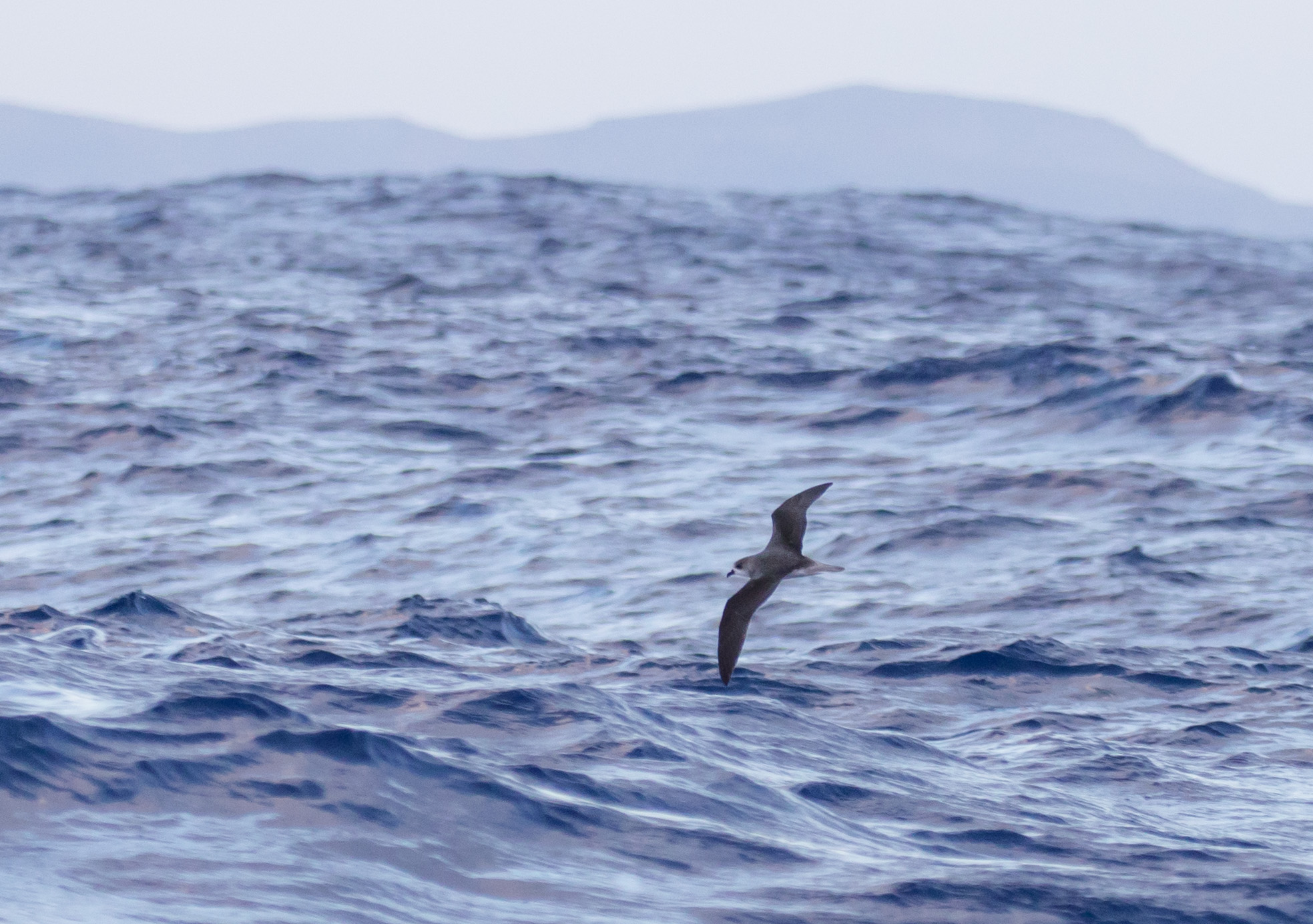
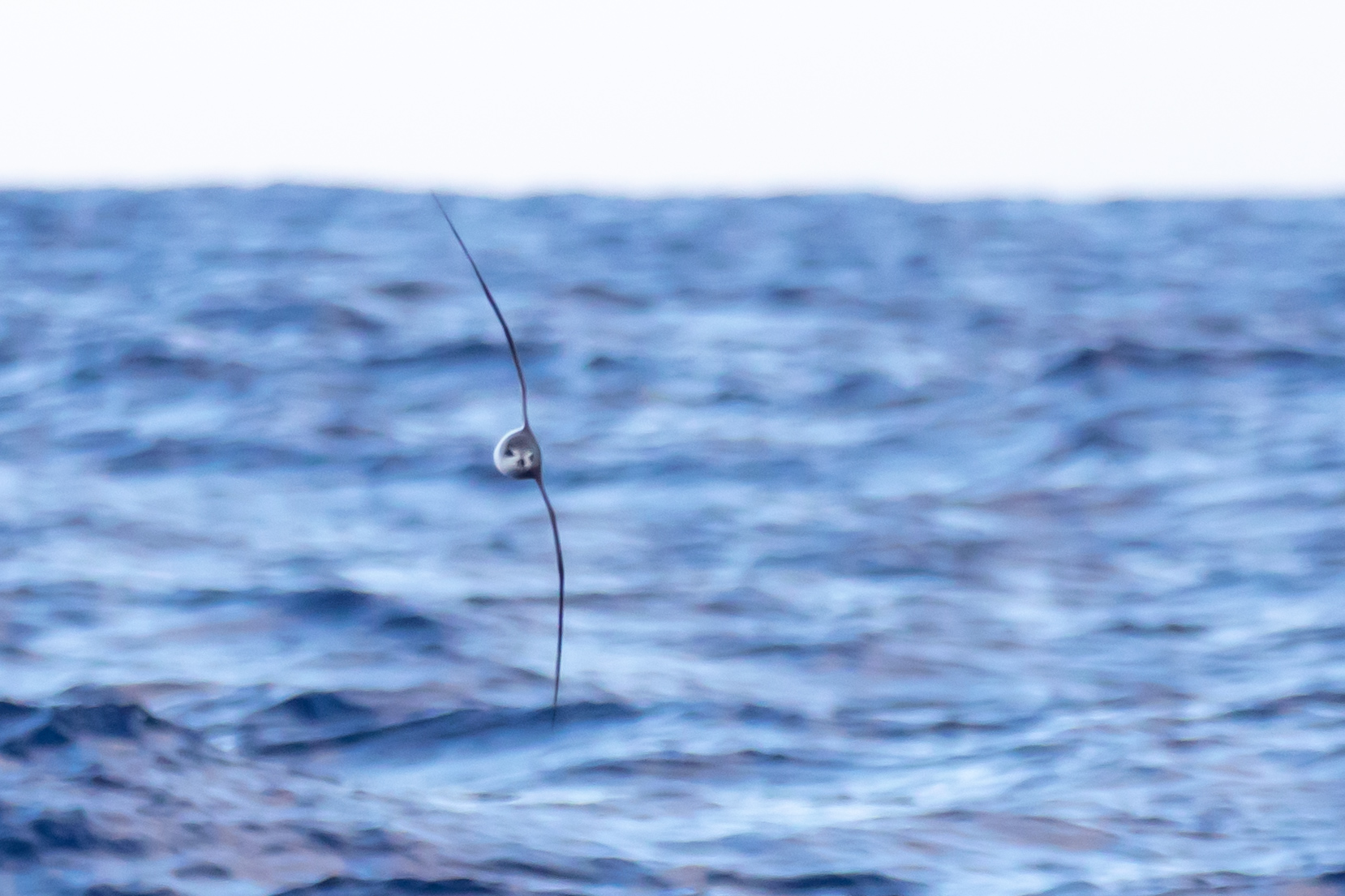
Zino’s Petrel at sea. The shape of the horizon gives some idea of the sea state: decidedly lumpy!
Head-on Zino’s.
This bird had large white underwing coverts and a slim bill, a straightforward Zino’s Petrel.

The journey back, with the wind behind us, was a breeze. We skimmed over the waves as darkness fell. And then at 20:56 another Pterodroma appeared. It zipped past in the middle distance in really poor light. It was not conclusively identified at the time but was recorded as a possible Desertas Petrel. I tried to photograph it, but it was too dark and the results hardly qualified as record shots. But on reviewing those images back at home, the bill of this bird appears tiny and one shot appears to reveal a moderate amount of white on the underwing. A probable Zino’s Petrel?
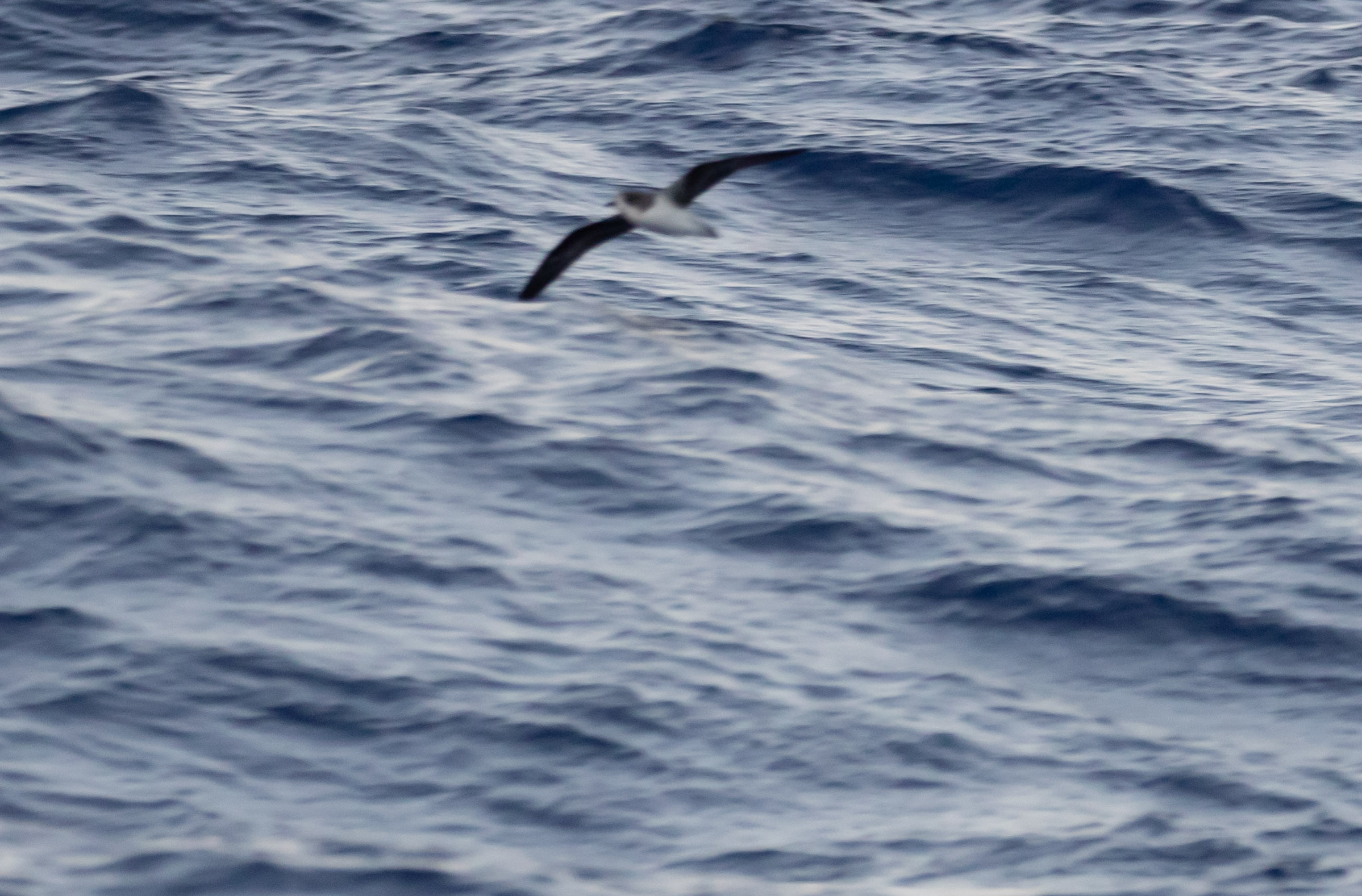
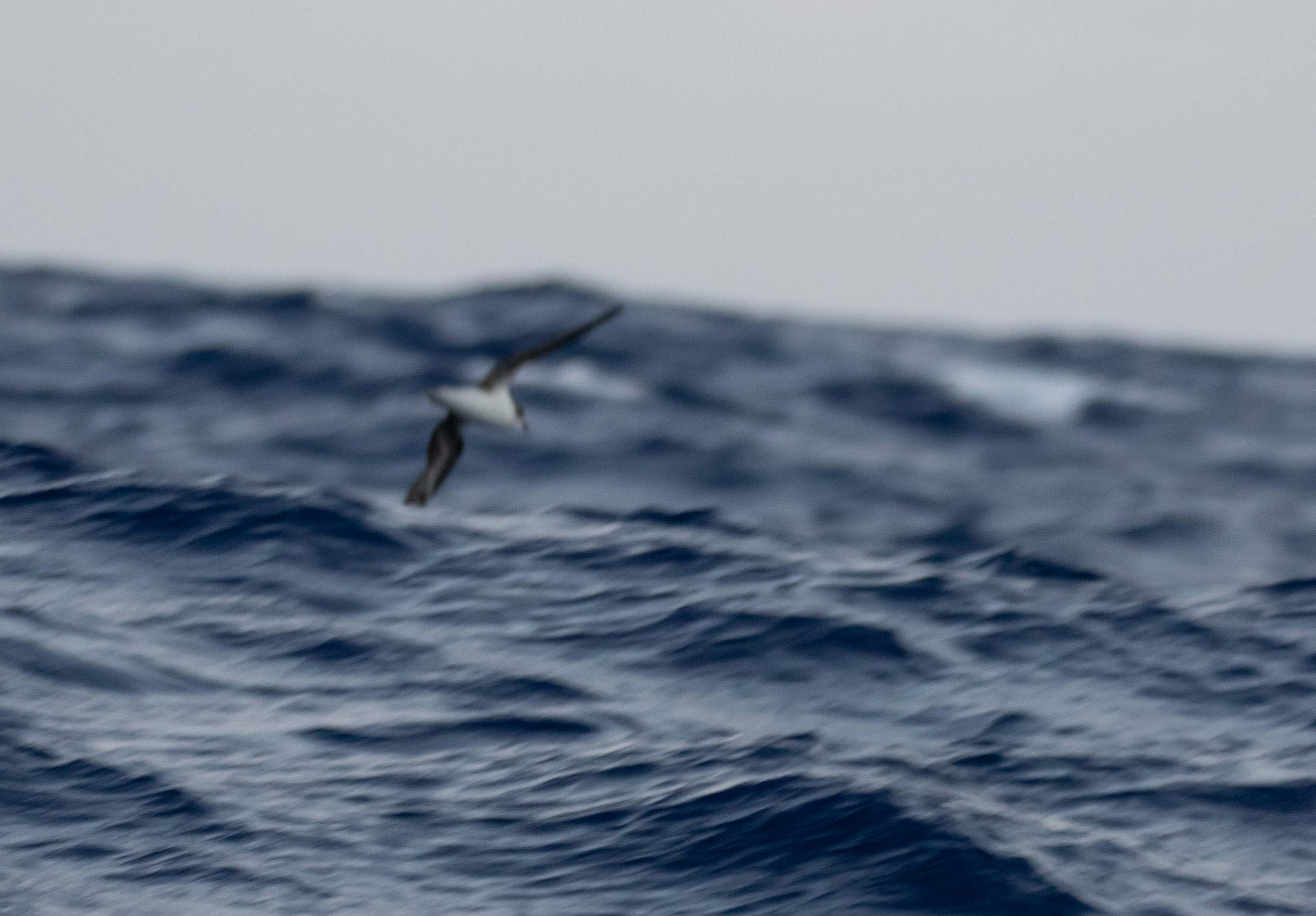
Unidentified pterodroma petrel in the dark 1. Note the tiny bill.
Unidentified pterodroma petrel in the dark 2: pale underwing coverts?

Crossing the tiderace between Ilhéu do Farol and the peninsular was like surfing. We rode the waves across the gap and gently body boarded into the calm waters south of the headland. We were home, having seen Zino’s Petrel.
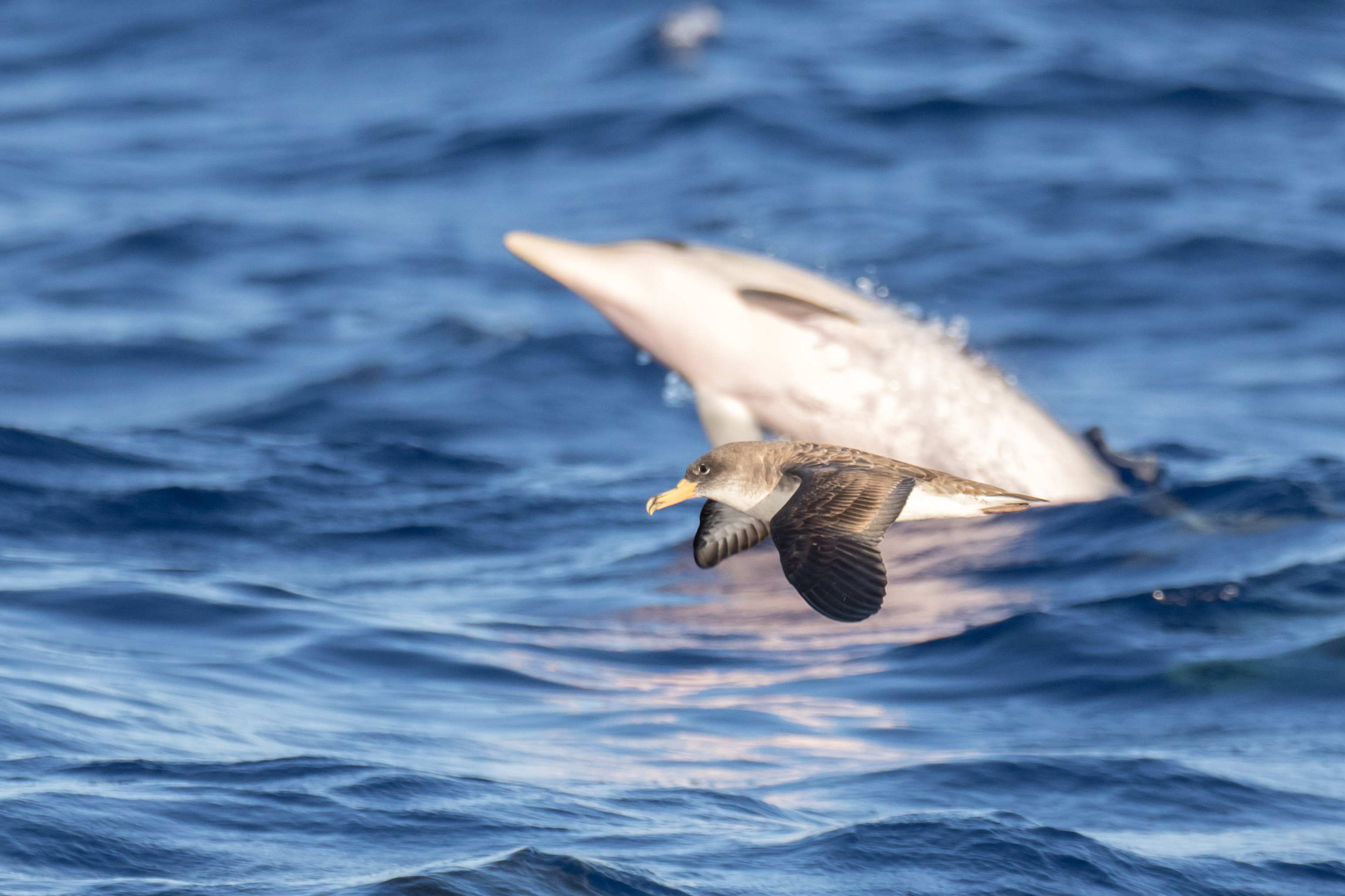
Cory’s Shearwater and Atlantic Spotted Dolphin from day one. We heard dolphins calling before we saw them. Dolphins on call!

Desertas Petrels

The second and third afternoons were spent to the south of Madeira looking for Desertas Petrel and storm-petrels. Conditions were calmer, with less wind and swell, which was physically easier, but less helpful in dispersing the chum. Day two was the quietest of the three days. There were hundreds of Bulwer’s Petrels around the chum slick, but very little else and no pterodroma petrels were seen.
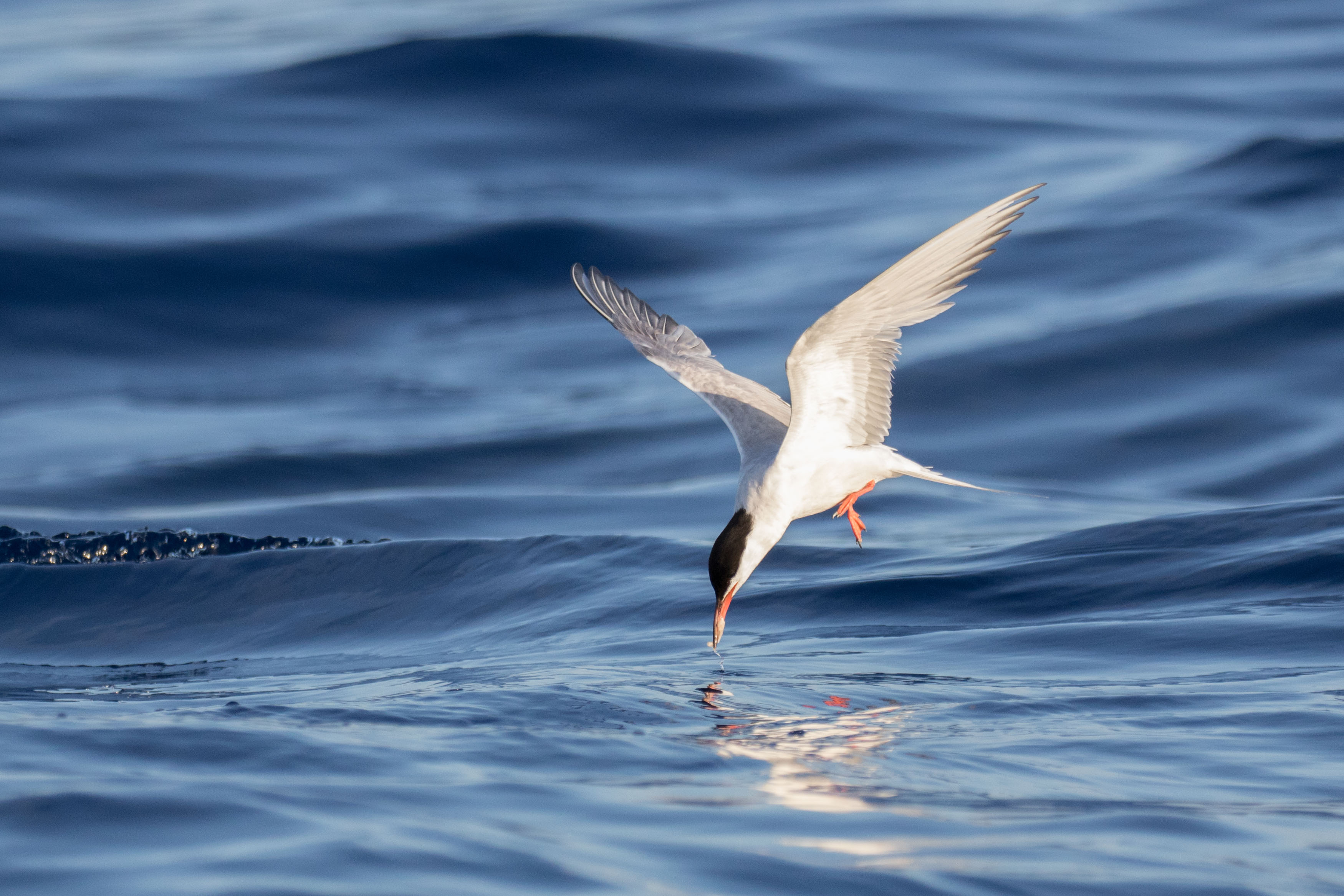
Common Tern

Eventually, at 18:30, two storm-petrels appeared in the chum slick. All storm-petrels are good, but when White-faced, Maderian and Wilson’s Petrels are all distinct possibilities, seeing 2 European Storm-petrels was something of an anti-climax. Especially when we learnt that the trip after ours saw all the specialist storm petrels, see here. Our only consolation was being accompanied by over 40 Atlantic Spotted Dolphins as we returned to Maderia. The sea was bathed in orange from the setting sun, a large pod of dolphins was all around our speeding boat, bow-riding just for the fun of it, just fabulous.
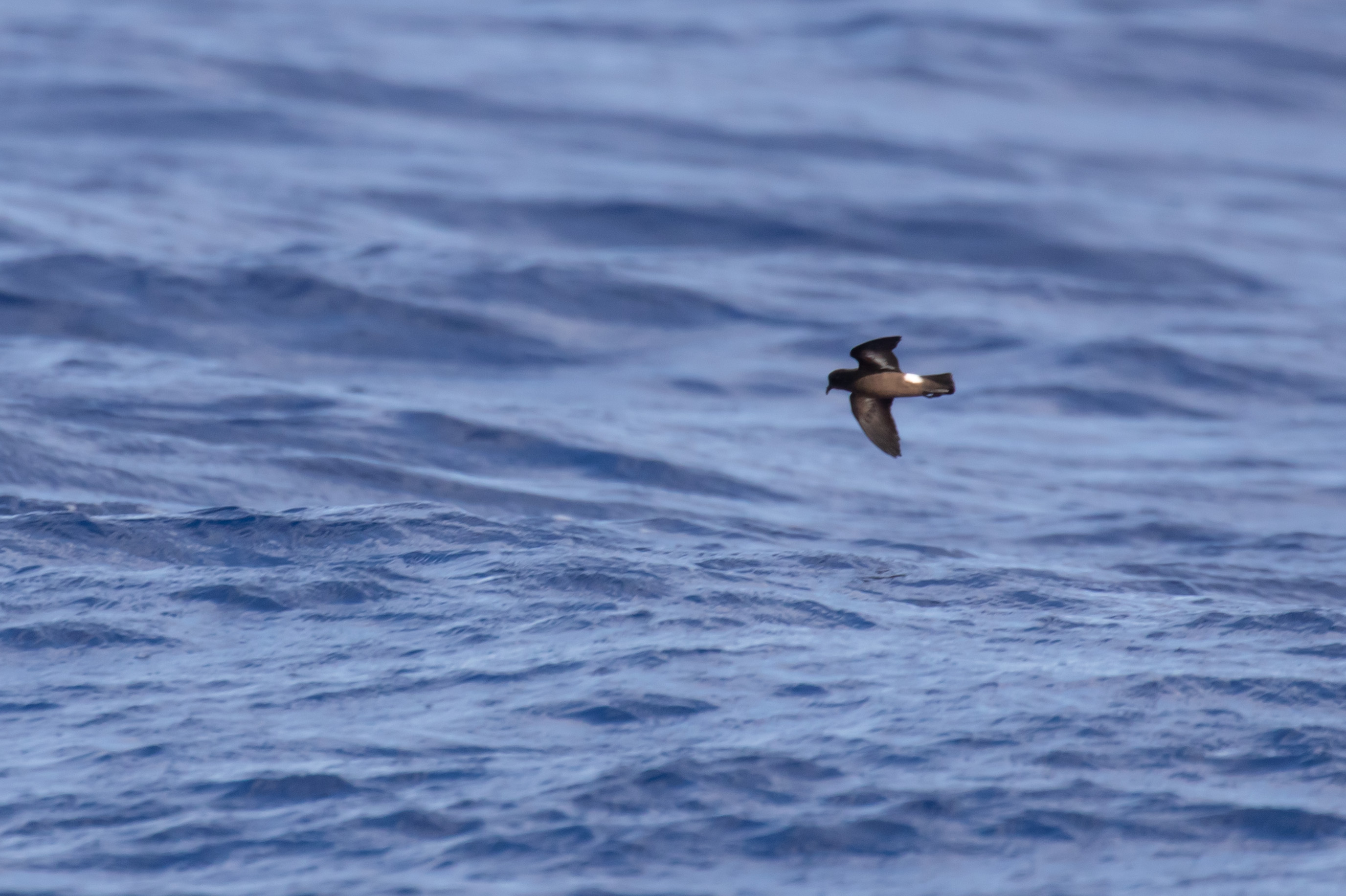
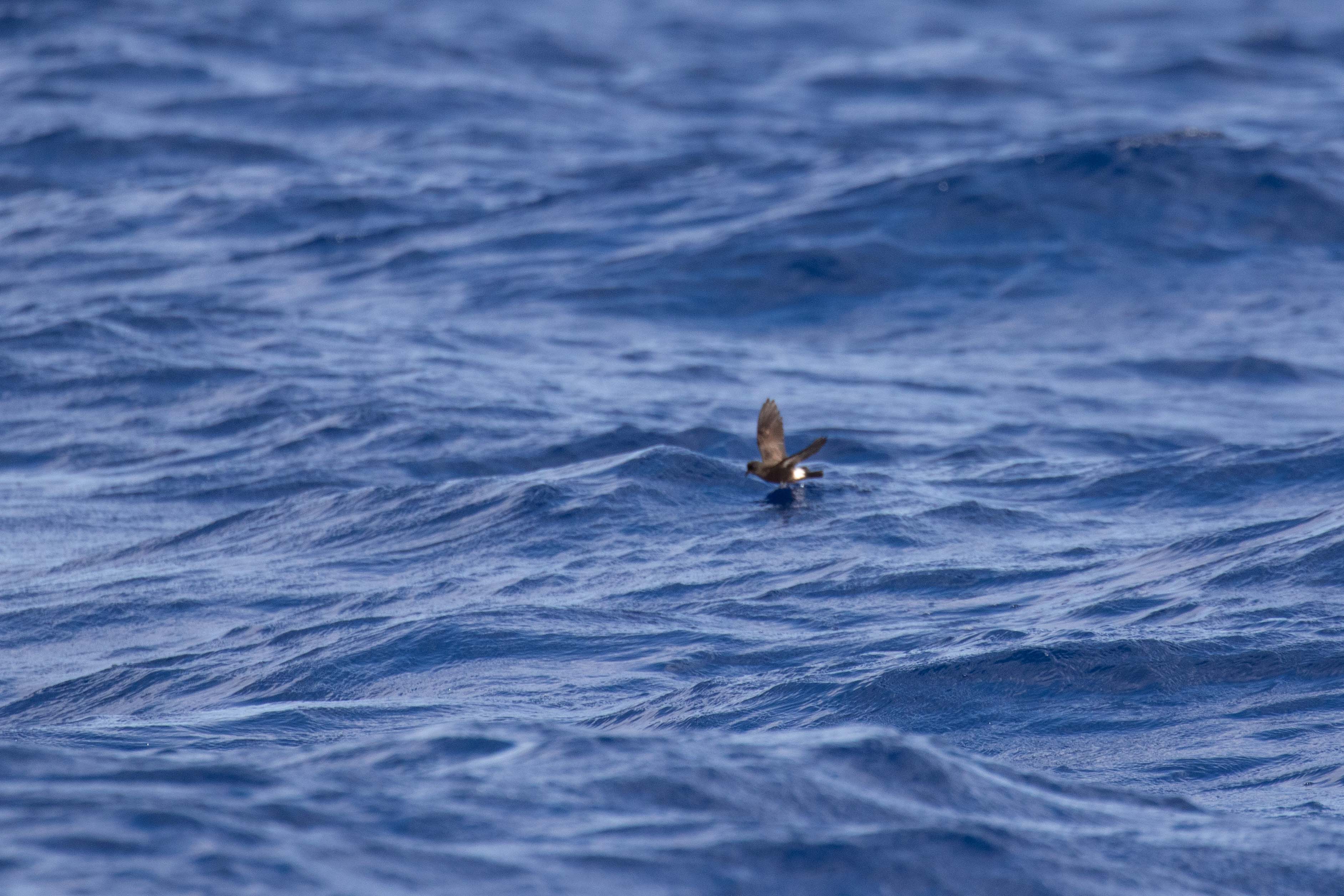
European Storm-petrel

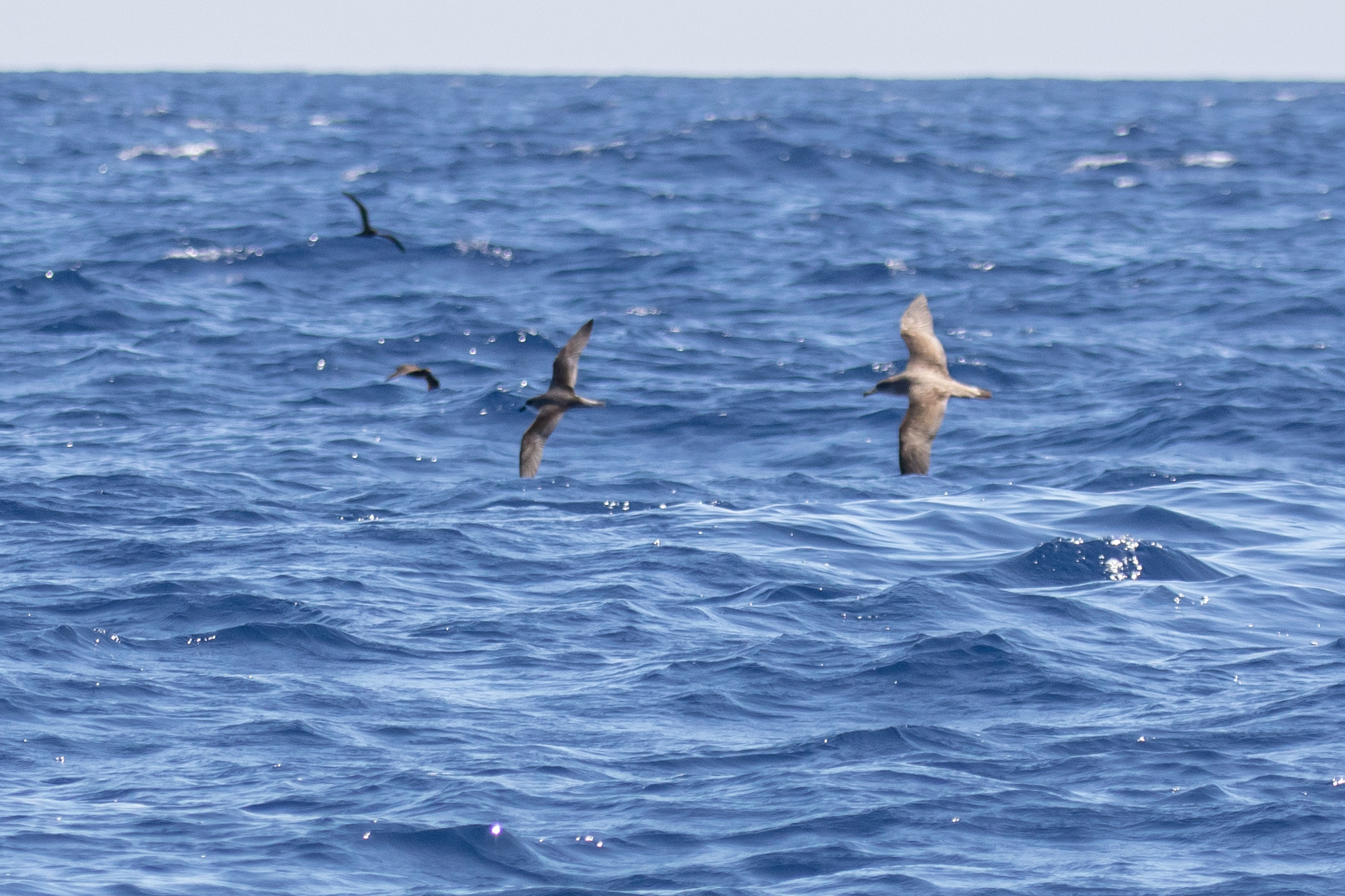
Nevertheless, even after a quiet day two, I was still looking forward to going out to sea on a third consecutive afternoon. Day three had the calmest conditions and once again we headed south. One hour and twenty minutes into our journey to the Desertas Islands, I see a shape behind and high to my left, in my peripheral vision. I glance up and find myself looking into the dark eye patch of a pterodroma petrel. Micheal, who was sitting behind me, and I shout “pterodroma” and instantly the engine is cut. Unfortunately, the bird departs directly away from us, giving no-one any sort of decent view. Fortunately, 15 minutes later, it returns, wheeling around the boat. One minute in the sky, the next skimming through the troughs:
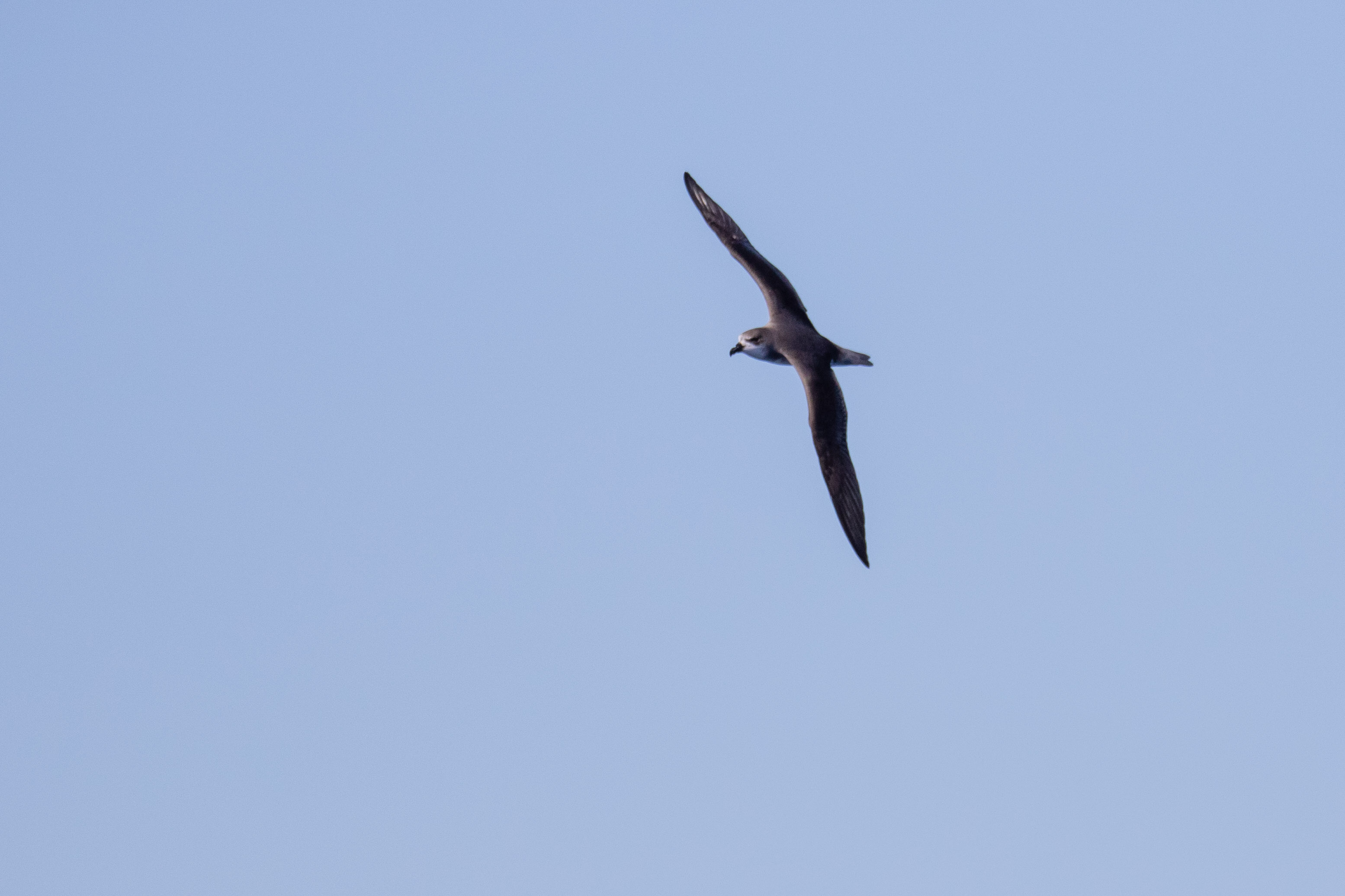
Desertas Petrel
(left to right): two Bulwer’s Petrels; Desertas Petrel; Cory’s Shearwater

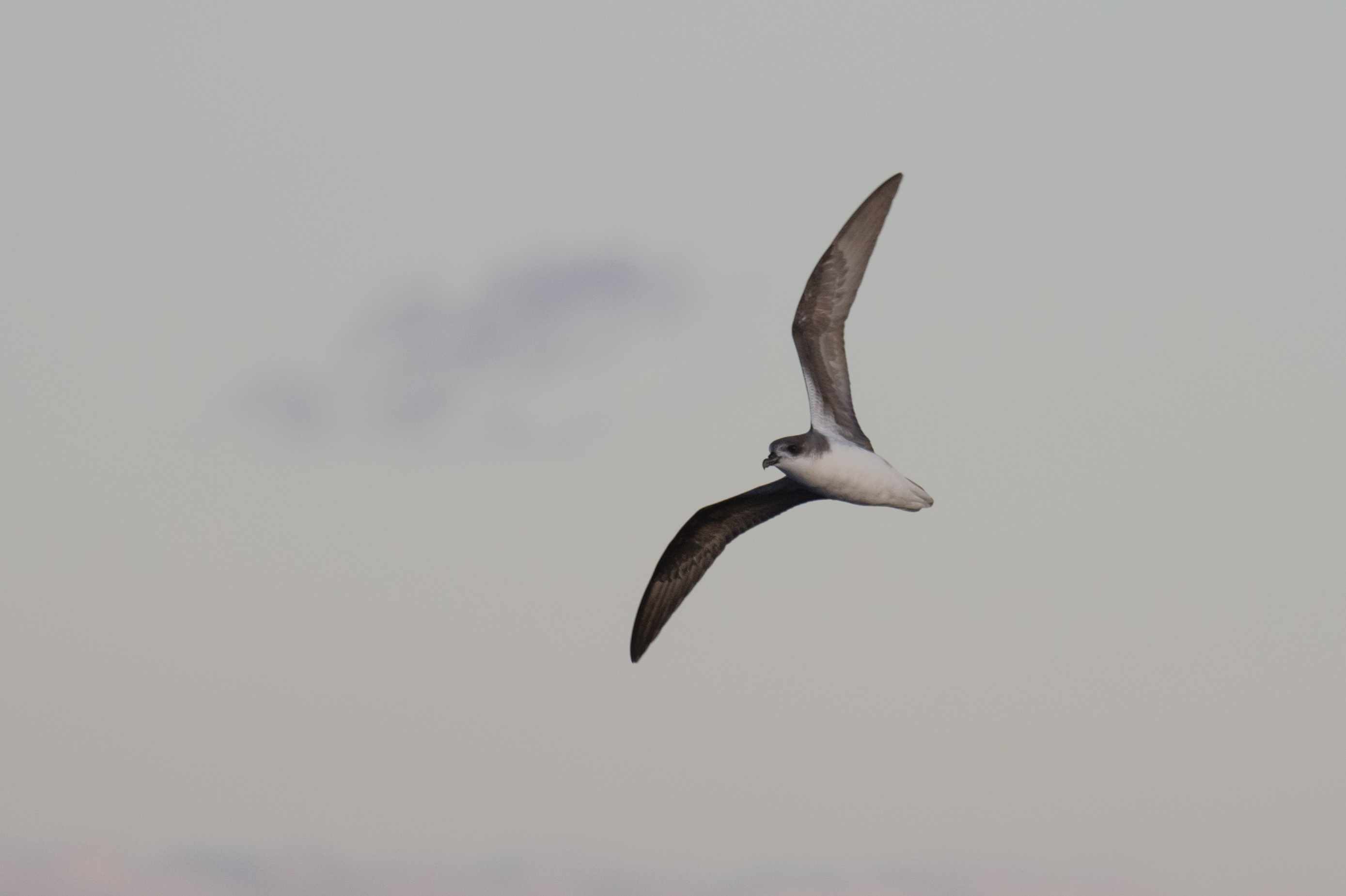
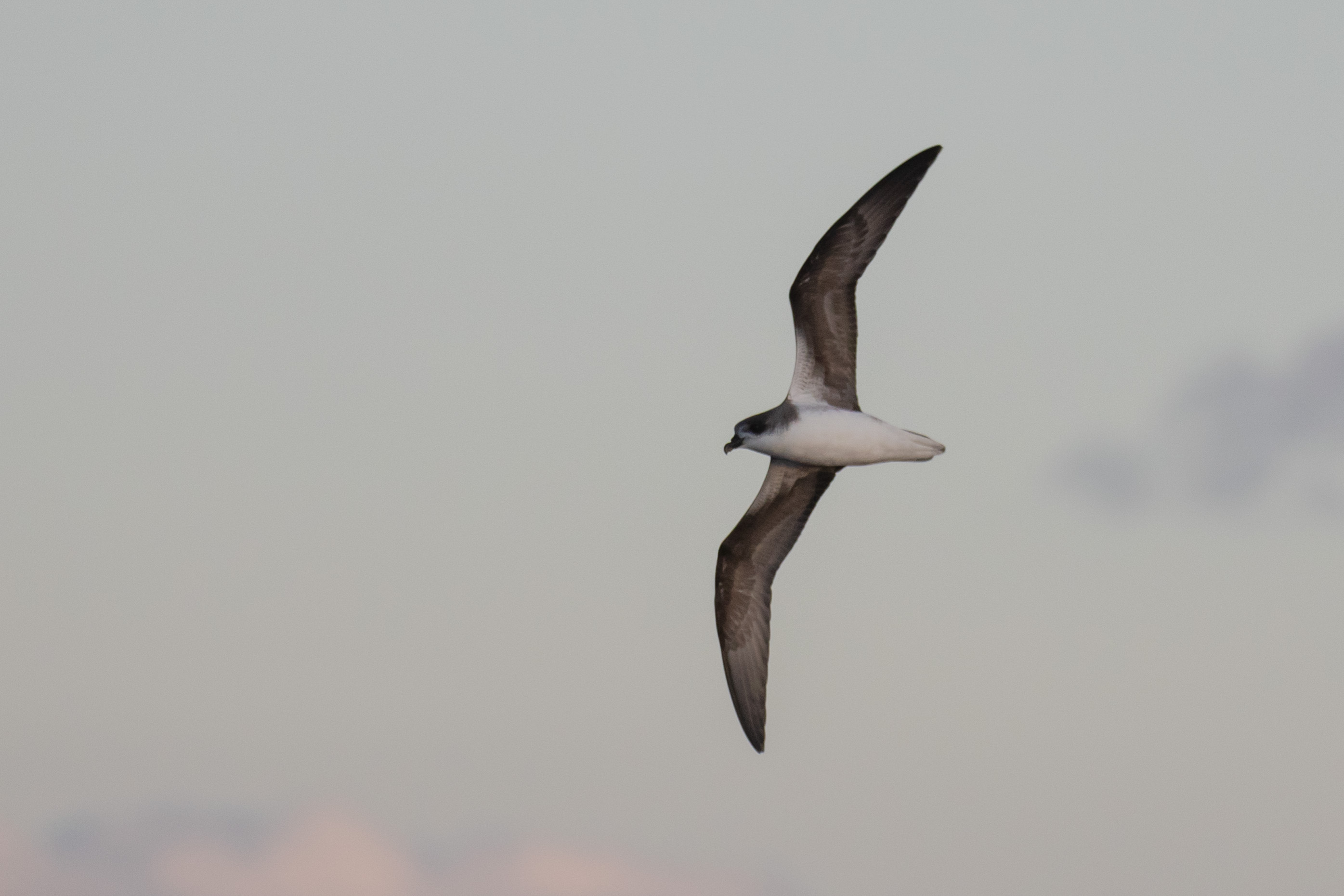
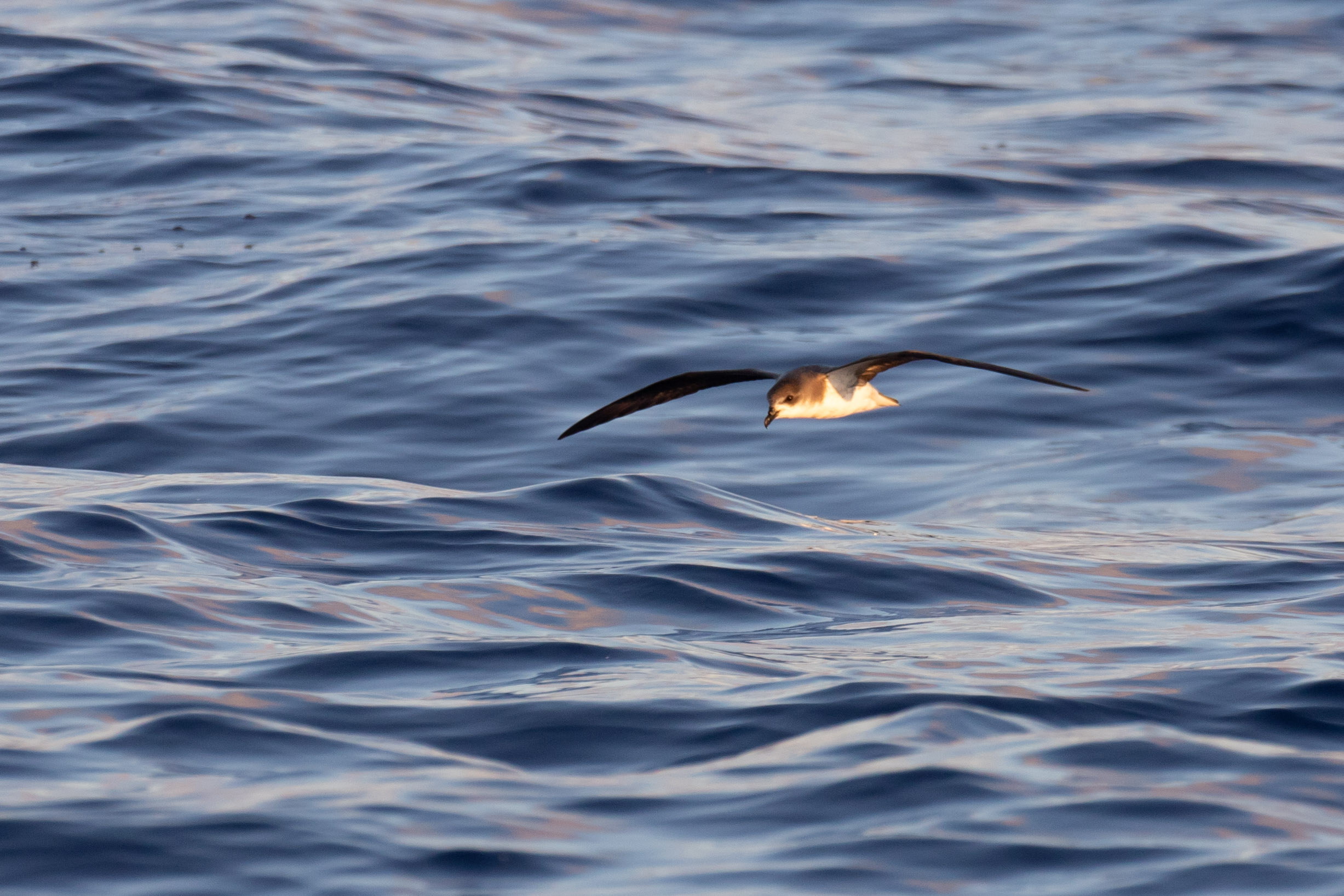
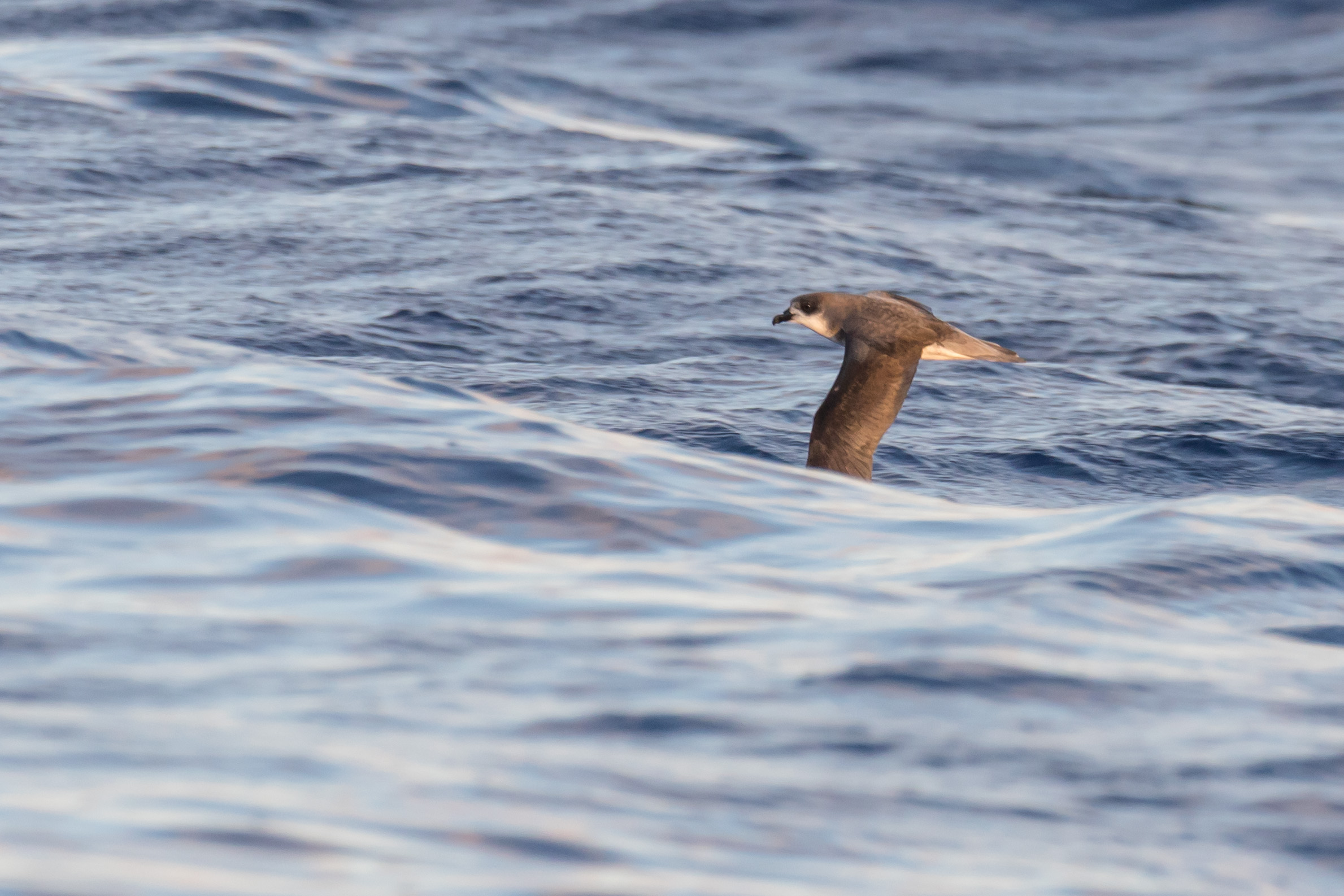
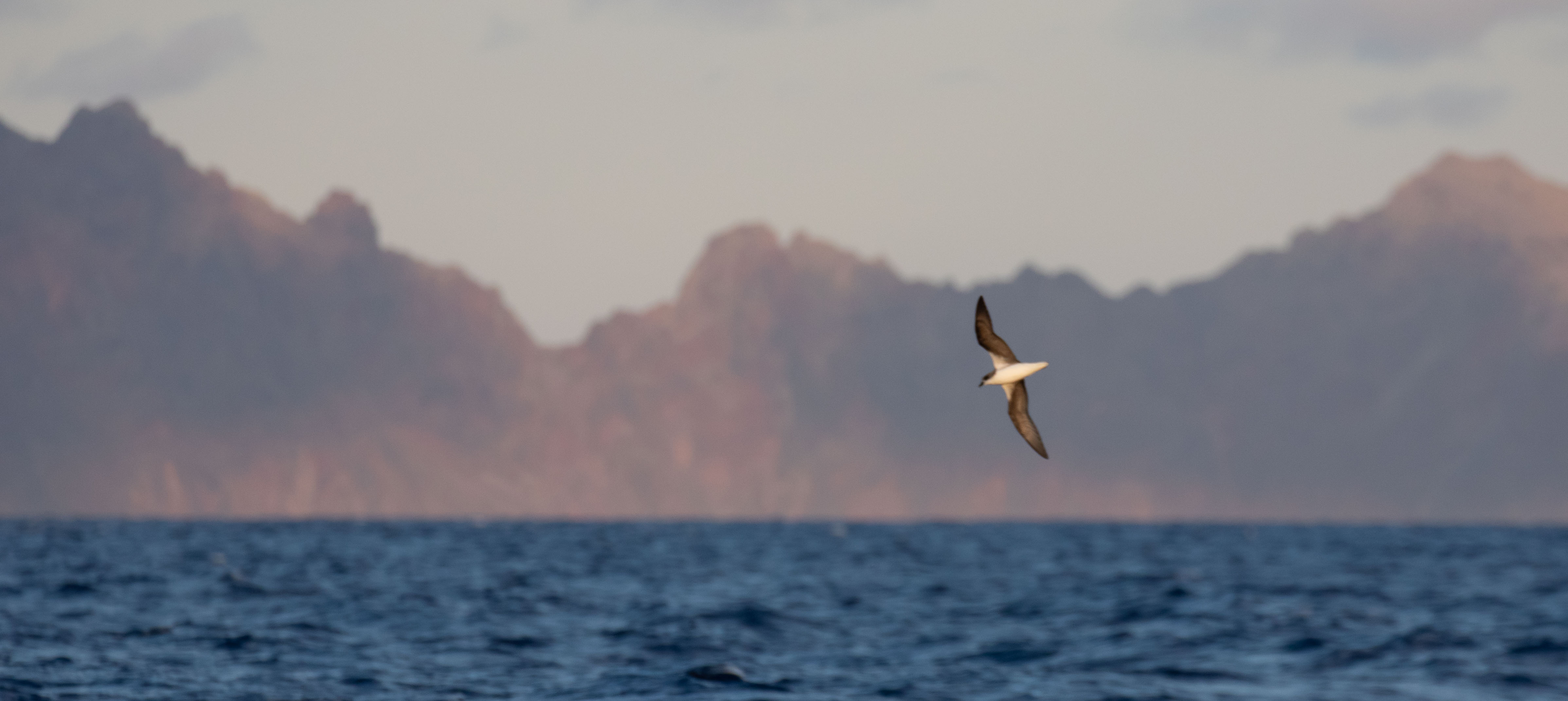
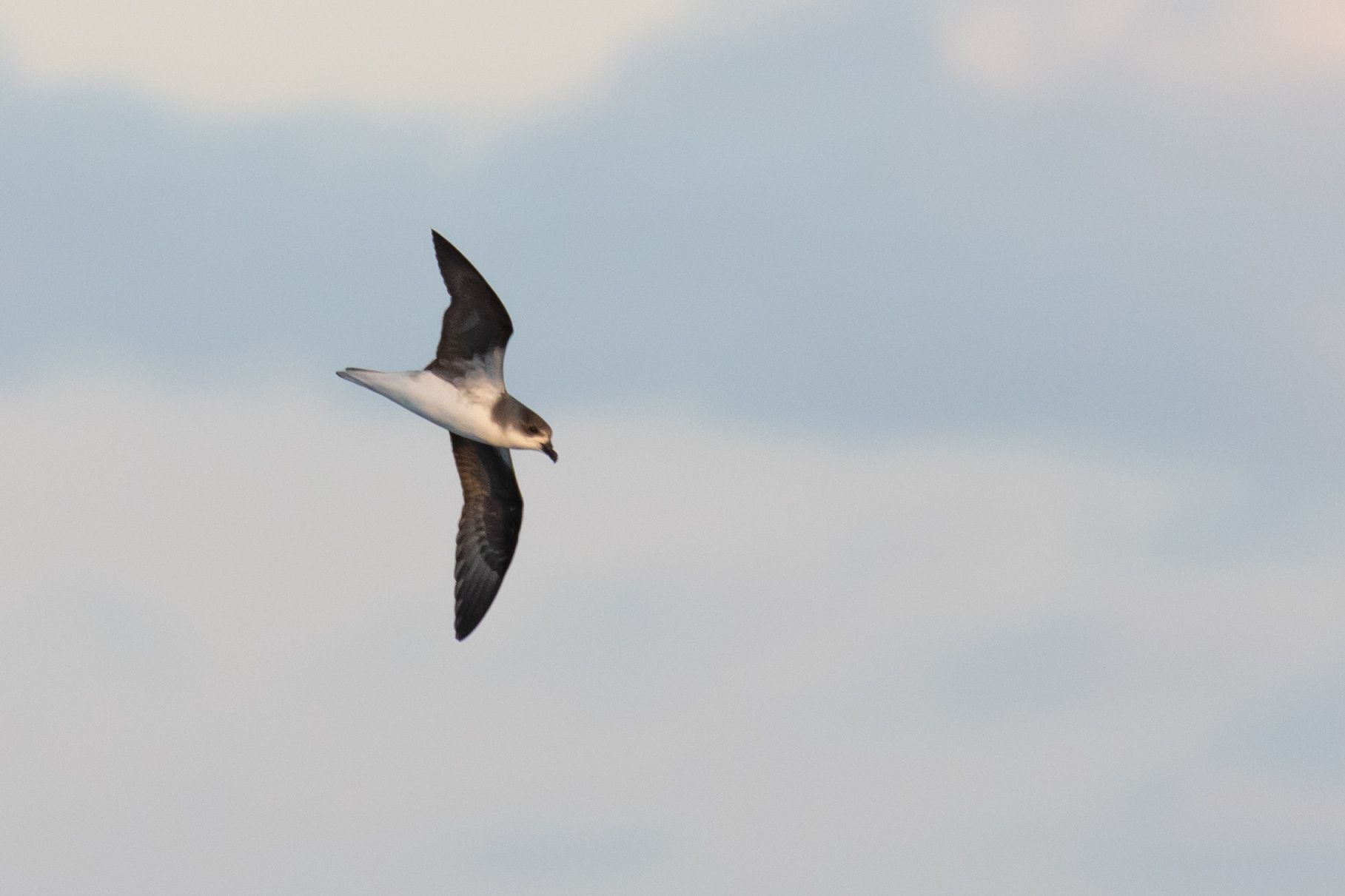
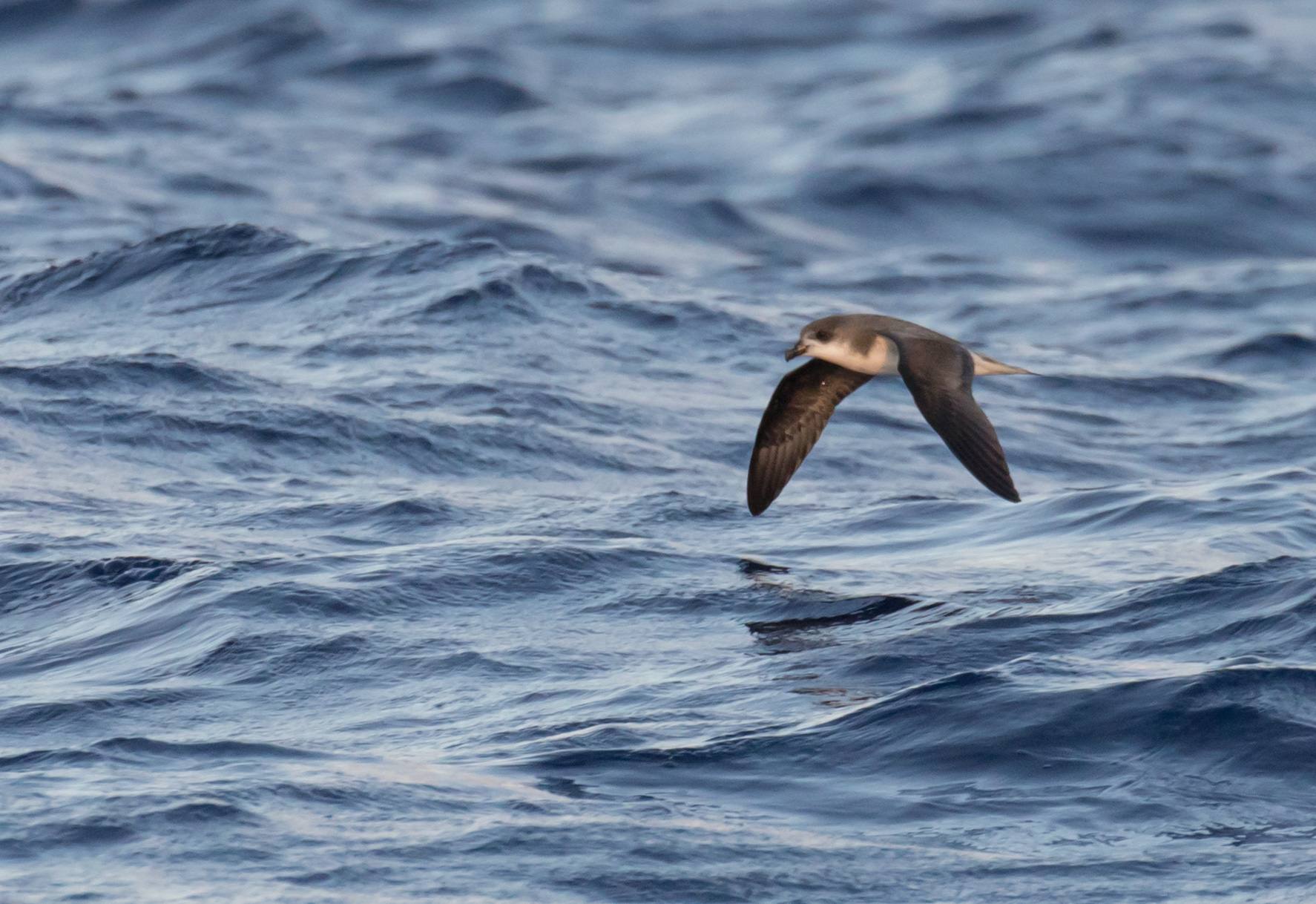
There was then a long period of just Cory’s Shearwaters and Bulwer’s Petrels. Fabian picked up a passing pterodroma in the middle distance, heading towards Bugio, but it didn’t stop. At 20:05 a Desertas Petrel was finally attracted to the chum slick and spent some minutes wheeling around us. This was not a particularly thick-billed individual but had enough chunkiness and weight to be identified as a Desertas Petrel. Note how the colouration of this bird changes depending on light conditions over the following nine pictures:
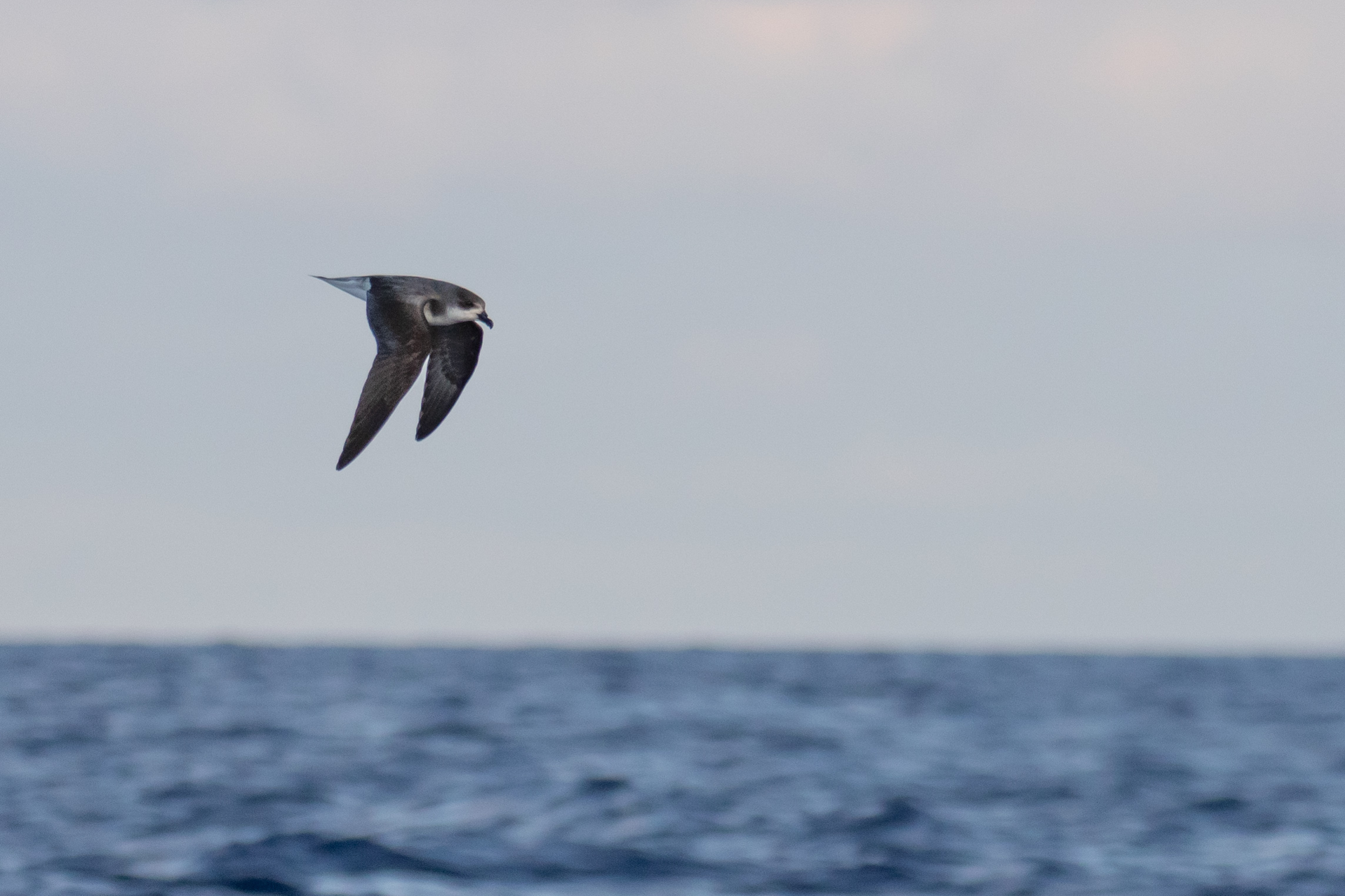
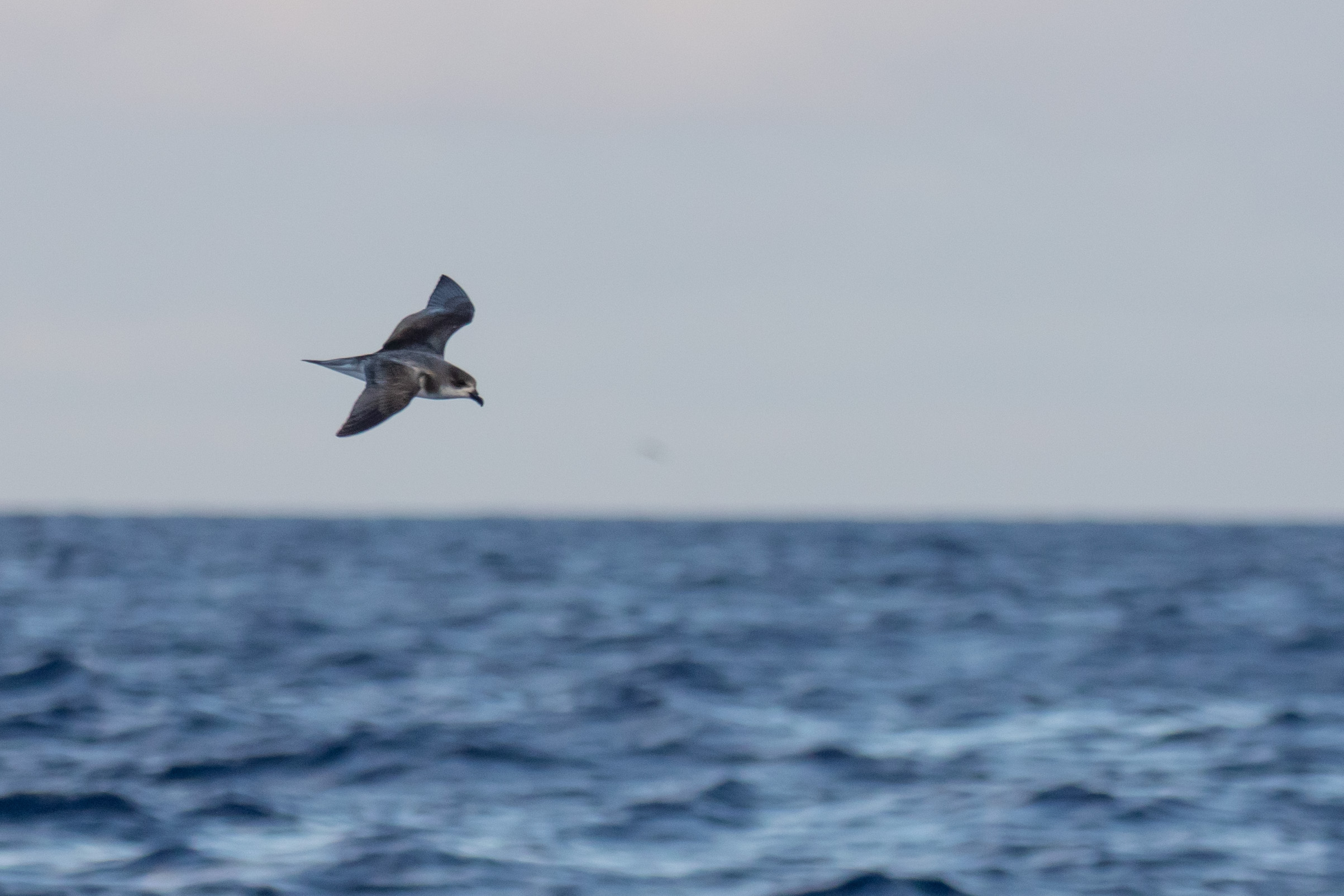
The upperwing “M” is just about visible here.
The all dark underwing and contrasting white body are visible at long range.
In very low evening sun, appearing brown and white.
Desertas Petrel in front of Bugio, their breeding island and the most southerly of the Desertas chain.

All in all, I really enjoyed the Windbird pelagic trips and would recommend them to any birder with an interest in petrels. We were unlucky with storm-petrels, but that is the risk you take with wildlife watching, nothing is guaranteed. Hugo’s summary of our three trips is here on the Windbirds website.

Next: Maderian landbirds
Feeling the Fea: the 2001 Scillonian pelagic

In 2001, as an inexperienced birder who lived far inland, I decided that I needed to see some more seabirds. I had read reports from the Scillonian III pelagic trip in 2000 (see here) and was inspired. Sooty, Great and Cory’s Shearwaters, Sabine’s Gulls and European Storm Petrels were frequently seen on these all day trips from Penzance that headed south west into the Western Approaches of the Atlantic Ocean. But the Holy Grail was Wilson’s Petrel, which in recent years was being seen with increasing frequency. Not having the sort of job where I could drop everything and drive to Cornwall if the weather looked promising for seabird passage, such a trip seemed the best opportunity to maximise my chances of seeing some of the oceanic species of seabird on the British list. However, there was a downside. As the trip report from 2000 noted:

The trip is not for the fainthearted. Many people refuse to set foot on the Scillonian fearing hours of sea-sickness for a brief moment of elation”.

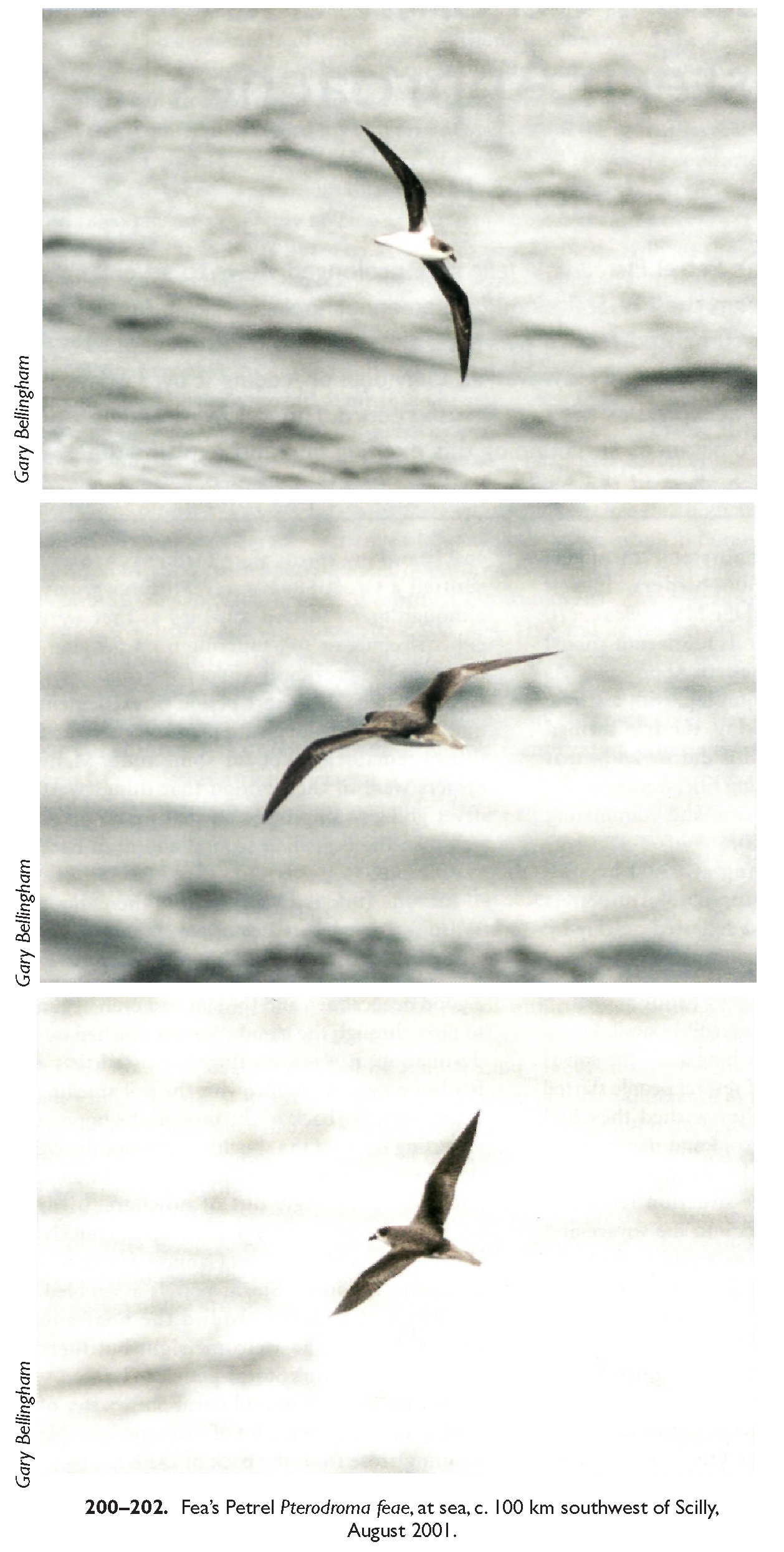
Despite the warnings, I booked my place. In 2001 the Scillonian pelagic was scheduled for 12th August. Then five weeks before the trip, on 8th July 2001, news broke of a huge seabird event off the Scilly Isles. Bob Flood and Ashley Fisher were on their regular pelagic trip from St Marys when a pterodroma petrel was attracted to the chum slick they had dispersed behind their boat. It passed close enough to be seen extremely well and good quality photographs were taken. It was conclusively identified as a Fea’s Petrel, the first accepted British record:

[scribd id=384046673 key=key-3Dbh6cPD1JUiqBapb2PN mode=scroll]

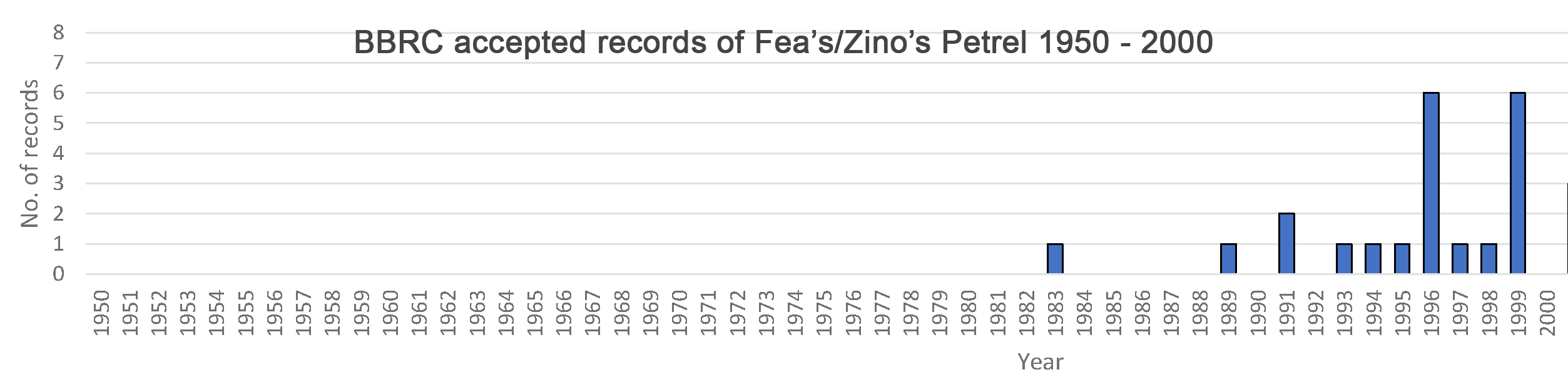
Fea’s Petrel is an extremely rare seabird in British waters. Between 1950 and 2000 there had been just 21 accepted records and none of these could be identified to species level. Instead such sightings were lumped together as “Fea’s/Zino’s Petrel”. These birds are the only northern hemisphere representatives of the Soft-plumaged Petrel group of the southern hemisphere.

Thanks to the experience and skill of the observers, combined with the excellent photographs, the bird seen off Scilly in July 2001 was identified as Britain’s first ever Fea’s Petrel. For those of us waiting to head out into the Atlantic on the Scillonian III in mid-August, this generated mixed feelings. Rare seabird events are, by definition, exceptional. It felt like the big seabird moment of 2001 had happened some five weeks before I would be anywhere near the ocean.

The weekend of 11th and 12th August arrived and I drove down from Oxford to Penzance on the Saturday, an horrendous journey that took nearly 12 hours with the roads filled with stationary holiday traffic. I had fish and chips in Penzance then tried to have an early night at my B&B, near the docks.

It was cloudy and windy as I awoke at 4:30am and forced down some breakfast. I couldn’t quite bring myself to take some seasickness pills, even though I knew that they took 2 hours to work. It was a reflection of my inexperience with the sea that I decided that I would see how conditions were and would then take the medication as required. This was to prove a costly and traumatic decision.

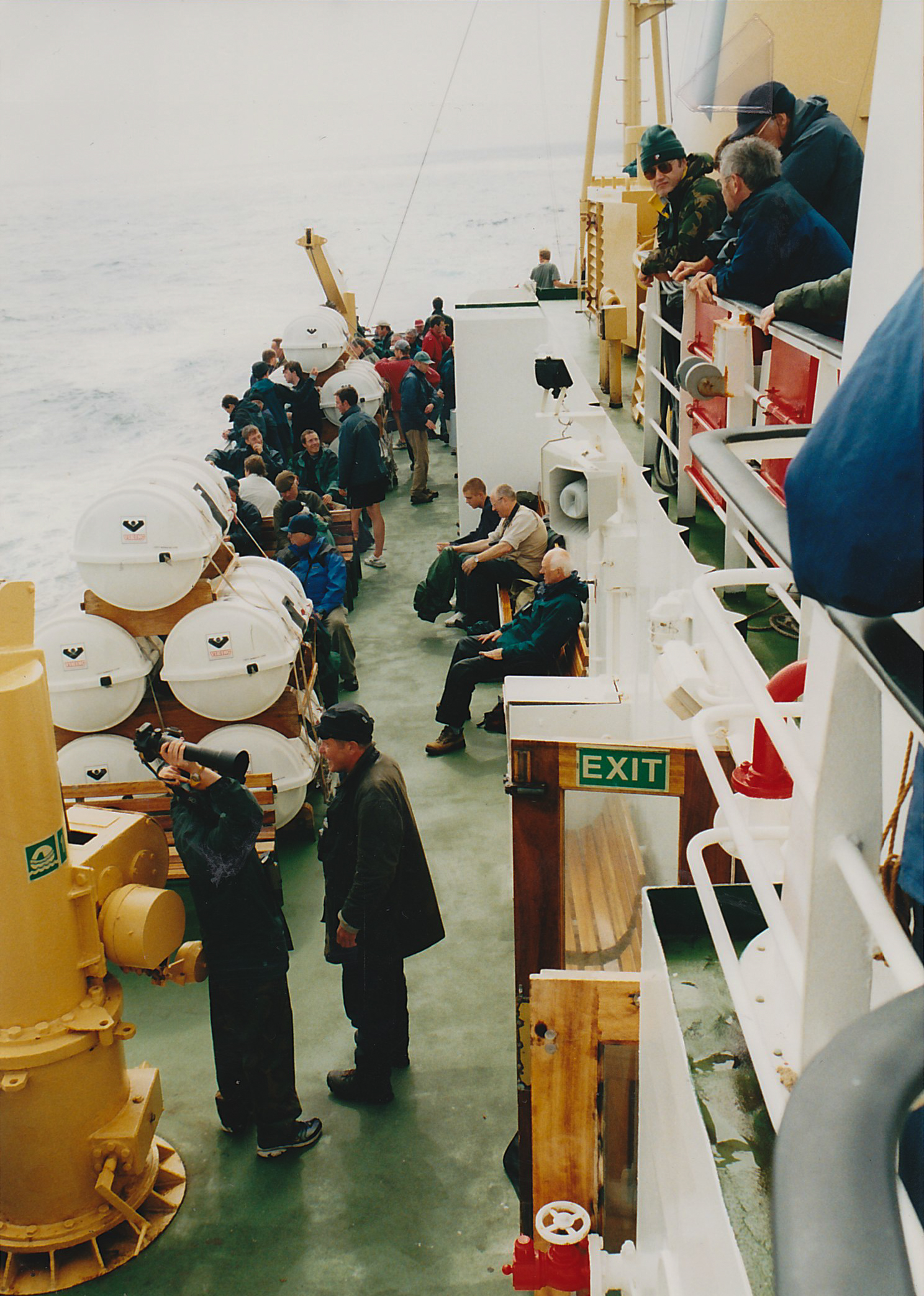
I queued up in the dark and boarded the Scillonian III at 5am. We left Penzance at 5:30am and as soon as we were clear of the mainland, the extent of the swell became apparent. The wind picked up and loud crashes could be heard from the bar and dinning areas as glasses and cutlery were thrown around and smashed. I began to wonder if this was normal for a pelagic trip. After 45 minutes I was feeling terrible. Being outside and looking at the horizon did not help at all. The horizon was thrashing around all over the place as the boat crashed through the swell. Frequently we could hear a loud juddering roar as the propellers were lifted out of the water as the boat pitched violently forward. The smell of the diesel fumes nearly brought up my breakfast. I forced down some seasickness tablets with some water. The complete lack of any seabirds seemed to be upsetting some people, but I had more important things on my mind: I had turned green and I felt like I was going to die.

At 6:45 the inevitable happened. I rushed into the toilets. Every cubicle was locked and the occupant of each cubicle was lying on the floor with their legs protruding out from under the door. As the boat rolled from side to side a large slick of vomit washed from one side of the toilets to the other, coating the legs of the prostrate occupants in stomach contents. I grabbed hold of an urinal, prayed to a God that I did not previously believe to exist, and violently threw up. In a stunned state I opened my eyes slightly and to my horror I saw two, mostly undigested, seasickness tablets, smiling back at me from the urinal. I had thrown up the only two things that were going to make me feel human again.

I crawled back through the vomit lake and managed to get back to my seat, despite the ship pitching and rolling like a roller coaster. I looked out of the porthole next to me and saw my first European Storm Petrels, flying alongside the ship. Never has a British tick had so little feeling attached to it. I forced down more two seasickness tablets, then two more, just in case. I had lost all interest in birding, I was exhausted, covered in vomit and most of it was not mine. The thought occurred to me that there were 15 hours remaining before we were to dock in Penzance. I wondered how I was going to survive this experience.

Fortunately for me the only major side-effect of taking an overdose of seasickness tablets was fatigue. With a recommended dosage of 2 in 24 hours, I had taken 6 in 2 hours, although not all of these were digested. As a result, I passed out in my seat.

I am woken a little while later by a tannoy announcement: “Sabine’s Gull behind the fishing boat at 3 o’clock”. I jump to my feet, but instantly feel violently sick, so I sink back into my seat. I let the Sabine’s Gull go, feeling disappointed as it would have been my first.

By now there are people being sick everywhere. Some hunch over sick bags, some find the downwind rail of the ship. Some attempt to enter the toilets, but it resembles a scene from hell, bodies and vomit were everywhere. And yet, others are not only coping but are birding on the stern of the ship. How anyone could manage that was completely beyond me.  Very few birds were seen during the first eight hours of the trip, fortunately for me as I was incapable of getting up to see them. There was talk of this being the worst pelagic trip in British birding history.

For the next few hours I drift into and out of consciousness, sometimes sleeping, sometimes vomiting. Gradually the winds and swell recede slightly, the seasickness medication finally begins to work and I manage to eat something. Around lunchtime, I feel brave enough to go out on deck and to try to begin birding. We are now at our destination – a featureless piece of the Atlantic, known as the Wilson’s Triangle. Chumming begins, a mixture of rotting fish and fish oils are dumped from the ship, as pelagic bird species are attracted by the appalling smell. I was at the side of the boat, about half way along, reasoning that the centre of the ship moves less than the stern or bow. This position also protected me from the smell of the chum.

The chum began to work its magic. Appearing out of nowhere, bird numbers began to build up. Several hundred Gannets wheel around, plunge diving for larger pieces of chum. European Storm Petrels were everywhere, zipping and flittering over the surface of the sea. Perhaps 200 birds were present. We scanned through them in the hope of a glimpse of a Wilson’s Petrel.

A second Sabine’s Gull was called from the other side of the ship, but I didn’t make it round in time to get onto it. Then my side of the boat had a treat, a Great Shearwater did a close pass, giving fantastic views.

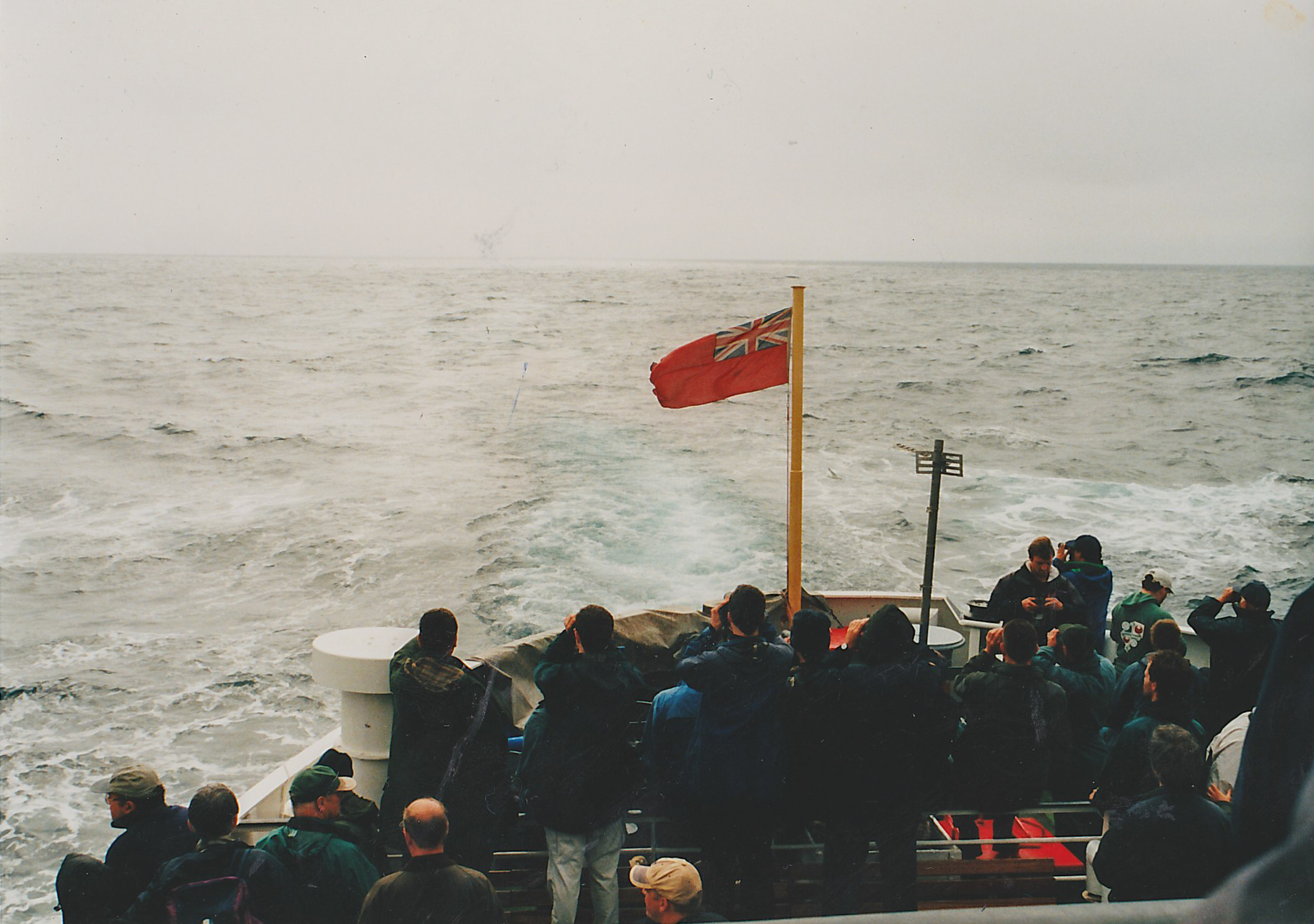
At just after 14:30 there was a tannoy announcement that will stay with me forever: “Soft-plumaged Petrel in the wake!”. I had no idea what this meant. All I knew was that there was a bird so rare that I had not even heard of it, somewhere behind the boat that I was standing on. Simultaneously, every single birder tried to get to the stern of the Scillonian III.

The wake behind the Scillonian III, 12th August 2001 © Tom Bedford

If my senses were working, rather than having been dulled by sleep deprivation, eight hours of vomiting and recurrent seasickness tablet overdoses, then I would have quickly worked out that the bird following the ship was a Fea’s Petrel, one of the Soft-plumaged Petrel group. As it turned out, it was the very same bird seen from the Scilly pelagic five weeks beforehand.

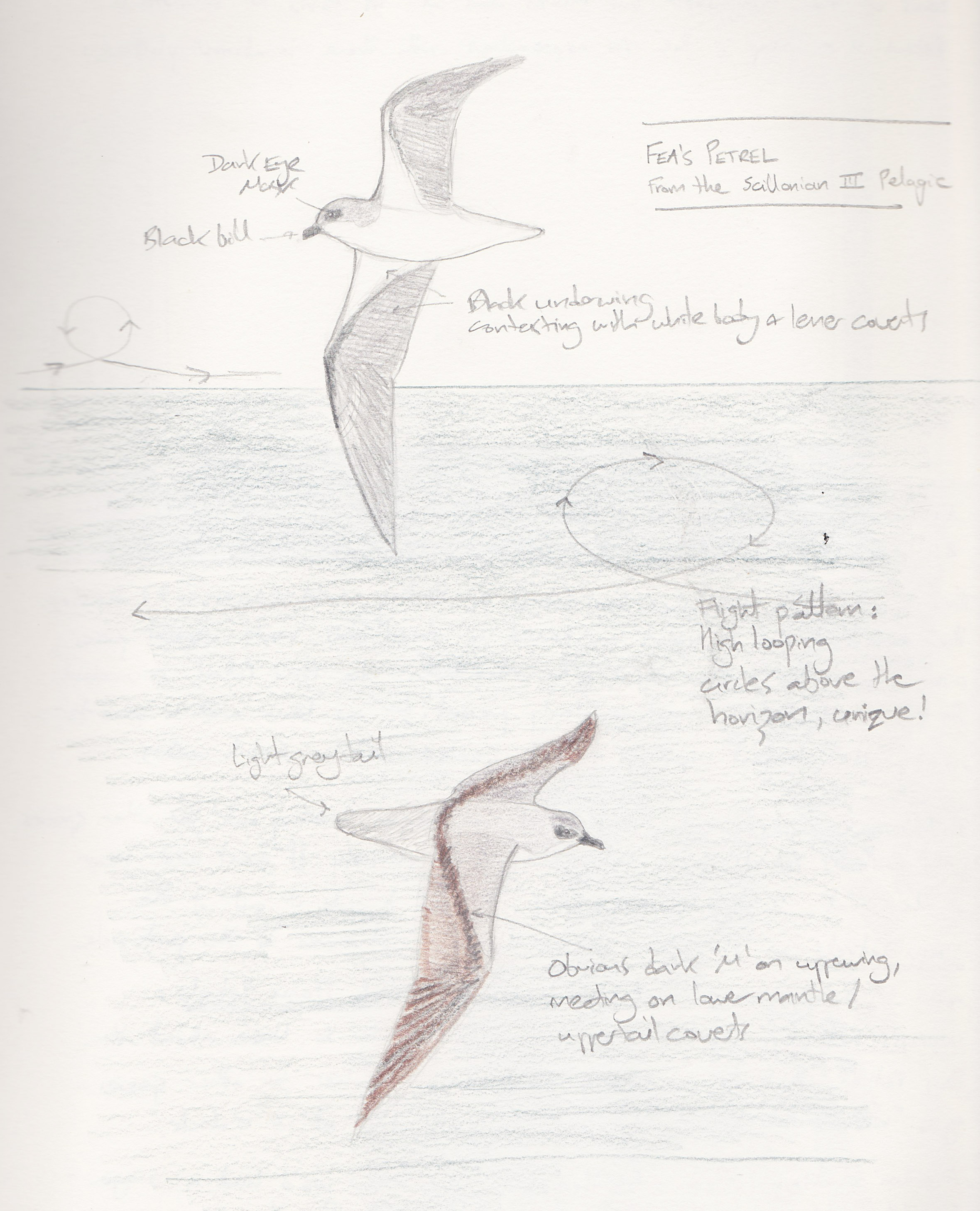
I began scanning through the mass of feeding seabirds in the wake of the ship, just looking for something, anything, different. I got lucky. After ten seconds I got onto a pale grey and white seabird that, as I watched, looped up from just above the sea, wheeled up high above the horizon before skimming back down low over the sea again. I saw the dark “M” across the upperwing and the white body contrasting with the dark underwing.  And then it was gone.

© British Birds 99, August 2006,  p402.

My notes from 12th August 2001, including attempts at recording the bird’s distinctive flight pattern.

There was a moment of silence and then a spontaneous outbreak of joy and applause from those birders that had seen the Fea’s Petrel. Strangers high-fived and shook hands. Unfortunately, only about half the birders on the boat had connected with the bird. They need not have worried. Almost immediately the Fea’s Petrel was located again off the side of the ship, whereupon it proceeded to give a close fly-by down the entire starboard side. As it glided past us, just below eye level, there was complete silence on board, as everyone drunk in dream views of a dream bird. In fact, the Fea’s Petrel remained around the ship for one hour and 15 minutes, still the longest ever viewing of this species in British waters.

2 Wilson’s Petrels were then located, pretty much simultaneously at the front and rear of the boat. The tannoy announced “Wilson’s Petrel with the Soft-plumaged Petrel at 3 o’clock” and was greeted with delirious, incredulous laughter. We could not believe what was playing out in front of us. We had suffered so much, but the rewards had been incredible. At 16:30 we began our return journey. The sea was flat and the sun was shining. The horror of the morning was behind us, we all knew we had experienced something pretty special.

Calm scenes on the upper deck of the Scillonian III on the return journey © Tom Bedford

Postscript:

Just four days later, back home in Oxfordshire, Nic Hallam found a superb adult Sabine’s Gull at Farmoor, only the second record for the county. Even better, it stayed for three days and I saw it. At 25 metres range in lovely evening sunlight. Somehow, pulling back an adult Sabine’s Gull so soon after missing two from the Scillonian III pelagic just added to the magic of the Scillonian experience.

The bird seen from the Scillonian on 12th August was written up and accepted before the record of the bird from Scilly on July 8th 2001, so for a short period it was the first Fea’s Petrel for Britain:

James Lees’s account of the Scillonian III Fea’s Petrel in British Birds:

[scribd id=384611132 key=key-rLAi74sEfqHzgDDxQxBV mode=scroll]

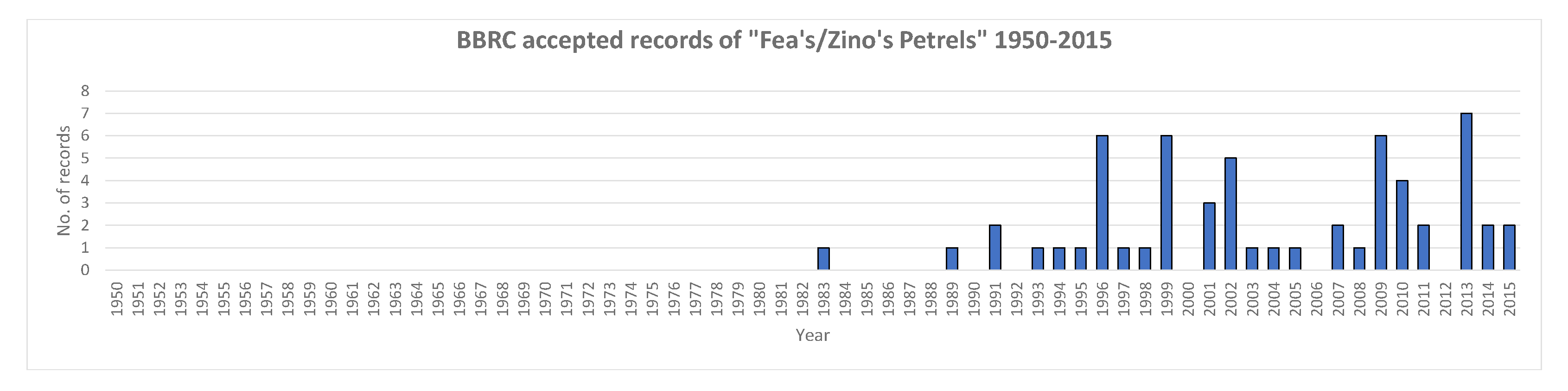
Since 2001 records of Fea’s/Zino’s Petrel have been almost annual. There were no records in 2006 and 2012, but 6 records in 2009 and 7 in 2013. Most years see just one or two accepted records: 

Contemporary pterodroma identification: Cape Verde Fea’s, Desertas Fea’s or Zino’s Petrel?

To date, there are just 6 accepted species level records of Fea’s Petrel (as opposed to the lumped Fea’s/Zino’s Petrel group):

2001 Isle of Scilly (July 8th, see above)

2001 Western Approaches (August 12th, the Scillonian III bird)

2004 Isles of Scilly

2014 Easington, Yorkshire

2014 Isles of Scilly

2015 Isles of Scilly

There is also a pending record from 2008 of a bird 10km NW of the Galway coast. It is no coincidence that 6 of these 7 records are from pelagic trips. These give a better chance of a close approach and provide the opportunity to gain photographs to allow species level identification of this difficult group. Species specific identification of Fea’s-type petrels is extremely difficult, as addressed in this article by Bob Flood:

[scribd id=384048002 key=key-DWY4p5Tfjto1xkdO0XNJ mode=scroll]

The future? 

With Fea’s Petrel firmly on the radar of British birding community, the new pterodroma holy grail of UK seawatching is probably either Zino’s Petrel or Bermuda Petrel. The latter has already come tantalising close to Ireland, see here. Both species have tiny breeding populations and are globally endangered. There have also been some quite remarkable reports of pterodroma petrels, from much further afield. Birds bearing resemblances to Atlantic and Trindade Petrels have been reported on a number of occasions (including this year from Cornwall). There is also a well discussed bird, widely thought to be a Herald Petrel, seen from Dungeness in January 1998:

[scribd id=384948291 key=key-BIbdHPZgHC464ackX512 mode=scroll]

Finally, if a lucky birder finds a Fea’s-type pterodroma petrel in British waters, they must also eliminate the possibility of Soft-plumaged Petrel, after this outrageous record of a southern hemisphere pterodroma species in the high arctic. The attraction of these magnificent seabirds is partly their  ability to travel vast distances. The challenge for the lucky finder is getting adequate documentation of birds that often pass at distance and at speed. As the BBRC Herald Petrel article notes, a change in seabirding culture towards pelagic trips will help with closer views and allow better photographs to be taken. It is then just a matter of huge luck and of surviving the trip if the weather is inclement!

error: Content is protected !!