Having experienced the dry fields of northern Mallorca, baking in another European heatwave, I visited my first wetland site on 13th July. I called in at a small site in nearby Alcúdia. As I walked through the reeds alongside the lake before dawn, I thought that I had glimpsed a Night Heron quite close to the track. A gap in the reeds provided a decent view over the lake. There wasn’t a Night Heron. There were dozens of them. Even with the naked eye, I could see that the entire lake appeared to be covered in herons and egrets. Literally hundreds and hundreds of herons and egrets, almost overwhelming numbers of herons and egrets. It was an incredible sight:


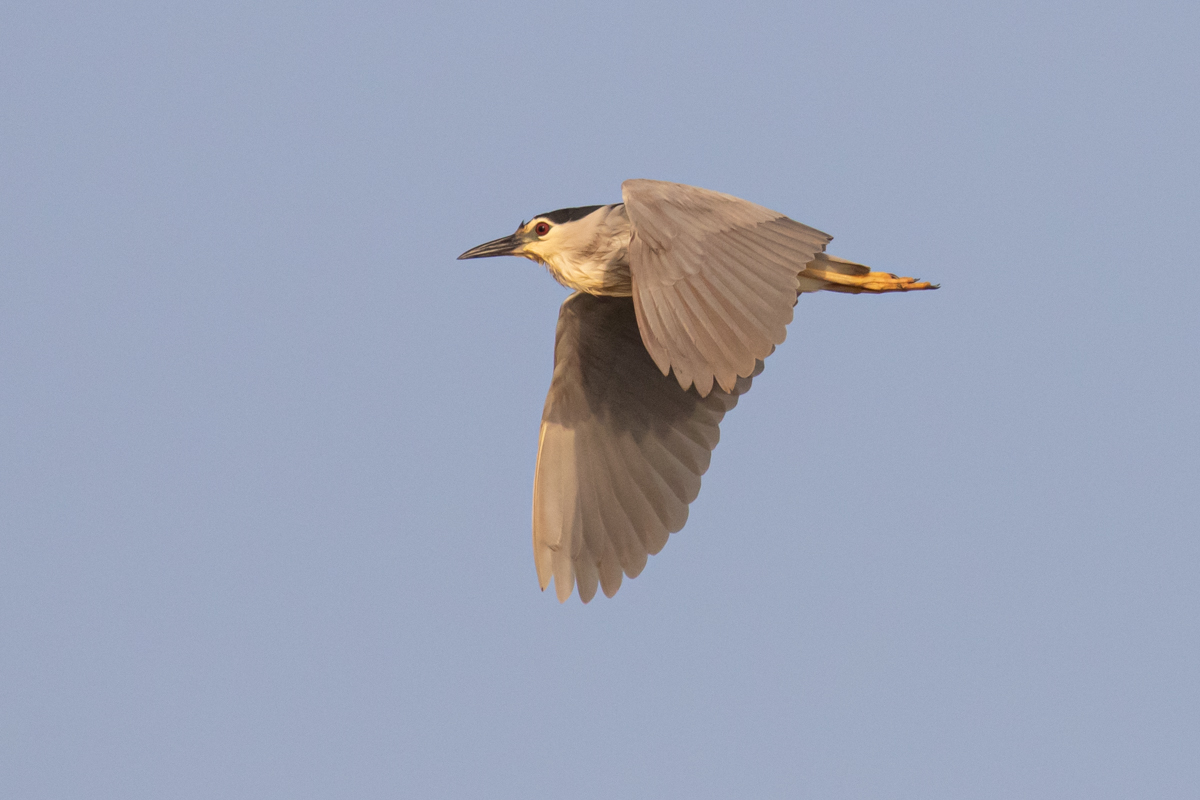
The nearest birds were Black-crowned Night Herons. Every patch of exposed mud had one perched on it:


Slightly further back, there were hordes of Purple Herons, with a smaller number of Grey Herons also present. eBird tells me that I have seen Purple Heron on 15 occasions since my first at Minsmere in 2002 (this total does not include one of my most painful Oxfordshire misses). My first scan across the waters of Maristany produced at least 25 Purple Herons, nearly doubling my lifetime sightings of these magnificent birds in just a few seconds. A count from this site later in the day totaled 48 Purple Herons, a site record count:


Egretapocalypse
Little Egrets were the commonest species; at least 160 were present, the majority feeding in a huge white mass at the back of the lake. Amongst them were Glossy Ibises and dozens of noisy Black-winged Stilts:


Below, Squacco Herons were present in much smaller numbers than the other herons and egrets, with up to 10 birds present:

The big beasts: Greater Flamingo. Always a surreal combination of pink and impossibly long legs, just fantastic to see:

Other species of note included the long-staying dark-morph Western Reef Heron and a handful of Marbled Duck:


Both adult and juvenile Gull-billed Terns were present. They were very inquisitive and vocal, coming over to investigate me as I walked down the main track:
The award for the wildest call of the day went to the bizarre trumpeting of Western Swamphen as two birds interacted at the edge of the reedbed:
Later in the week, I made a dawn visit to the observation tower at Son Bosc, in the southern part of the s’Albufera Reserve. There were a few lagoons here, next to an extensive area of reeds:

As I waited for the sun to rise, I heard the honking of geese from behind me. Not having recorded any geese species on Mallorca, I turned around only to discover that I had heard the goose-like honking of flying Greater Flamingos. These calls are audible on this recording, although any sound recording at this site has to compete with the incessant calls of Black-winged Stilts, with both adults and recently fledged young present and vocal:

Warblers
The reedbeds and surrounding areas held Sardinian and Cetti’s Warblers, Common Nightingale, Zitting Cisticola and Western Yellow Wagtails. Western Marsh Harriers quartered the reedbeds and calling European Bee-eaters passed overhead.

I enjoyed spending an hour or so just watching various warbler species move through this habitat. A Subalpine Warbler-type appeared once, but was distant and frustratingly never revealed itself again, so was left unidentified. Cetti’s Warblers were common, with adults and juveniles present:

Common Reed Warblers were abundant:

At least two Great Reed Warblers also lumbered around the bushes, though always kept their distance:

Eventually, I picked out the warbler species that I most wanted to see here, Moustached Warbler:

The black crown and huge white supercilia were obvious, though very little sign of the thin black sub-moustachial stripe that gives these birds their name on this individual. From the front, Moustached Warblers are very pale birds:

Having moved through the bushes by the observation tower, one Moustached Warbler began singing. The opening series of rising notes (reminiscent of a kettle coming to the boil to my ear!) is distinctive, before they deliver bursts of scratchy acrocephalus song:
Finally, to the beach to see one of my favourite Mediterranean species, Audouin’s Gull. I deployed a chip or two, then sat back to enjoy these beautiful birds:


